
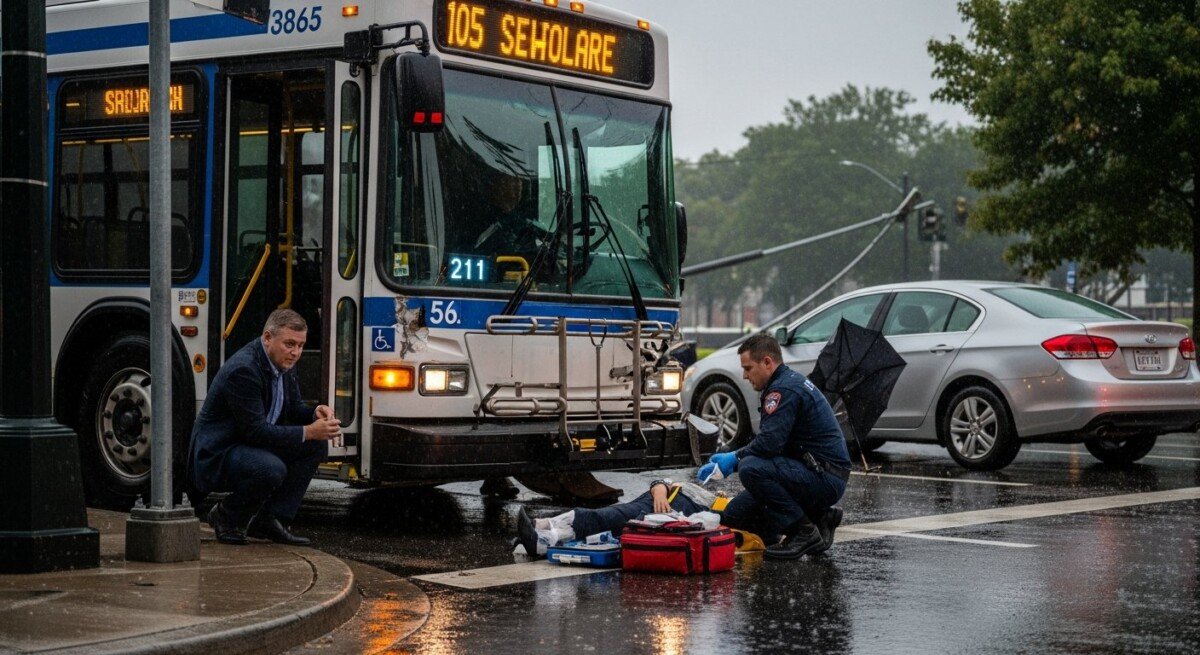
Public Transit Accident: What Happens Next?
Learn what happens if an accident involves public transportation, including liability, claims, and deadlines. Call (833) 227-7919 for a free case review.

By Samira Lockwood
Imagine you are riding a city bus, a commuter train, or a subway on your way to work. The vehicle lurches forward, and suddenly you are thrown from your seat. A crash has occurred. In the immediate aftermath, confusion sets in. You wonder who is responsible, how to get medical care, and whether the transit authority will pay for your injuries. This scenario is more common than most people realize. In 2022 alone, public transportation systems in the United States reported over 6,500 collisions involving buses and light rail. When an accident involves a city bus, a subway train, or a paratransit van, the legal and insurance landscape shifts dramatically compared to a car crash. Understanding what happens if accident involved public transportation is critical for protecting your rights and securing fair compensation.
Public transit accidents raise unique questions about liability, government immunity, and claim procedures. Unlike a collision between two private vehicles, these incidents often involve government entities, large insurance policies, and strict filing deadlines. The process can feel overwhelming, especially when you are recovering from injuries. This article breaks down the entire chain of events: what to do at the scene, how liability is determined, who pays for damages, and how to handle disputes with the transit agency or its insurer. We also explain when you may need to challenge an official accident report or deal with a defendant who refuses to pay a settlement. By the end, you will have a clear roadmap for navigating a public transit accident claim.
Immediate Steps After a Public Transit Accident
Your actions in the first minutes and hours after a crash can make or break your case. The priority is always your safety and the safety of others. If you are able, move to a secure location away from traffic. Call 911 immediately to report the accident and request emergency medical services. Even if you feel fine, the adrenaline surge can mask serious injuries like whiplash, concussions, or internal bleeding. A medical evaluation at the scene or in the emergency room creates a documented link between the accident and your injuries.
Next, gather evidence while the details are fresh. Use your phone to take photos of the scene, the vehicle damage, your injuries, and the surrounding area. Record the bus or train number, the route, the driver’s name, and any witness contact information. Ask other passengers for their names and phone numbers. Do not sign any statement or waiver presented by transit authority employees at the scene. They may ask you to describe what happened, but anything you say can be used to minimize the agency’s liability. Instead, politely state that you are injured and will provide a statement later through your attorney.
Seek medical attention even if you believe your injuries are minor. Some conditions, such as herniated discs or traumatic brain injuries, take days or weeks to manifest. A delay in treatment can give the insurance company an argument that your injuries were not caused by the accident. Keep all medical records, prescription receipts, and bills. If you miss work, document your lost wages with pay stubs or a letter from your employer. This evidence forms the foundation of your compensation claim.
Who Is Liable in a Public Transit Accident?
Determining liability in a public transit accident is more complex than in a standard car crash. Multiple parties may share responsibility. The transit agency itself is often the primary defendant, but other entities can be involved. For example, if a city bus runs a red light and hits another vehicle, the bus driver and the transit authority are likely liable. If the accident was caused by a defective brake system, the manufacturer of the bus or the brake components could be held responsible. If the road was poorly maintained or lacked proper signage, the municipality or state department of transportation might share fault.
In cases involving government-run transit systems (like a city bus or subway), special rules apply. Government entities are protected by sovereign immunity, a legal doctrine that limits when they can be sued. However, most states have waived this immunity for certain types of claims, typically through a tort claims act. These laws allow injured individuals to sue the government, but they impose strict requirements. You must file a formal notice of claim within a short window, often 90 to 180 days from the accident date. Missing this deadline can permanently bar you from recovering any compensation.
Private transit companies, such as charter buses, airport shuttles, or rideshare vans, do not have sovereign immunity. They are treated like any other private corporation in a personal injury lawsuit. However, they still carry substantial insurance policies and have legal teams dedicated to minimizing payouts. Understanding who owns and operates the transit vehicle is the first step in identifying the correct defendant. In our guide on accident report errors and what happens if it is incorrect, we explain how a flawed police report can complicate liability determinations.
Shared Fault and Comparative Negligence
Some states follow a pure comparative negligence rule, meaning you can recover damages even if you were partially at fault. For instance, if you were standing in a marked danger zone on a subway platform and were struck by a train, the court might find you 30 percent responsible. Your final award would be reduced by that percentage. Other states use a modified comparative negligence system, which bars recovery if you are found 50 or 51 percent at fault. A few states still apply contributory negligence, which blocks any recovery if you are even 1 percent at fault. Your attorney will evaluate your state’s laws to determine how shared fault might affect your case.
Dealing With Insurance and Claims
Public transit agencies typically self-insure or carry large commercial liability policies. After the accident, you will likely receive a call from a claims adjuster representing the transit authority or its insurer. This adjuster may sound friendly and sympathetic, but their job is to protect the agency’s bottom line. They will try to get you to make a recorded statement, sign medical authorizations, or accept a quick settlement that covers only immediate expenses. Do not agree to any of these requests without first consulting an attorney.
The claims process for public transit accidents often involves multiple layers. First, you must file a notice of claim with the transit agency within the statutory deadline. This document describes the accident, your injuries, and the amount of compensation you seek. The agency then has a period (often 30 to 90 days) to investigate and either accept or deny the claim. If they accept, they may offer a settlement. If they deny or the offer is inadequate, you can proceed with a lawsuit. Be aware that lawsuits against government entities often require a special process called a trial by judge instead of a jury, and caps on damages may limit your recovery.
For private transit companies, the process is more straightforward but still adversarial. The insurance company will assign a claims handler who will review the police report, medical records, and any witness statements. They may also send an investigator to photograph the scene and interview witnesses. It is common for insurers to delay responses, hoping you will become desperate and accept a low offer. If the defendant refuses to pay a reasonable settlement, your attorney can file a lawsuit and take the case to trial. For more on this scenario, see our article on what happens when a defendant refuses to pay a settlement.
Common Injuries and Compensation Types
Public transit accidents can cause a wide range of injuries, from minor bruises to catastrophic harm. Because buses and trains are large, heavy vehicles, the forces involved in a collision are often severe. Common injuries include:
- Whiplash and neck injuries from sudden stops or impacts
- Head injuries, including concussions and traumatic brain injuries (TBI)
- Fractured bones, especially in the arms, legs, and ribs
- Spinal cord injuries leading to partial or complete paralysis
- Soft tissue damage, such as torn ligaments or herniated discs
The compensation you can recover falls into two main categories: economic and non-economic damages. Economic damages cover tangible losses like medical expenses (past and future), lost wages, reduced earning capacity, and rehabilitation costs. Non-economic damages compensate for pain and suffering, emotional distress, loss of enjoyment of life, and disfigurement. In rare cases involving gross negligence or intentional misconduct, punitive damages may also be awarded to punish the defendant.
Calculating the full value of your claim requires a thorough analysis. An attorney will work with medical experts, economists, and vocational specialists to project your future medical needs and lost income. They will also consider the impact of your injuries on your daily life. For example, a bus driver who suffers a back injury and can no longer work may be entitled to decades of lost wages plus compensation for chronic pain. Without professional guidance, you risk accepting a settlement that covers only your current bills while ignoring future costs.
Frequently Asked Questions
Do I need an attorney for a public transit accident claim?
Yes, in almost all cases. The legal and procedural complexities of suing a government entity or large transit company make professional representation essential. An attorney can ensure you meet filing deadlines, gather evidence, negotiate with insurers, and take your case to court if necessary.
How long do I have to file a claim after a public transit accident?
The deadline varies by state and by the type of defendant. For government entities, the notice of claim must often be filed within 90 to 180 days. For private transit companies, the statute of limitations for a personal injury lawsuit is typically one to three years. Missing any deadline can forfeit your right to compensation.
Can I sue both the driver and the transit agency?
Yes. The driver is an employee of the transit agency, and the agency is vicariously liable for the driver’s negligence. You can name both as defendants in your claim or lawsuit. However, you cannot recover double damages; the total award is limited to your actual losses.
What if the accident was caused by a defect in the road or traffic signal?
If a poorly designed intersection or malfunctioning traffic light contributed to the crash, you may have a claim against the government entity responsible for maintaining that roadway. This adds another layer of complexity, as separate notice requirements and damage caps may apply.
Will my insurance cover injuries sustained on public transit?
Your personal health insurance may cover your medical bills, but you will still have a claim against the transit agency for out-of-pocket costs, lost wages, and pain and suffering. You may also have uninsured/underinsured motorist coverage on your auto policy that applies if the transit vehicle is not adequately insured.
When the Accident Report Contains Errors
The police report filed after a public transit accident is a critical piece of evidence. It contains the officer’s observations, witness statements, and a diagram of the scene. If the report contains errors, such as misidentifying the at-fault driver, omitting key facts, or incorrectly describing the weather or road conditions, your case can be severely damaged. Insurance adjusters rely heavily on these reports to evaluate liability. A mistake that makes you appear partially at fault can reduce your settlement or even lead to a denial of your claim.
If you discover an error in the accident report, you have options. You can contact the responding officer or the police department’s records division to request a correction. Some jurisdictions allow you to file a written statement explaining the error and providing supporting evidence. In more serious cases, your attorney can subpoena the officer’s notes, dashcam footage, or body camera recordings to challenge the report’s accuracy. We discuss this process in depth in our article on accident report errors and what happens if it is wrong.
Do not assume that a police report is infallible. Officers sometimes make mistakes, especially in chaotic multi-vehicle or multi-passenger incidents. If you believe the report is incorrect, act quickly. Most police departments have a limited window for amendments. Waiting too long can make it harder to correct the record. An experienced attorney can guide you through the correction process and use the corrected report to strengthen your claim.
What to Do If the Defendant Refuses to Pay
After you file a claim, the transit agency or its insurer may respond with a denial or an unreasonably low offer. This is frustrating, especially when you are facing mounting medical bills and lost income. A denial does not mean your case is over. It simply means you must escalate the dispute. Your attorney can file a lawsuit in civil court, formally demanding a jury trial (or a bench trial if the defendant is a government entity). The lawsuit initiates a legal process that can include discovery, depositions, and ultimately a trial.
If you win at trial, the court will issue a judgment ordering the defendant to pay a specific amount. However, collecting that judgment can be another hurdle. Government entities typically pay judgments from dedicated funds, but there may be procedural steps required. Private companies may appeal the decision or attempt to delay payment. If the defendant continues to refuse to pay after a judgment, your attorney can pursue collection methods such as wage garnishment or bank account levies. For a detailed breakdown of this process, read our article on defendant refuses to pay settlement and what happens next.
Preventing Legal Pitfalls With Professional Guidance
Navigating a public transit accident claim without legal representation is risky. The procedural requirements are strict, the defendants are well-funded, and the stakes are high. A single missed deadline or an ill-advised statement can destroy your case. An attorney who handles transit accident claims understands the nuances of government tort claims, insurance bad faith, and personal injury law. They can also help you avoid common mistakes, such as accepting a settlement before your injuries are fully diagnosed or failing to preserve key evidence.
One of the most important roles an attorney plays is managing communication with the insurance company. Adjusters are trained to extract statements that can be used against you. Your attorney will handle all correspondence, ensuring that nothing you say is misinterpreted or used to deny your claim. They will also negotiate aggressively on your behalf, using their knowledge of similar cases to demand a fair settlement. If the insurer acts in bad faith, such as unreasonably delaying payment or denying a valid claim, your attorney can pursue additional damages.
If you find yourself in a dispute with a transit authority or its insurer, do not go it alone. The legal system is designed to favor those who understand its rules. With the right guidance, you can level the playing field and secure the compensation you deserve. For more information on how an incorrect accident report can affect your claim, see our article on incorrect accident report and what happens next.
Public transit accidents are disruptive and painful, but they do not have to derail your financial future. By taking the right steps immediately after the crash, understanding the liability framework, and working with a qualified attorney, you can protect your rights and focus on your recovery. The law is on your side, but you must act promptly and strategically. If you or a loved one has been injured in a public transit accident, reach out to a legal professional who can evaluate your case and guide you through every stage of the claims process.