
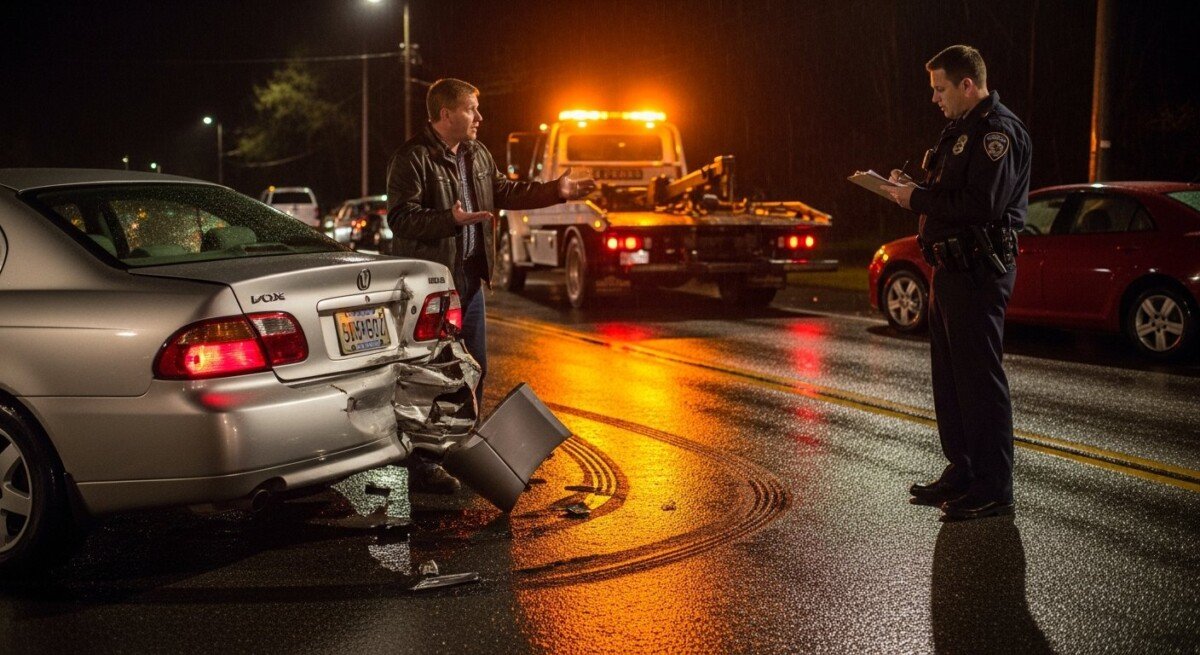
Incorrect Accident Report: What Happens Next
Learn what happens if an accident report is incorrect and how errors can affect your insurance claim. Call (833) 227-7919 for legal guidance.

By Miles Thornbury
A police accident report is often the first official record created after a car crash. Insurance adjusters, attorneys, and even judges rely on this document to determine fault and calculate damages. But what happens if the accident report is incorrect? An error in the report can derail your claim, reduce your settlement, or even shift blame to you unfairly. Understanding the consequences of a flawed report and knowing how to correct it can mean the difference between a fair recovery and a costly denial.
Imagine this scenario: you are rear-ended at a stoplight. The other driver admits fault at the scene. However, the responding officer writes in the report that you made an unsafe lane change before the collision. Suddenly, the insurance company uses that error to argue you were partially at fault. You now face reduced compensation or a flat denial. This is a common reality when reports contain mistakes. The report carries significant weight in negotiations and litigation, so any inaccuracies must be addressed promptly.
Why Accident Report Accuracy Matters
An accident report serves as a neutral, third-party account of the incident. Insurance companies treat it as a credible source of facts. When the report contains errors, it creates a false narrative that can influence every stage of your claim. For example, if the report lists the wrong location, the wrong time, or the wrong sequence of events, the insurer may question your version of the story. They might even deny liability based on the officer’s mistaken observations.
In legal disputes, the report can be introduced as evidence in court. A judge or jury may give it substantial weight because the officer is considered an unbiased professional. If the report incorrectly states that you were speeding, for instance, you could be found partially or fully at fault for the crash. This can reduce your damages or bar recovery entirely in some states. Therefore, understanding what happens if accident report is incorrect is critical for protecting your rights.
Common Types of Errors in Accident Reports
Errors in accident reports are more common than many people realize. Officers work under pressure at crash scenes, and they may miss details or misinterpret events. Some of the most frequent mistakes include:
- Incorrect party identification: The officer may list the wrong driver as at fault or miss a contributing factor like a third vehicle.
- Wrong date, time, or location: These details can affect insurance deadlines and venue for legal filings.
- Misstated facts: The report might describe the collision sequence inaccurately, such as saying you changed lanes when you did not.
- Omitted witnesses: Witness statements that support your case may be left out entirely.
- Errors in diagrams or measurements: Skid marks, point of impact, and vehicle positions can be drawn incorrectly.
Each of these errors can have a ripple effect on your claim. For example, a wrong location might place you in a jurisdiction with different traffic laws or insurance requirements. A missing witness statement could deprive you of key corroborating evidence. It is essential to review the report as soon as it is available and identify any inaccuracies.
How an Incorrect Report Affects Your Insurance Claim
Insurance adjusters rely heavily on the police report when evaluating fault. If the report says you were at fault, the adjuster will likely use that as a basis to deny your claim or offer a low settlement. Even if the report is neutral but contains factual errors, the adjuster may question your credibility. For instance, if the report says you were driving 45 mph in a 35 mph zone, but you were actually going 35, the adjuster might argue you were speeding and therefore partially negligent.
In some cases, an incorrect report can trigger a coverage dispute. Your own insurance company might deny your collision or medical payments coverage if the report suggests you were engaged in illegal activity, such as reckless driving. Additionally, if the report incorrectly states that you fled the scene or were under the influence, you could face criminal implications beyond the civil claim. The stakes are high, which is why you should not ignore errors.
To understand the full scope of potential damage, read our detailed analysis on accident report errors and their impact on your case. That resource explains how even small mistakes can snowball into major obstacles.
Steps to Correct an Inaccurate Accident Report
If you discover an error in your accident report, do not panic. You have options to correct the record, but time is of the essence. Follow these steps:
- Obtain a copy of the report: Request the official report from the responding police department or through your state’s crash reporting system. Review every field carefully.
- Document the error: Write down what is incorrect and gather evidence that proves the mistake. This could include photos, videos, witness statements, or your own notes.
- Contact the reporting officer: Reach out to the officer who wrote the report. Politely explain the error and provide your supporting evidence. They may agree to file a supplemental or corrected report.
- File a formal request for amendment: If the officer does not cooperate, contact the police department’s records division or internal affairs. Some states have a formal process for correcting accident reports.
- Notify your attorney: If you have legal representation, inform your lawyer immediately. They can handle the correction process and ensure your rights are protected.
It is important to act quickly. Some police departments have strict deadlines for requesting corrections, often within 30 days of the report being filed. If you wait too long, the error may become part of the permanent record. In our guide on correcting an inaccurate accident report, we walk through the process in more detail.
When the Report Cannot Be Changed
Sometimes, despite your best efforts, the officer refuses to amend the report. This can happen if the officer believes their original observations were correct or if the department has a policy against revisions. In such cases, you are not without recourse. You can still challenge the report’s accuracy during settlement negotiations or in court.
Your attorney can depose the officer and question them about the basis of their conclusions. They can also present your own evidence, such as dashcam footage or expert accident reconstruction, to contradict the report. While the report remains in the record, it does not have to be the final word. A skilled lawyer can argue that the report is unreliable and should be given little weight by the factfinder.
Another option is to file a motion with the court to exclude the report or certain portions of it as evidence. This is a strategic decision that depends on the nature of the error and the strength of your counter-evidence. For more on this, see our article on handling unchangeable accident report errors.
Legal Consequences of a False Report
While most errors are unintentional, a false report made with malicious intent or gross negligence can have serious consequences for the officer and the department. If you can prove that the officer deliberately falsified information, you may have grounds for a civil rights claim or a complaint with the police oversight board. However, this is rare and requires strong evidence.
For the driver, relying on a false report can lead to wrongful denial of insurance benefits, increased premiums, or even criminal charges if the report alleges DUI or hit-and-run. If you are charged with a crime based on an incorrect report, you need a criminal defense attorney immediately. The report alone is not enough to convict you, but it can be used against you in court.
It is also worth noting that insurance companies sometimes use incorrect reports to justify bad faith practices. If the insurer refuses to investigate or corrects the error themselves, you may have a bad faith claim against them. Consulting with a legal professional is the best way to evaluate your options.
Frequently Asked Questions
Can I dispute an accident report with my insurance company?
Yes, you can dispute the report by providing your own evidence and explaining why the report is incorrect. However, the insurance adjuster may still rely on the report unless you have strong counter-evidence. It is often helpful to have an attorney present your dispute.
How long do I have to correct an accident report?
Deadlines vary by state and police department. Some allow corrections within 30 to 60 days, while others have no formal deadline. It is best to act as soon as you discover the error to maximize your chances of success.
Will correcting the report guarantee a better settlement?
Not automatically, but it removes a major obstacle. A corrected report that accurately reflects the facts can strengthen your negotiating position and make it harder for the insurer to deny liability.
Do I need a lawyer to fix an accident report?
Not always, but having legal representation is advisable, especially if the error is significant or if you are facing a dispute with the insurance company. An attorney can handle communications with the police and the insurer on your behalf.
If you have additional questions about your specific situation, do not hesitate to seek professional guidance. Every case is unique, and the steps you take can affect your recovery.
An incorrect accident report does not have to ruin your claim. By understanding what happens if accident report is incorrect and taking proactive steps to address errors, you can protect your rights and pursue the compensation you deserve. Whether you correct the report or challenge it in court, knowledge is your strongest tool. Review the document carefully, gather your evidence, and consult with an experienced attorney to ensure the record reflects the truth.