Accident Report Errors: What Happens If It Is Wrong
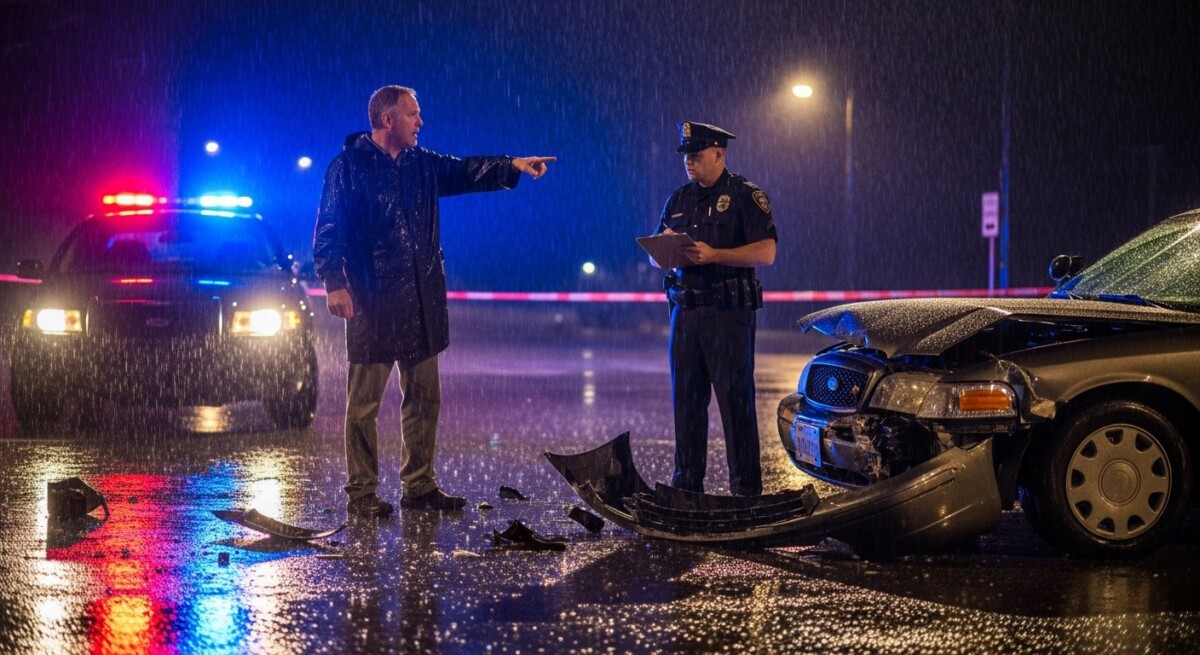
When you are involved in a car crash, the police accident report often becomes the official record of what happened. Insurance companies, lawyers, and even judges rely on this document to determine fault and calculate compensation. But what happens if accident report is incorrect? A mistake on this critical document can derail your claim, reduce your settlement, or even leave you falsely blamed for the collision. Understanding the consequences of an inaccurate report and knowing how to fix it can protect your rights and your financial recovery.
Why Accident Reports Matter in Legal and Insurance Claims
An accident report is not just a piece of paper. It is a snapshot of the incident created by a trained officer who is presumed to be objective. Insurance adjusters use the report to assign liability percentages. Attorneys use it to build their arguments. If the report contains an error in the location, the direction of travel, the number of vehicles involved, or the officer’s narrative of how the crash occurred, the entire foundation of your claim can shift.
For example, if the report states that you were speeding when you were actually traveling at the speed limit, the insurer may deny your claim or offer a fraction of what you deserve. In our guide on Incorrect Accident Report: What Happens Next, we explain how a single factual error can multiply into a legal headache. The report carries weight because it is created soon after the event, when memories are fresh and evidence is still visible. Courts often give it significant deference unless you can prove it is wrong.
Common Types of Errors Found in Accident Reports
Mistakes in accident reports are more common than most people realize. Officers work under pressure, often at night or in bad weather, and they rely on statements from drivers who may be shaken or dishonest. Some errors are minor, while others are catastrophic to your case.
Before you panic about what happens if accident report is incorrect, consider these frequent categories of mistakes:
- Factual errors: Wrong date, time, location, or weather conditions. These seem small but can contradict other evidence.
- Vehicle and party information: Incorrect license plate numbers, driver names, insurance policy numbers, or vehicle descriptions.
- Diagram and narrative mistakes: The officer draws the wrong angle of impact, mislabels lanes, or writes a narrative that blames the wrong driver.
- Citation errors: The officer cites you for a violation you did not commit, such as failure to yield when you had the right of way.
- Witness or statement omissions: The report fails to include a witness who saw the crash or misquotes what you said at the scene.
Each type of error carries different risks. A wrong license plate number is easy to fix. A narrative that says you ran a red light when you had a green light can destroy your claim. Understanding the distinction helps you prioritize which corrections matter most.
How an Incorrect Report Affects Your Insurance Claim
Insurance companies are in the business of minimizing payouts. They scan accident reports for any detail that supports a denial or a reduced offer. If the report contains an error that suggests you were at fault, the adjuster will seize on that mistake. You will then face an uphill battle to prove the report is wrong, all while the insurer uses it as a shield against paying what you deserve.
What happens if accident report is incorrect when you are trying to file a claim? The adjuster may delay the investigation, demand additional evidence, or issue a flat denial based on the officer’s findings. Even if the error is on a minor point, the insurer can argue that the report is credible because it was created by a neutral third party. You then have to spend time and money gathering photographs, witness affidavits, or expert testimony to contradict the official record.
Consider a scenario where the report says your car was stopped in the middle of the road, but dashcam footage shows you were stopped at a red light. Without the video, the insurer might use the erroneous report to claim you were negligent. The lesson is clear: the sooner you identify and challenge an error, the better your chances of preserving your claim’s value.
Legal Consequences of an Inaccurate Report
Beyond insurance, an incorrect accident report can have legal ramifications. If the report includes a citation for a moving violation, you may face fines, points on your license, or increased premiums. In more serious cases involving injuries or fatalities, an erroneous report could influence criminal charges or civil lawsuits.
For example, if the officer writes that you were driving under the influence when you were sober, that statement could trigger a DUI investigation. Even if the charge is later dropped, the existence of the report can haunt you in court. Similarly, if the report incorrectly states that you caused the accident, the other driver’s attorney may use it to pressure you into a settlement that admits fault.
Our article on Incorrect Accident Report: What Happens Next details how attorneys challenge flawed reports in litigation. The key takeaway is that you cannot ignore a mistake. Silence can be interpreted as agreement with the officer’s version of events.
Steps to Correct an Error on Your Accident Report
If you discover a mistake, act quickly. Most states have a limited window to request corrections, often within 10 to 30 days of the report being filed. Waiting too long can make the process more difficult or even impossible.
Here is a step-by-step approach to fixing the record:
- Obtain a copy of the report. Request it from the police department that responded to the crash. Review every section for errors.
- Gather supporting evidence. Collect photos, videos, witness statements, and any other documentation that proves the error.
- Contact the reporting officer or agency. Call or visit the police department and explain the mistake. Be polite and provide your evidence. Some agencies allow informal corrections.
- File a formal request for amendment. If the officer refuses, ask about the formal process. This may involve submitting a sworn affidavit or a written statement detailing the correct facts.
- Notify your insurance company. Send the corrected report to your insurer. Do not assume they will automatically receive the updated version.
Remember that officers are not required to change their opinions. They can only correct clear factual errors, such as a wrong date or misspelled name. If the dispute is about the officer’s interpretation of events, you may need an attorney to challenge the report in a different forum, such as during settlement negotiations or at trial.
When to Hire an Attorney for a Report Dispute
Some errors are too serious to handle alone. If the mistake involves fault determination, a traffic citation, or a significant financial loss, legal representation becomes critical. An experienced attorney knows how to depose the officer, subpoena dashcam footage, and present alternative evidence that undermines the report’s credibility.
What happens if accident report is incorrect and you cannot get it fixed? The report remains in the official record, but it is not the final word. In court, you can introduce evidence that contradicts the report. The jury or judge will weigh the competing evidence. An attorney can help you build a strong case by focusing on the objective facts rather than the officer’s narrative.
You can read more about these strategies in our piece on Incorrect Accident Report: What Happens Next which covers legal remedies for unreported errors. The cost of hiring a lawyer is often offset by the increase in settlement value that comes from correcting or challenging a flawed report.
How to Prevent Errors in the First Place
Prevention is always better than correction. At the scene of the accident, you can take steps to ensure the officer has accurate information. Stay calm, provide your version of events clearly, and point out any witnesses or evidence the officer might miss. If you have a dashcam, tell the officer about the footage immediately.
After the officer leaves, write down everything you remember about the crash while it is still fresh. Note the names and badge numbers of the officers, the time they arrived, and any statements they made. This personal record can help you spot discrepancies when you review the official report.
Also, do not admit fault or apologize at the scene. Anything you say can end up in the report and be used against you. Stick to the facts: what you saw, what you did, and what happened. Let the investigation determine fault.
Frequently Asked Questions
Can I dispute a police accident report? Yes. You can request a correction from the police department or challenge the report in court with supporting evidence.
How long do I have to correct an accident report? It varies by state. Many jurisdictions allow 10 to 30 days from the date the report was filed. Check with the local police department for specific deadlines.
Will an incorrect report automatically deny my claim? Not automatically, but it gives the insurance company a reason to dispute your version of events. You will need to provide evidence to override the report.
What if the officer refuses to correct the report? You can still introduce contradictory evidence in your insurance claim or lawsuit. An attorney can help you navigate this situation.
Does a corrected report guarantee a better settlement? It improves your position significantly, but it does not guarantee a specific outcome. Other factors like policy limits and shared fault also matter.
For a deeper look at how errors affect the legal process, see our detailed analysis on Incorrect Accident Report: What Happens Next.
An incorrect accident report is a serious obstacle, but it is not an insurmountable one. By catching the error early, gathering evidence, and seeking professional help when needed, you can protect your right to fair compensation. The report is just one piece of the puzzle. Your testimony, your evidence, and your persistence matter just as much. Do not let a typo or a flawed narrative cost you thousands of dollars. Take action, correct the record, and move forward with confidence.