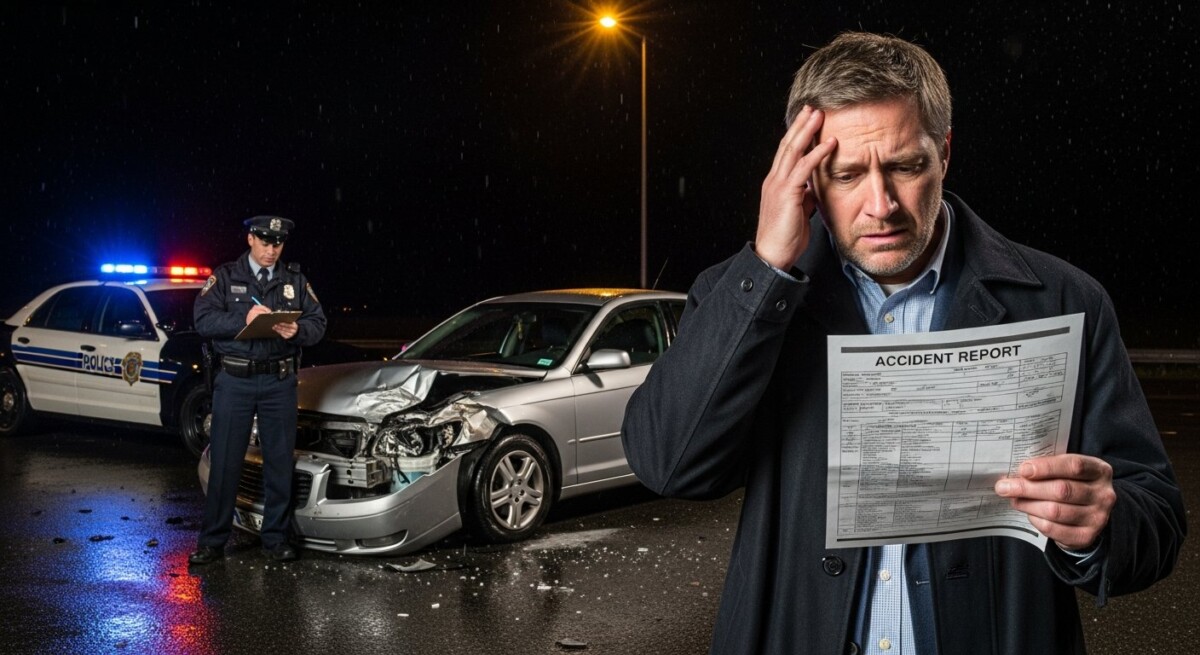
What Happens If Accident Report Is Incorrect: Key Risks
When you are involved in a car crash, the police accident report becomes a critical document. Insurance companies, attorneys, and courts rely on it to determine fault, calculate damages, and process claims. But what happens if accident report is incorrect? The consequences can range from delayed claim payments to outright denial of coverage. Even a small error, such as a wrong license plate number or an inaccurate description of road conditions, can shift liability in the wrong direction. Understanding the risks, your rights, and the steps to correct a flawed report is essential for protecting your financial recovery.
Why Accuracy Matters in Police Accident Reports
A police accident report is often the first official record created after a collision. Officers gather information from drivers, witnesses, and physical evidence to compile a narrative of the event. This report typically includes the date, time, location, involved parties, vehicle details, a diagram of the crash, and the officer’s opinion on who caused the accident. Because insurers treat this document as a neutral, third-party account, they rarely question its findings unless presented with strong counter-evidence.
When errors creep into this report, the entire claims process can falter. For example, if the report incorrectly states that you ran a red light when you had a green signal, the insurance adjuster may deny your claim or assign you a higher percentage of fault. In our guide on accident report errors what happens if it is wrong, we explain how these mistakes can snowball into larger legal problems. The bottom line is that an inaccurate report does not just cause inconvenience; it can cost you thousands of dollars in lost compensation.
Common Types of Errors in Accident Reports
Accident reports can contain many kinds of mistakes. Some are simple clerical errors, while others involve factual misstatements that directly affect liability. Being aware of the most common errors can help you spot them quickly if they appear in your report.
Here are the most frequently seen inaccuracies:
- Incorrect driver or vehicle information: Wrong name, address, license number, or vehicle identification number (VIN).
- Factual errors about the crash: Wrong time of day, weather conditions, or road surface details that change the narrative.
- Fault assignment mistakes: The officer may misjudge who caused the accident based on incomplete witness statements or missing evidence.
- Missing or inaccurate witness statements: Key witnesses may be omitted, or their statements may be paraphrased incorrectly.
- Diagram or measurement errors: Skid marks, vehicle positions, and point of impact may be drawn incorrectly.
Each of these errors can undermine your claim. For instance, if the report misstates the weather as rainy when it was clear, the officer’s conclusion about your speed or braking may be flawed. This is why reviewing every detail of the report is the first step toward protecting your case. For a deeper look at the specific types of mistakes and their impacts, see our article on what happens if an accident report is incorrect.
How Inaccurate Reports Affect Insurance Claims and Lawsuits
The ripple effects of a wrong accident report extend far beyond the initial paperwork. Insurance adjusters use the report as a shortcut to determine fault. If the report says you are at fault, the adjuster will likely offer a low settlement or deny your claim entirely, even if the evidence actually supports your version of events. This can force you into a lengthy appeals process or litigation.
In court, the report carries even more weight. Judges and juries tend to trust police officers as neutral professionals. If your attorney has to spend time attacking the credibility of the report, it shifts the focus away from the facts that support your case. Additionally, if the report contains an error that benefits the other driver, that driver’s lawyer will use it aggressively to argue that you were negligent. In our post about wrong accident report what happens next, we outline the procedural steps you can take to counter these negative effects.
Furthermore, an incorrect report can affect your insurance premiums. If the report is submitted to your insurer and it shows you at fault, your rates may increase even if the error is later corrected. Some states allow insurers to use police reports as a basis for rate adjustments, so acting quickly to correct mistakes is essential to avoid long-term financial consequences.
Steps to Correct an Inaccurate Accident Report
If you discover an error in your accident report, you do not have to accept it as final. Most states have a formal process for requesting corrections. The key is to act promptly and provide supporting evidence. Here is a step-by-step approach to getting the report amended.
- Obtain a copy of the report immediately. You can usually request it from the police department that responded to the accident. Review it thoroughly within a few days of the crash.
- Document the specific errors. Highlight each mistake and note what the correct information should be. If possible, gather supporting evidence such as photos, dashcam footage, or witness statements.
- Contact the responding officer or agency. Call or visit the police department and explain the errors. In many cases, the officer can file a supplemental report or amend the original if you provide credible evidence.
- Submit a formal request in writing. If the officer is uncooperative, send a written request to the agency’s records division. Include copies of your evidence and reference the report number.
- Consult an attorney if necessary. If the error is significant and the agency refuses to correct it, a lawyer can help you file a petition with the court or use other legal remedies to force a correction.
It is important to note that not all errors can be removed. Some opinions, such as the officer’s belief about who caused the accident, are subjective and may be harder to change. However, factual errors like wrong dates or vehicle descriptions are almost always correctable. For more on this process, read our resource on accident report errors what happens if it is incorrect, which covers the correction timeline and common obstacles.
When Legal Help Becomes Essential
While minor errors can often be resolved by contacting the police department, major inaccuracies that affect fault determination may require legal intervention. If the report wrongly states that you were speeding, distracted, or under the influence, those claims can devastate your case. An attorney experienced in accident law can help you gather expert testimony, reconstruct the accident, and present counter-evidence to the insurance company or court.
Additionally, if the insurance company has already used the incorrect report to deny or reduce your claim, a lawyer can challenge that decision. They can file a formal dispute, negotiate a settlement, or take the case to trial. In some situations, if the error was caused by police negligence or misconduct, you might have grounds for a separate claim against the agency. However, these cases are rare and require strong evidence of wrongdoing.
Remember that time limits apply. Insurance companies have deadlines for filing claims and appeals, and statutes of limitations govern how long you have to file a lawsuit. Waiting too long to address an incorrect report can permanently bar your right to seek full compensation.
Frequently Asked Questions
Can I dispute a police accident report after it has been filed?
Yes. You can request a correction or file a supplemental report. Contact the police department that created the report and provide evidence to support your corrections. If they refuse, an attorney can help you escalate the matter.
Will an insurance company automatically accept a police report as fact?
Not automatically, but they give it significant weight. If you have strong counter-evidence, such as dashcam footage or independent witnesses, you can challenge the report’s conclusions. However, the burden is on you to prove the report is wrong.
How long do I have to correct an error in an accident report?
There is no universal deadline, but you should act as quickly as possible. Some police departments have internal policies requiring correction requests within 30 to 90 days. Additionally, insurance claims and lawsuits have their own filing deadlines that may be shorter.
What if the other driver caused the error in the report?
If the other driver gave false information to the officer, that is a separate issue. You can still request a correction based on the true facts. If the other driver lied deliberately, it may constitute fraud, which an attorney can address in court.
Does a corrected report guarantee a better settlement?
Not necessarily, but it removes a major obstacle. Once the report is corrected, your claim will be evaluated on the accurate facts. You still need to prove damages and liability, but a corrected report eliminates a false narrative that works against you.
Final Thoughts on Protecting Your Claim
An incorrect accident report is not the end of the road. You have the right to challenge errors and present the true facts of your case. Whether you notice a simple typo or a major misstatement of fault, taking action quickly can save you from a denied claim, higher premiums, or a lost lawsuit. Review your report as soon as you receive it, document every discrepancy, and do not hesitate to seek professional help when the stakes are high. By staying proactive, you can ensure that the official record reflects what really happened and that you receive the compensation you deserve.