When Your Accident Report Is Wrong: Next Steps

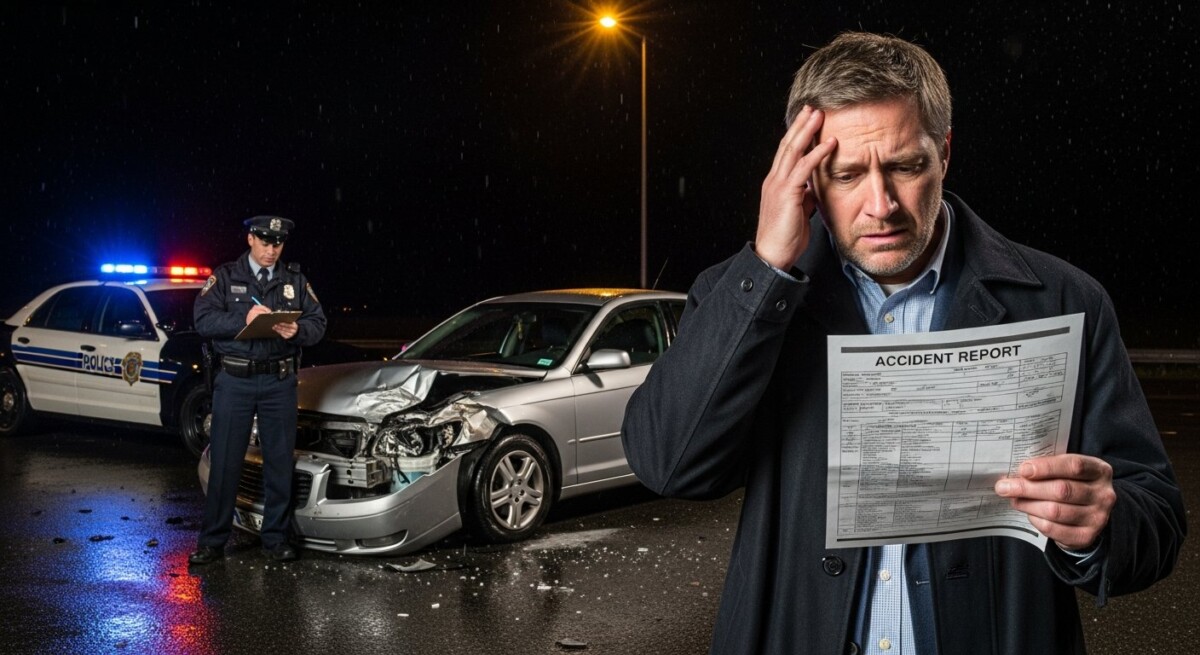
You are sitting at home after a car crash, and a copy of the police accident report arrives in your mailbox. You scan the document and freeze. The officer wrote that you were speeding. Your car is listed as the wrong color. The other driver’s statement is recorded as fact, while your account is barely mentioned. These errors might seem small, but they can cost you thousands of dollars and even derail your entire insurance claim. An incorrect accident report is not just a clerical mistake. It is a legal document that insurers, lawyers, and courts rely on to determine fault. If the report is wrong, you need to act fast to protect your rights and your recovery.
Police officers are human, and humans make mistakes. They arrive at chaotic scenes, interview stressed witnesses, and jot down notes in poor lighting. Errors creep in: wrong dates, swapped lane positions, misstated speeds, or even the wrong driver named as at fault. The problem is that once that report is filed, it becomes the official record. Insurance adjusters treat it as gospel. If the report says you caused the accident, your premium may skyrocket, your claim may be denied, or you might face a lawsuit. Understanding what happens if an accident report is incorrect is the first step toward correcting the record and protecting your financial future.
Fortunately, you are not stuck with a bad report. There are established procedures to challenge errors, amend records, and present your side of the story. This article walks you through the consequences of an inaccurate report, the steps you can take to fix it, and why timing matters. Whether the error is a simple typo or a major fault determination, you need a clear plan. Let us break down exactly what happens if an accident report is incorrect and how you can fight back.
Why Accuracy Matters in Accident Reports
A police accident report serves as the foundation for almost every decision after a crash. Insurance companies use it to assign liability. Lawyers use it to build their cases. Judges and juries may rely on it if the dispute goes to trial. When the report contains errors, the entire claims process can go off the rails. For example, if the report incorrectly states that you failed to yield, the other driver’s insurer may deny your claim entirely. You could be left paying for medical bills, car repairs, and lost wages out of your own pocket.
The report also affects your insurance premiums. If the report names you as the at-fault driver, your insurer may raise your rates or even drop your policy. In some states, the report is used by the Department of Motor Vehicles to assess points on your license. An error that makes you look reckless could lead to license suspension or mandatory traffic school. Beyond the immediate financial impact, a wrong report can haunt you for years. Future insurers will ask about your accident history, and a report that blames you unfairly can follow you like a shadow.
In our guide on accident report errors and what happens if it is wrong, we explain how even minor inaccuracies can snowball into major legal headaches. The key takeaway is that you cannot afford to ignore a mistake. Every day that passes with an uncorrected error makes it harder to prove the truth. Witnesses forget details, physical evidence gets cleaned up, and the official record becomes harder to change.
Common Types of Errors in Accident Reports
Not all errors are created equal. Some are simple typos that cause no real harm. Others are fundamental misstatements of fact that can destroy your case. Recognizing the type of error you are dealing with helps you decide how aggressively to pursue a correction. Here are the most common categories of mistakes found in accident reports:
- Factual errors: Wrong date, time, location, or weather conditions. These are usually easy to fix because they are objective and verifiable.
- Vehicle and driver information: Incorrect license plate numbers, VINs, driver’s license numbers, or insurance policy details. These can cause delays in claim processing.
- Diagram and narrative mistakes: The officer’s sketch shows the wrong positions of the vehicles, or the written narrative contradicts the physical evidence like skid marks or damage patterns.
- Fault determination: The officer assigns blame to the wrong party based on incomplete information or witness bias. This is the most damaging type of error.
- Omitted information: The report fails to mention a contributing factor such as the other driver running a red light or speeding.
Each type of error requires a different approach. A simple typo may only need a phone call to the police department. A disputed fault determination may require you to submit photographic evidence, witness statements, or even hire an accident reconstruction expert. The more serious the error, the more documentation you will need to overturn it. Do not assume that small mistakes will be ignored by insurers. They often use any ambiguity to reduce your settlement or deny your claim.
What Happens If an Accident Report Is Incorrect: The Immediate Consequences
When you discover an error, the clock starts ticking. Insurance companies typically process claims quickly, and they base their initial decisions on the police report. If the report is wrong, you may receive a denial letter within days. That letter will cite the report as the reason for the denial. At that point, you are in a fight to reverse the decision, and the burden of proof shifts to you. You must show that the report is inaccurate and that the insurer should have relied on other evidence instead.
Another immediate consequence is that the other driver’s insurance company may use the report to pressure you into a lowball settlement. They will say, “The police report shows you were at fault, so take this offer or get nothing.” Many people accept these unfair offers because they do not know how to challenge the report. They assume the police must be right. That assumption can cost them thousands of dollars in compensation they deserve. Understanding what happens if an accident report is incorrect empowers you to push back against such tactics.
In our article on what happens next with an incorrect accident report, we detail how quickly these consequences unfold. The best defense is a proactive offense. As soon as you spot an error, you should begin gathering evidence to support your version of events. Take photos of the scene, collect witness contact information, and get a copy of any surveillance footage from nearby businesses. The stronger your evidence, the harder it is for insurers or police to ignore your correction request.
How to Correct an Incorrect Accident Report
Correcting a police report is not always easy, but it is possible. The process varies by jurisdiction, but there are general steps that work in most cases. You should start by contacting the law enforcement agency that wrote the report. Ask to speak with the officer’s supervisor or the records division. Explain the error clearly and provide supporting evidence. Be polite and professional; the goal is to collaborate, not to accuse.
If the error is minor, the officer may agree to file a supplemental report or an amended report. This is an addendum that corrects the mistake without deleting the original entry. For major errors, you may need to submit a formal request in writing. Include your name, the report number, the date of the accident, a description of the error, and copies of your evidence. Keep a copy of everything you send. Follow up within a week if you do not receive a response.
If the police department refuses to correct the report, you have other options. You can request a hearing with the department’s internal affairs division. You can also contact your state’s attorney general or file a complaint with the state police oversight board. In extreme cases, you may need to hire a lawyer to file a motion in court to have the report corrected or excluded from evidence. The path forward depends on the severity of the error and how much is at stake. For a detailed breakdown of these procedures, read our post about what happens next with an incorrect accident report.
Gathering Evidence to Support Your Correction
Evidence is your strongest tool when challenging an incorrect report. The more objective proof you have, the harder it is for the police or insurers to dismiss your claim. Start with your own photographs. If you took pictures at the scene before the cars were moved, those images can show the actual positions of the vehicles, the damage patterns, and the road conditions. Skid marks, debris, and traffic light signals are all visible in photos and can contradict a written narrative.
Witness statements are also powerful. If a bystander saw the accident and agrees with your account, ask them to write a signed statement or provide a recorded interview. Witnesses who are independent (not your friends or family) carry more weight with police and insurers. If the other driver made any admissions at the scene, write down exactly what they said as soon as possible. Admissions like “I didn’t see you” or “I was texting” can be gold when the report says something different.
Finally, consider obtaining any available surveillance footage. Businesses, traffic cameras, and even nearby homes may have recorded the accident. Footage is the most compelling evidence because it cannot be disputed. If the video shows that the other driver ran a red light, the police report’s claim that you caused the crash will be impossible to defend. Act quickly, though, because many surveillance systems overwrite footage after a few days or weeks.
When You Need a Lawyer to Fight an Incorrect Report
Not every error requires legal help. If the mistake is a simple typo, you can likely handle it yourself with a phone call. But when the error affects fault, liability, or the amount of your settlement, a lawyer becomes essential. Insurance companies have teams of adjusters and lawyers whose job is to minimize payouts. They will not take your word that the report is wrong. They will demand hard evidence and may still refuse to change their position.
A lawyer experienced in accident cases knows how to navigate the system. They can request the officer’s notes and dashcam footage from the patrol car. They can depose the officer to challenge their recollection. They can hire accident reconstruction experts to prove that the physics of the crash contradicts the report. Most importantly, a lawyer can negotiate with the insurance company from a position of strength. When the insurer sees that you have legal representation, they are far more likely to take your correction seriously.
In our guide on what happens next with an incorrect accident report, we discuss scenarios where legal intervention is not just helpful but necessary. If you have suffered serious injuries, lost significant income, or face a potential lawsuit from the other driver, do not try to fix the report alone. The cost of hiring a lawyer is a fraction of what you could lose by accepting an unfair outcome. Many personal injury lawyers offer free consultations, so you can get professional advice without upfront cost.
Frequently Asked Questions
Can I dispute a police accident report? Yes, you can dispute a report by contacting the issuing agency and providing evidence of the error. If the agency refuses to correct it, you may need to escalate to a supervisor, file a formal complaint, or seek legal help.
How long do I have to correct an accident report? There is no universal deadline, but you should act as quickly as possible. Evidence can disappear, and insurance companies make early decisions based on the report. Aim to start the correction process within days of receiving the report.
Will an incorrect report affect my insurance rates? Yes, if the report names you as at fault, your insurer may raise your rates regardless of whether the report is accurate. That is why correcting the error quickly is so important.
What if the other driver caused the accident but the report blames me? You have the right to challenge the report. Gather your evidence, including photos, witness statements, and video footage. If the police do not amend the report, your lawyer can present your evidence in court or during settlement negotiations.
Can I sue the police for an incorrect report? In most cases, police officers have qualified immunity for errors made during the course of their duties. However, if the error was intentional or the result of gross negligence, you may have grounds for a lawsuit. Consult with an attorney to evaluate your specific situation.
Taking Control After an Incorrect Report
An incorrect accident report can feel like a betrayal of the system designed to help you. But you are not powerless. The same system that allowed the error to happen also provides mechanisms for correction. By acting quickly, gathering strong evidence, and knowing your rights, you can fight back against an unfair report. Whether you handle the process yourself or hire a lawyer, the goal is the same: to ensure that the official record reflects the truth. The truth matters because it determines who pays for your medical bills, who repairs your car, and whether you receive fair compensation for your pain and suffering. Do not let a clerical error or an officer’s mistake rob you of the recovery you deserve. Take the first step today by reviewing your report and starting the correction process.