
What Is a Vocational Expert at a Disability Hearing?
Understand what a vocational expert at a disability hearing does and how their testimony can affect your SSDI claim. Call (833)-670-8160 for guidance.

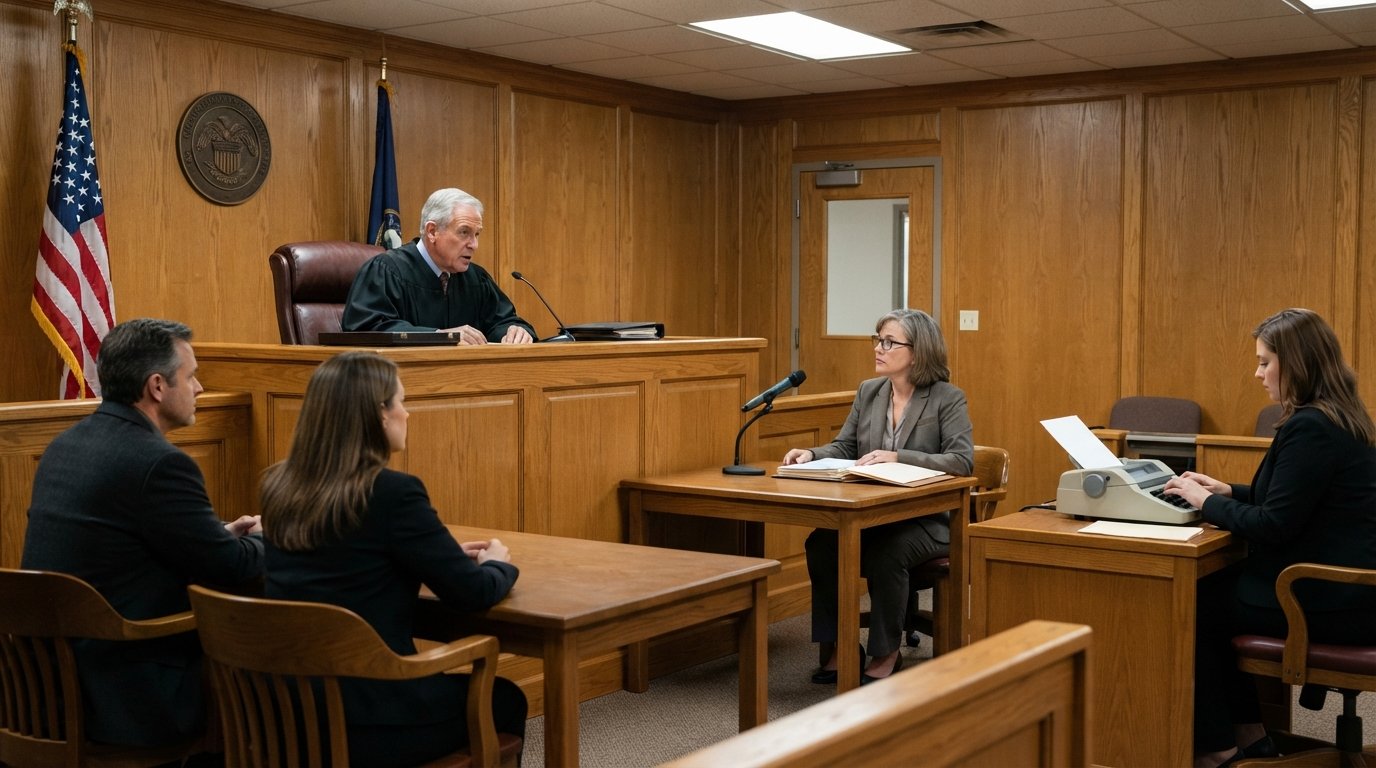
You have waited months for your Social Security disability hearing. You sit at a table with your attorney, and across the room sits a person you have never met, a vocational expert. The administrative law judge turns to this person and asks a hypothetical question about whether someone with your limitations could find work. Your entire claim may hinge on the answer. Understanding what a vocational expert does, how they testify, and how their testimony can be challenged is essential for anyone preparing for an SSDI or SSI hearing. This article explains the role of the vocational expert, the framework judges use to question them, and the practical steps you and your attorney can take to prepare. Note that this information is educational only and is not legal advice. For guidance on your specific case, consult a licensed attorney.
Who the Vocational Expert Is and Who They Work For
A vocational expert (VE) is a professional who testifies at disability hearings about jobs that exist in the national economy and whether a claimant with specific limitations can perform them. VEs typically have backgrounds in vocational rehabilitation, counseling, or human resources, and they are called upon to interpret occupational data. At a hearing, the VE does not work for you or for the Social Security Administration (SSA) in an advocacy capacity. Instead, the VE is a neutral witness who provides impartial testimony, though in practice their testimony often supports the agency's position. The VE is paid by the SSA for their time, which is a factor some claimants and attorneys consider when evaluating the weight of their testimony.
The VE's role is distinct from that of the medical expert, who testifies about your medical conditions and functional limitations. The VE focuses on the vocational side: given a set of limitations, what jobs, if any, can you perform? The VE consults resources such as the Dictionary of Occupational Titles (DOT), its companion publication the Selected Characteristics of Occupations (SCO), and the Occupational Information Network (O*NET). The DOT classifies jobs by exertional level (sedentary, light, medium, heavy, very heavy) and by skill level, and it lists physical demands, environmental conditions, and other requirements. The VE uses this data to answer the judge's questions.
It is important to understand that the VE does not decide your case. The administrative law judge (ALJ) makes the final decision. However, the VE's testimony can heavily influence the outcome, especially at step five of the sequential evaluation process, where the burden shifts to the SSA to show that other work exists in significant numbers that you can perform despite your limitations. If the VE identifies jobs that fit your residual functional capacity (RFC), the judge may deny benefits. If the VE testifies that no jobs exist, the judge may award benefits. Thus, the VE's testimony is often the pivotal evidence at the hearing.
How the Judge Frames Hypothetical Questions
The core of the VE's testimony comes in response to hypothetical questions posed by the ALJ. These questions are not about you personally; they describe a hypothetical person with specific limitations. The judge will ask the VE to assume a person of your age, education, and work experience who has certain physical and mental restrictions. For example, the judge might ask: "Assume a person of the claimant's age, education, and work history who can lift and carry 20 pounds occasionally, 10 pounds frequently, stand and walk for six hours in an eight-hour day, and sit for six hours. This person also has moderate limitations in concentration, persistence, or pace. Are there jobs such a person could perform?" The VE then consults the DOT and responds with job titles and numbers.
The judge may pose multiple hypothetical questions, each adding or removing limitations based on the evidence. Your attorney will also have the opportunity to question the VE, often by presenting a hypothetical that includes all of your credible limitations. The VE's answers to these competing hypotheticals can create a record that supports or undermines your claim. If the VE testifies that a person with your limitations cannot work, that testimony can be powerful evidence in your favor. If the VE identifies jobs, your attorney may challenge the basis of that testimony, including whether the jobs exist in significant numbers and whether the DOT descriptions accurately reflect the requirements.
The order and framing of hypothetical questions matter. The ALJ typically asks the first hypothetical, which may include only the limitations the judge finds credible. Your attorney may then ask a more restrictive hypothetical that includes additional limitations supported by the medical evidence. The VE's response to your attorney's hypothetical may be crucial. If the VE says that a person with the additional limitations could not work, your attorney will argue that the VE's testimony supports a finding of disability. If the VE says jobs exist even with the additional limitations, your attorney may need to challenge the VE's testimony on other grounds.
Challenging Vocational Expert Testimony About Available Jobs
Vocational expert testimony is not infallible. Attorneys can challenge it in several ways. One common challenge is that the VE's testimony conflicts with the DOT. Under Social Security Ruling 00-4p, the ALJ has an affirmative duty to ask the VE whether their testimony conflicts with the DOT and to resolve any conflicts. If the VE identifies a job that requires a limitation you do not have (for example, frequent reaching when you are limited to occasional reaching), your attorney can point out the conflict. The ALJ must then explain why the VE's testimony is more persuasive than the DOT or why the conflict does not affect the outcome.
Another challenge involves the number of jobs the VE identifies. The VE may testify that a particular job exists in significant numbers nationally or in the regional economy. Your attorney can question the source of those numbers. The VE may rely on software such as Job Browser Pro or on their own experience, and the reliability of those sources can be challenged. If the VE identifies only a handful of jobs, your attorney may argue that the numbers are not significant. The SSA does not have a precise threshold for "significant numbers," but courts have found that very small numbers may be insufficient.
A third challenge concerns the VE's use of the DOT versus O*NET. The DOT was last updated in 1991 and is widely considered outdated. O*NET provides more current job descriptions but does not use the same classification system. Attorneys may question the VE about whether the jobs they identified actually exist as described in the DOT in today's economy. For example, the DOT may list a job as unskilled, but the actual job in the modern economy may require skills or physical demands that exceed your RFC. Your attorney can cross-examine the VE on these discrepancies.
Finally, the VE's testimony can be challenged if it is based on assumptions that are not supported by the evidence. The VE must base their testimony on the hypothetical limitations provided by the judge. If the judge's hypothetical does not include all of your credible limitations, your attorney can ask the VE to consider additional limitations. If the VE's answer changes, that can support your case. If the VE's answer does not change, your attorney may argue that the VE's testimony is not realistic or that the additional limitations would not affect the job base in the way the VE claims.
The Dictionary of Occupational Titles and Job Classification Issues
The Dictionary of Occupational Titles (DOT) is a publication of the U.S. Department of Labor that classifies jobs by their requirements. It lists over 12,000 job titles and describes the physical demands, skill level, and working conditions for each. The SSA relies heavily on the DOT in disability adjudication. The DOT assigns each job a specific vocational preparation (SVP) level, which indicates the time required to learn the job, and a physical demand level (sedentary, light, medium, heavy, very heavy). The SSA uses these classifications to determine whether a claimant can perform past relevant work or other work.
One major issue with the DOT is its age. The data was collected decades ago, and many jobs have changed or disappeared. For example, the DOT lists jobs that no longer exist in the same form, such as certain manufacturing or clerical positions. The SSA has acknowledged this limitation and has issued guidance on using more current sources. However, the DOT remains the primary reference at hearings. Attorneys may challenge the VE's reliance on the DOT by pointing out that the job descriptions are outdated and may not reflect the actual requirements of the job today. The VE may then rely on their own experience or on O*NET data, which can be another source of challenge.
Another classification issue involves the distinction between unskilled, semi-skilled, and skilled work. The SSA's grid rules use these categories to determine disability at step five. If the VE classifies a job as unskilled when the DOT classifies it as semi-skilled, that could affect the outcome. Your attorney can cross-examine the VE on the SVP level and on whether the job requires skills that you do not have. Similarly, the VE may identify a job at a certain exertional level, but your RFC may limit you to a lower level. The VE's testimony must be consistent with the DOT or the ALJ must resolve the conflict.
In addition, the VE may use the concept of "transferable skills" when you are of advanced age and cannot perform past work. The VE may testify that you have skills from past work that transfer to other jobs. Your attorney can challenge whether those skills are truly transferable and whether the other jobs exist in significant numbers. The SSA has specific rules on transferable skills, and the VE's testimony must comply with them. If the VE's testimony on transferable skills is vague or unsupported, your attorney can argue that it should be given little weight.
How to Prepare with an Attorney Before the Hearing
Preparation is critical. Before the hearing, your attorney will review your medical records, work history, and the SSA's file. Your attorney will also review the VE's qualifications and may obtain the VE's resume or curriculum vitae if it is available. Understanding the VE's background can help your attorney anticipate the VE's testimony and prepare cross-examination questions. In our guide on how to prepare for a Social Security disability hearing, we explain the importance of reviewing the evidence and understanding the vocational issues. Your attorney will also prepare you to testify about your limitations, your daily activities, and your past work. Your testimony must be consistent with the medical evidence and with the hypothetical questions your attorney will pose to the VE.
Your attorney may also prepare a hypothetical question that accurately reflects all of your limitations. This question should be based on the medical evidence and should include both physical and mental restrictions. Your attorney will ask the VE this hypothetical at the hearing, and the VE's answer may determine the outcome. If the VE says that a person with your limitations cannot work, your attorney will argue that the VE's testimony supports a finding of disability. If the VE says that jobs exist, your attorney will be ready to challenge the VE's testimony on the grounds discussed above.
You can also help your attorney by providing detailed information about your past work. Describe your job duties, the physical requirements, the tools you used, and the skills you needed. This information helps your attorney and the VE understand your vocational background. If your past work was performed at a higher exertional level than the DOT indicates, your attorney can bring that to the VE's attention. Similarly, if your past work required skills that are not reflected in the DOT, your attorney can use that to challenge the VE's testimony about transferable skills. Being thorough and honest about your work history is essential.
Finally, your attorney may consider consulting a vocational expert of your own. A private VE can review your file and provide an opinion about whether jobs exist that you can perform. This can be useful if the SSA's VE identifies jobs that your attorney believes are inconsistent with your limitations. A private VE can also help your attorney prepare cross-examination questions and can testify at the hearing if necessary. However, private VEs can be expensive, and your attorney will discuss whether this is a good strategic choice for your case. For those seeking to connect with legal professionals who handle disability claims, resources such as AttorneyLeads can help attorneys find clients, but individuals should consult a qualified attorney directly for advice on their case.
The vocational expert is a central figure at a disability hearing. Understanding their role, the way the judge questions them, and the ways their testimony can be challenged gives you a significant advantage. With careful preparation and skilled representation, you can present your case effectively and address the vocational issues that may determine the outcome. If you are preparing for a hearing, consult a qualified disability attorney who can guide you through the process and advocate on your behalf.