
Slip and Fall on Commercial Property: Who Is Responsible?
Slip and fall on commercial property who is responsible? Learn how to hold negligent owners accountable and recover damages. Call (833)-670-8160 for a free case review.

A sudden slip on a wet grocery store floor or a trip over an uneven parking lot curb can leave you with serious injuries, mounting medical bills, and a confusing question: who is actually at fault? The answer is rarely simple, and it depends on a web of legal duties, notice requirements, and evidence that must be preserved quickly. Understanding the responsible party is the first step toward protecting your rights and pursuing fair compensation.
Commercial property owners have a legal obligation to keep their premises reasonably safe for visitors. When they fail to do so, they can be held liable for injuries that result. But proving responsibility requires more than showing that a hazard existed; you must demonstrate that the owner knew or should have known about it and had a reasonable opportunity to fix it. This article breaks down the key legal principles, the evidence that matters most, and the practical steps to take after a fall. If you are considering a claim, you may also want to review our guide on whether you can sue the property owner for additional context.
Premises Liability Basics: The Duty Owed to Different Visitors
Premises liability law categorizes visitors based on their reason for being on the property, and the level of care owed by the owner varies accordingly. In most states, the highest duty is owed to invitees, people who are on the property for a commercial purpose or who are open to the public. Shoppers in a retail store, diners in a restaurant, and customers using a parking lot are typically invitees. Property owners must exercise reasonable care to inspect for hazards, warn of known dangers, and remedy unsafe conditions in a timely manner.
Licensees are individuals who enter for their own purposes but with the owner's permission, such as a social guest or a salesperson making a delivery. Owners must warn licensees of known hazards that the licensee is unlikely to discover, but they have no duty to inspect for hidden dangers. Trespassers, those who enter without permission, are owed the lowest duty: owners generally must refrain from willful or wanton harm, but they have no obligation to keep the premises safe. Some states have abolished these categories in favor of a single reasonable care standard, but the distinctions still matter in many jurisdictions.
For a slip and fall on commercial property, the injured person is almost always an invitee. That status triggers the broadest duty: the owner must not only fix known hazards but also actively look for them through reasonable inspections. The frequency of those inspections depends on the nature of the business and the likelihood of the hazard. A grocery store with produce displays that shed leaves and water requires more frequent monitoring than a quiet office lobby. If you can show that the owner's inspection schedule was inadequate or nonexistent, you strengthen your case for responsibility.
Notice Requirements: Proving the Owner Knew or Should Have Known
One of the most contested issues in slip and fall cases is notice. You must prove that the property owner had actual notice (they knew about the hazard) or constructive notice (the hazard existed long enough that a reasonable inspection would have discovered it). Without notice, the owner cannot be held responsible, even if the hazard was obvious to you after the fact. This is why evidence of how long a spill was on the floor is critical.
Actual notice can be established through witness testimony, incident reports, or maintenance logs that show the owner was aware of a recurring problem. Constructive notice is often proven by circumstantial evidence: a puddle with a cart track through it, scattered debris that has been there for hours, or a pattern of similar accidents at the same location. Surveillance video can be a powerful tool, capturing the moment the hazard appeared and how long it remained before your fall. If the video shows the spill was present for 30 minutes and no employee walked by, that supports constructive notice.
Businesses often defend slip and fall claims by arguing that the hazard was created moments before the fall, leaving no time to remedy it. They may also claim that you were not paying attention or that the hazard was open and obvious. To counter these defenses, you need immediate documentation: photographs of the hazard, witness statements, and a request for the store's inspection and maintenance records. The sooner you act, the less likely it is that evidence will be lost.
Spoliation Concerns: Why Video and Incident Reports Must Be Requested Quickly
Spoliation refers to the destruction or alteration of evidence that is relevant to a legal claim. In slip and fall cases, the most perishable evidence is surveillance footage, which is often overwritten or deleted after a short retention period (sometimes as little as 30 days). Incident reports generated by store employees can also disappear or be altered. If you wait too long to request these materials, you may lose the ability to prove notice or even the existence of the hazard.
To avoid spoliation, you should send a written preservation letter to the property owner and their insurer as soon as possible. This letter should specifically request that all surveillance video, incident reports, maintenance logs, cleaning schedules, and any other relevant records be preserved. If the business fails to comply after receiving the letter, you may be able to seek sanctions in a subsequent lawsuit. However, the burden is on you (or your attorney) to act swiftly. Waiting weeks or months can be fatal to your claim.
In addition to video and reports, other evidence may include the actual substance that caused the fall (e.g., a piece of fruit, a wet floor sign that was misplaced), photographs of the scene from multiple angles, and contact information for witnesses. If you are injured, ask a family member or friend to take photos immediately, before the scene is cleaned up. If you are alone, use your phone to document everything you can before leaving the property. Then, contact an attorney who can send the preservation letter on your behalf.
Comparative Fault: How Your Actions Affect Responsibility
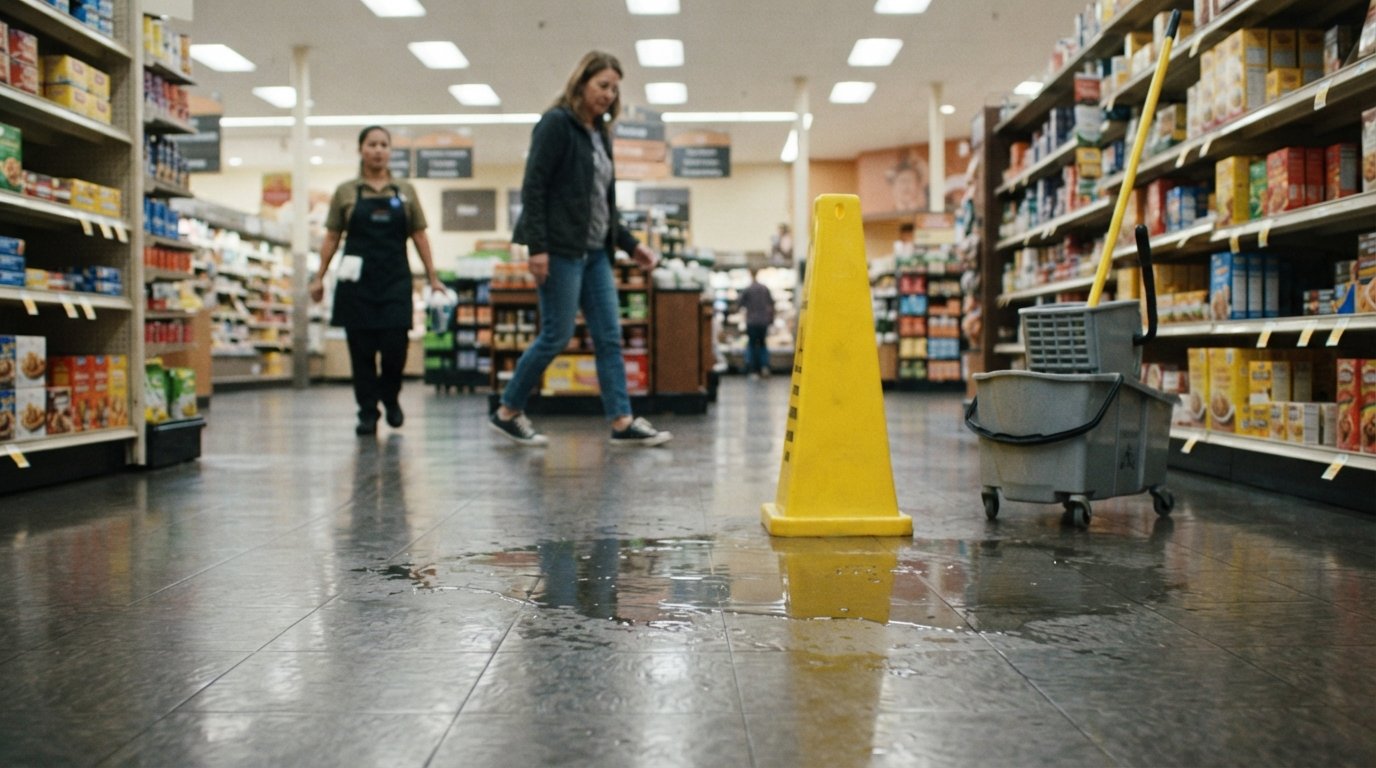
Even when a property owner is negligent, the injured person's own conduct can reduce or bar recovery under comparative fault rules. Most states follow some form of comparative negligence, meaning your compensation is reduced by your percentage of fault. For example, if you were distracted by your phone and ignored a caution cone, a jury might assign you 20% of the blame, reducing your award by that amount. In a few states with contributory negligence, any fault on your part can completely bar recovery, though this is increasingly rare.
Common defenses in slip and fall cases include allegations that the injured person was running, wearing inappropriate footwear, or failed to watch where they were going. Property owners may also argue that the hazard was open and obvious, such as a large puddle with a warning sign, and that a reasonable person would have avoided it. However, the open and obvious doctrine does not always absolve the owner; if the hazard is unavoidable or the owner's actions created a distraction, liability may still attach.
To minimize comparative fault, be prepared to explain why you did not see the hazard. Perhaps it was in a poorly lit area, partially obscured by merchandise, or the same color as the floor. If the owner failed to place warning signs or barriers, that supports your position. Documenting the scene and your footwear can also help. Remember that comparative fault is a factual question for a jury, and having an attorney who can frame the evidence favorably is crucial.
Immediate Steps to Take After a Fall on Commercial Property
The actions you take in the minutes, hours, and days after a slip and fall can significantly impact your ability to hold the responsible party accountable. Your first priority is your health: seek medical attention immediately, even if you feel fine at first. Some injuries, like concussions or internal bleeding, may not show symptoms right away. A medical record also creates a link between the fall and your injuries, which is essential for any claim.
Next, report the incident to the property owner or manager. Ask them to fill out an incident report and request a copy for your records. If they refuse, note the name of the person you spoke with and the time. While at the scene, take photographs of the hazard, your footwear, and the surrounding area. Look for witnesses and ask for their contact information. If there is surveillance footage, note the location of any cameras. Finally, preserve your clothing and shoes in a bag, as they may contain evidence of the substance that caused the fall.
After you leave the property, keep a detailed journal of your symptoms, medical treatments, and any communication with the business or its insurer. Avoid posting about the incident on social media, as insurance adjusters may use your posts against you. Contact a personal injury attorney who handles premises liability cases to discuss your options. An attorney can help you send a spoliation letter, gather evidence, and negotiate with the insurer. If you are also dealing with a car accident or DUI charge, resources like AutoInjuryAccident.com provide free case reviews for those situations.
Many people wonder whether they can sue the property owner directly. The answer depends on the facts, but in most cases, you can pursue a claim against the business or its insurance company. However, if the property is leased, the responsibility may shift between the landlord and the tenant. For example, a commercial tenant may be responsible for maintaining the interior of the store, while the landlord handles common areas like parking lots. An attorney can help untangle these relationships.
When the Responsible Party May Be Someone Other Than the Owner
While the property owner is the usual defendant in a slip and fall case, other parties may share responsibility. A cleaning contractor hired to maintain the floors could be liable if they left a slippery residue or failed to use proper signage. A maintenance company responsible for repairing a broken sidewalk might be at fault if the repair was faulty. In some cases, the manufacturer of a defective floor surface or a spilled product could be pursued under product liability theories.
If you were injured in a parking lot, the owner of the lot (which may be a separate entity from the business) could be responsible. If the lot is owned by a municipality, different notice requirements and immunities may apply. Similarly, if you fell in a common area of a shopping mall, the mall owner and the individual store may both bear some responsibility. Identifying all potential defendants is important because it increases the likelihood of recovering full compensation.
An experienced attorney can investigate the ownership and maintenance structure of the property. They can review leases, contracts, and insurance policies to determine who was responsible for the specific area where you fell. This often requires sending subpoenas or requests for production to multiple parties. Without this step, you might settle with one defendant only to discover later that another party was primarily at fault.
The Role of Insurance and How to Maximize Your Recovery
Most commercial properties carry general liability insurance that covers slip and fall claims. The insurer will typically assign an adjuster to investigate the incident and may contact you directly. Be cautious when speaking with an adjuster: they may ask for a recorded statement that could be used to undermine your claim. It is generally best to have an attorney handle communications with the insurer.
To maximize your recovery, you need to document all your damages, including medical expenses, lost wages, pain and suffering, and any future care needs. Keep every receipt, medical record, and pay stub. If you cannot work because of your injuries, obtain a letter from your doctor. An attorney can help you calculate the full value of your claim and negotiate with the insurer to reach a fair settlement. If the insurer denies your claim or acts in bad faith, litigation may be necessary.
Remember that insurance companies are businesses focused on minimizing payouts. They may dispute liability, argue comparative fault, or undervalue your injuries. Having a knowledgeable attorney on your side levels the playing field and ensures that your rights are protected. If you are unsure whether you have a case, many attorneys offer free consultations and work on a contingency fee basis, meaning you pay nothing unless they recover compensation for you.
If you are dealing with a legal dispute involving an attorney, such as a fee dispute or malpractice, AttorneyLawsuit.com provides educational resources and can connect you with participating attorneys for a free, confidential case review. However, for slip and fall injuries, you should seek a personal injury lawyer who specializes in premises liability. The sooner you act, the better your chances of preserving evidence and building a strong claim.