
Refusing a Field Sobriety Test vs a Breath Test: Consequences
Understand the legal consequences of refusing a field sobriety test vs a breath test. Call (833)-670-8160 for a free case review and protect your rights.

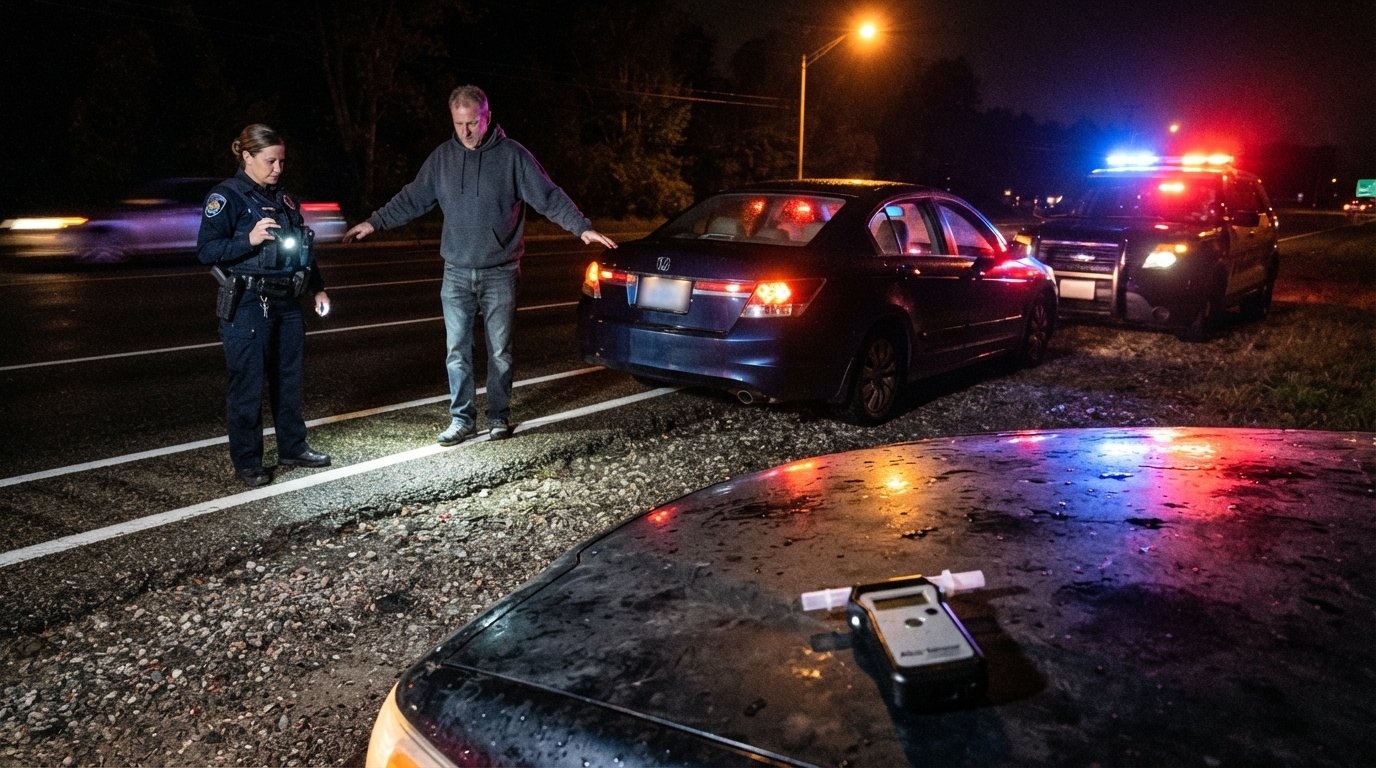
You see the flashing lights in your rearview mirror, and your heart sinks. The officer approaches and asks you to step out of the vehicle. After a few questions, you are asked to perform a series of roadside maneuvers, and then to blow into a handheld device. In that moment, confusion and anxiety can cloud your judgment. Many drivers wonder whether they should comply or refuse, and what happens next. The truth is that refusing a field sobriety test vs a breath test carries very different legal consequences, and understanding those differences before you are in that situation can protect your rights and your future. This article breaks down the distinctions, explains how implied consent laws work, and outlines why consulting an attorney quickly is critical.
The Legal Foundation: Implied Consent and Roadside Exercises
The legal landscape for DUI stops is governed by two separate but related concepts: implied consent laws and the voluntariness of field sobriety tests. When you obtain a driver's license, most states require you to agree to submit to chemical testing (breath, blood, or urine) if you are lawfully arrested for suspicion of driving under the influence. This agreement is known as implied consent. Refusing a chemical test triggers automatic administrative penalties, such as license suspension, and those penalties are separate from any criminal charges you may face. In contrast, field sobriety tests (FSTs) are a series of physical and cognitive exercises, such as the walk-and-turn or the one-leg stand, that officers use to gather evidence of impairment. These tests are not covered by implied consent laws. You can generally refuse to perform them without facing the same automatic license suspension, but your refusal can be used against you in court. Understanding this distinction is the first step in evaluating the consequences of refusing a field sobriety test vs a breath test.
It is important to note that the laws vary significantly from state to state. Some states impose criminal penalties for chemical test refusal, while others treat it as a civil administrative matter. Similarly, the admissibility of field sobriety test refusal as evidence at trial depends on local rules. Because of this complexity, anyone facing a DUI investigation should seek legal guidance as soon as possible. A qualified DUI defense attorney can explain the specific rules in your jurisdiction and help you make informed decisions. For those who are also concerned about their rights during a traffic stop, resources like field sobriety tests rights and common defenses can provide additional context on what to expect and how to protect yourself.
Consequences of Refusing a Field Sobriety Test
Field sobriety tests are designed to be divided-attention tasks that allegedly reveal impairment. However, they are subjective, and many factors (such as medical conditions, fatigue, or nervousness) can affect performance. Refusing to take these tests is not typically a violation of implied consent, because they are not chemical tests. The immediate consequence of refusal is often that the officer may arrest you based on other observed evidence, such as erratic driving, slurred speech, or the odor of alcohol. At trial, the prosecutor may argue that your refusal demonstrates consciousness of guilt, and the judge or jury may infer that you refused because you knew you would fail. This inference is not automatic, and an experienced attorney can challenge it, but it is a risk.
On the other hand, submitting to field sobriety tests provides the officer with more evidence to use against you. If you perform poorly, the results can bolster the prosecution's case. Some attorneys advise clients to politely decline field sobriety tests because the tests are optional and often unreliable. However, this is a strategic decision that should be made with legal advice. The consequences of refusing a field sobriety test are primarily evidentiary and can influence the outcome of your case, but they do not usually trigger an automatic license suspension. That is a key difference when comparing refusing a field sobriety test vs a breath test.
It is also worth noting that some states have statutes that allow the prosecution to comment on a defendant's refusal to submit to field sobriety tests, while others prohibit it. In jurisdictions where refusal can be used as evidence, the prosecution may argue that a sober, innocent person would have no reason to refuse. Defense attorneys counter that the tests are subjective and that refusal is a constitutional right. The best course of action depends on the specific facts and the law in your state. Consulting an attorney before making a decision is always wise.
Consequences of Refusing a Breath Test
A breath test is a chemical test that measures blood alcohol concentration (BAC). Unlike field sobriety tests, breath tests are covered by implied consent laws in all 50 states. When you refuse to submit to a breath test after a lawful arrest, you will face automatic administrative penalties. These typically include a license suspension for a set period, ranging from 90 days to one year for a first offense, and longer for subsequent offenses. You may also be required to pay fines and fees to reinstate your license. In some states, refusal is a separate criminal offense, which can result in additional charges and penalties. The consequences of refusing a breath test are therefore more severe and immediate than refusing a field sobriety test.
Moreover, the refusal itself can be used as evidence at trial. Prosecutors often argue that refusal shows consciousness of guilt. In many states, the jury is instructed that they may infer guilt from the refusal. However, the defense may argue that the refusal was based on a fear of inaccurate results, medical conditions, or other valid reasons. An attorney can challenge the admissibility of the refusal and the circumstances surrounding the arrest. For example, if the officer failed to properly advise you of the consequences of refusal, the suspension may be invalidated. These are complex issues that require legal expertise.
It is also important to understand that you may have the right to choose a blood test instead of a breath test in some states. However, refusing all chemical tests will still trigger implied consent penalties. The key takeaway is that refusing a breath test is not a simple matter; it carries significant administrative and criminal consequences that can affect your driving privileges and your record. When comparing refusing a field sobriety test vs a breath test, the breath test refusal is clearly the more legally perilous choice in terms of automatic penalties.
Administrative License Penalties for Test Refusal
Administrative license penalties are imposed by the state's motor vehicle department, independent of any criminal court proceedings. When you refuse a chemical test, the officer will typically confiscate your license and issue a temporary permit. You then have a limited time (often 7 to 14 days) to request an administrative hearing to challenge the suspension. If you miss the deadline, the suspension goes into effect automatically. The length of the suspension varies by state and by whether you have prior refusals or DUI convictions. For a first refusal, common suspension periods are 90 days to one year. For a second or third refusal, the suspension can be much longer, sometimes several years.
In addition to license suspension, you may face other administrative penalties, such as fines, mandatory installation of an ignition interlock device, and completion of a substance abuse program. These penalties can have a profound impact on your daily life, affecting your ability to work, care for family, and maintain independence. It is crucial to act quickly to request a hearing and contest the suspension if there are grounds to do so. An attorney can represent you at the hearing and help you present evidence, such as improper police procedure or medical conditions that justified the refusal.
The administrative penalties for refusing a field sobriety test are generally nonexistent, because implied consent does not apply to those tests. However, some states may have separate penalties for refusing to comply with an officer's lawful orders, but these are uncommon. The primary risk of refusing a field sobriety test is evidentiary, not administrative. This stark difference underscores why the phrase refusing a field sobriety test vs a breath test consequences is so important for drivers to understand.
How Refusal May Be Used as Evidence at Trial
Both field sobriety test refusal and breath test refusal can be used as evidence at trial, but the rules differ. For field sobriety tests, the prosecution may argue that your refusal shows you were aware of your impairment and wanted to hide it. However, many defense attorneys argue that field sobriety tests are unreliable and that a refusal is not an admission of guilt. Some states allow the jury to draw an adverse inference from the refusal, while others do not. The admissibility depends on the specific state's evidence code and case law.
For breath test refusal, the prosecution can use the refusal as evidence of consciousness of guilt. In many states, the jury is instructed that they may infer that the defendant refused because he or she knew that the test would reveal an illegal BAC. However, the defense can challenge this inference by presenting evidence that the refusal was based on a reasonable fear of false positives, religious beliefs, or medical conditions. An experienced attorney can also challenge the legality of the arrest or the request for the test, which may suppress the evidence of refusal.
It is important to note that the prosecution must prove that you were properly advised of the consequences of refusal. If the officer failed to read the implied consent warning or misstated the law, the refusal may not be admissible. These technical defenses require a thorough review of the police report and dashboard camera footage. An attorney can obtain this evidence and build a strong defense strategy.
Common Defense Strategies and Why You Should Consult an Attorney Quickly
Defending against DUI charges involving refusal requires a multi-faceted approach. First, the attorney will examine whether the initial traffic stop was lawful. If the officer lacked reasonable suspicion to pull you over, all subsequent evidence may be suppressed. Second, the attorney will scrutinize the probable cause for the arrest. If the officer did not have sufficient evidence to arrest you, the request for a chemical test may be invalid. Third, the attorney will review the administration of the field sobriety tests and the breath test to ensure they complied with established procedures. For example, the breath test device must be properly calibrated and maintained, and the officer must have observed you for a required period before the test.
If you refused a breath test, the attorney can challenge the administrative suspension by requesting a hearing and presenting evidence that the refusal was justified or that the officer failed to follow proper procedures. In some cases, the attorney may be able to negotiate a plea bargain that reduces the charges or penalties. The sooner you consult an attorney, the better your chances of preserving evidence, such as surveillance footage or witness statements, which can be crucial to your defense. For those who are unsure about their legal options, a service like LawyerOffer can help connect you with qualified DUI defense attorneys who understand the complexities of refusal cases.
Additionally, if you believe that your attorney mishandled your DUI case or provided inadequate representation, you may have grounds for a legal malpractice claim. AttorneyLawsuit.com provides resources for consumers who need to understand their rights when dealing with legal professionals. However, it is important to remember that this article is for informational purposes only and does not constitute legal advice. You should always consult with a licensed attorney in your state for advice specific to your situation.
The consequences of refusing a field sobriety test vs a breath test are not the same, and the stakes are high. Whether you are facing an administrative license suspension or criminal charges, having an experienced attorney by your side can make a significant difference in the outcome. Do not wait to seek legal help; the deadlines for challenging a suspension are short, and evidence can disappear quickly. Protect your rights and your future by consulting a qualified DUI defense attorney today.