
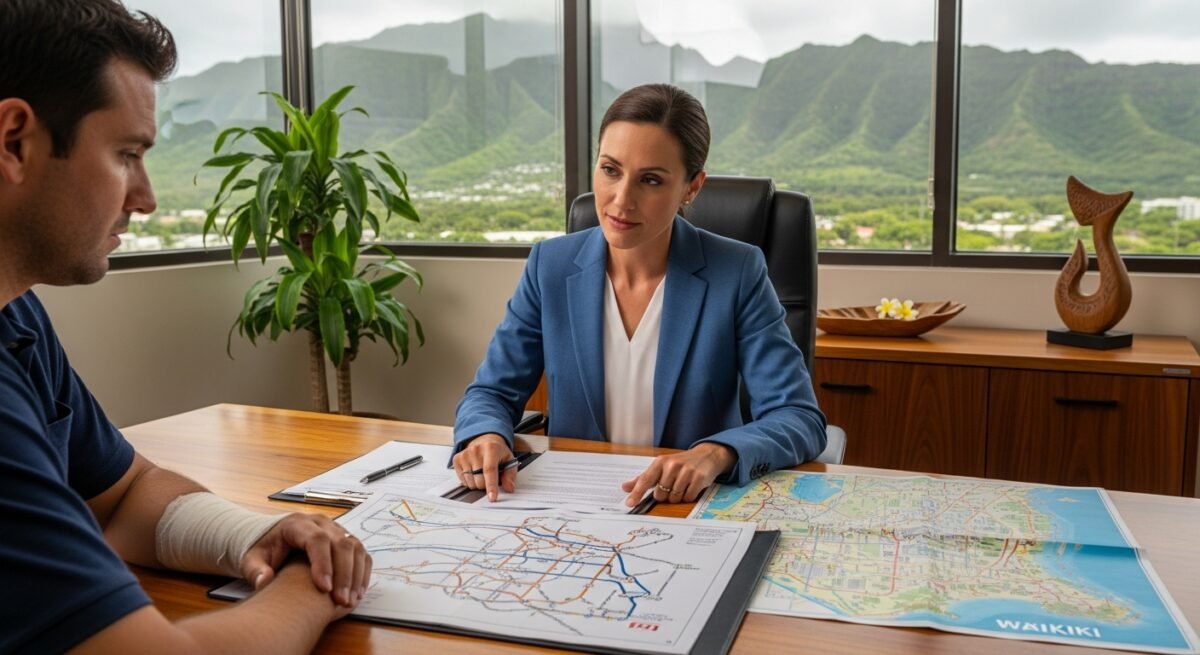
Navigating a Personal Injury Lawsuit in Hawaii: A Legal Guide
Understand Hawaii’s unique laws for personal injury lawsuits, including the 51% fault rule and strict two-year filing deadline. Learn how to protect your right to full compensation after an accident.

By Brian Thompson
Sustaining a serious injury in an accident is a life-altering event, and navigating the legal system in Hawaii adds a unique layer of complexity. Whether you were injured in a car crash on the H-1, suffered a slip and fall at a Waikiki resort, or experienced medical negligence, understanding the specific laws and procedures for a personal injury lawsuit Hawaii is critical. Hawaii’s legal landscape, from its modified comparative negligence rule to its statute of limitations, directly impacts your ability to recover compensation for medical bills, lost wages, and pain and suffering. This guide provides a comprehensive overview to help you make informed decisions during a challenging time.
Understanding Hawaii’s Personal Injury Laws
Hawaii’s personal injury laws establish the framework for determining fault, liability, and the compensation you may be entitled to receive. Unlike some states, Hawaii follows a “modified comparative negligence” rule with a 51% bar. This means you can recover damages as long as you are found to be 50% or less at fault for the accident that caused your injuries. Your total compensation award will be reduced by your percentage of fault. For instance, if a jury awards you $100,000 but finds you 20% responsible for a collision, you would receive $80,000. However, if you are found 51% or more at fault, you are barred from recovering any compensation. This rule emphasizes the importance of a thorough investigation and strong evidence to establish the other party’s primary liability.
Another cornerstone of Hawaii personal injury law is the statute of limitations. In most cases, you have two years from the date of the injury to file a lawsuit in court. This deadline, codified in Hawaii Revised Statutes section 657-7, is strict. Missing this two-year window will almost certainly result in your case being dismissed, forfeiting your right to seek compensation through the court system. There are rare exceptions, such as for injuries to minors or cases where the injury was not discovered immediately, but you should never assume an exception applies. Acting promptly to consult with an attorney is the safest course to protect your legal rights.
Common Types of Personal Injury Cases in Hawaii
The beautiful landscapes and active lifestyle in Hawaii give rise to specific types of injury cases. While car accidents are prevalent on Oahu and other islands, other claims are equally significant. Tourist-heavy areas see a high number of premises liability cases, where property owners fail to maintain safe conditions. Understanding the nuances of your specific accident type is key to building a strong claim.
Motor Vehicle Accidents
Traffic accidents, involving cars, motorcycles, mopeds, bicycles, and pedestrians, are a leading cause of personal injury claims in Hawaii. Determining fault often involves analyzing traffic laws, police reports, witness statements, and sometimes vehicle data (like “black box” information). Hawaii is a no-fault state for auto insurance, meaning you initially seek compensation from your own Personal Injury Protection (PIP) policy for medical expenses and lost wages, regardless of who caused the crash. However, for serious injuries that meet a certain threshold (such as significant disfigurement, permanent disability, or medical expenses exceeding the PIP limit), you can step outside the no-fault system and file a personal injury lawsuit against the at-fault driver to seek full compensation.
Premises Liability: Slip and Fall and Inadequate Security
Property owners and businesses in Hawaii have a legal duty to keep their premises reasonably safe for visitors. A failure to do so can lead to a premises liability claim. Common scenarios include slip and fall accidents caused by wet floors, uneven pavement, poor lighting, or debris in walkways at hotels, shopping centers, or restaurants. Another critical area is inadequate security, particularly in areas with known crime, where a property owner’s negligence in providing security can lead to liability for a visitor’s assault or robbery injuries. Proving these cases requires showing the owner knew or should have known about the dangerous condition and failed to correct it.
Medical Malpractice
When a healthcare provider, such as a doctor, nurse, or hospital, deviates from the accepted standard of care and causes harm to a patient, it may constitute medical malpractice. These are among the most complex personal injury cases. Hawaii law requires that a plaintiff in a medical malpractice case file a “certificate of consultation” from a qualified expert stating that the claim has merit. These cases have a separate, two-year statute of limitations from the date of the negligent act or from the date it should have been discovered, but no more than six years from the date of the act. Given the intricate nature of both medicine and law, pursuing a medical malpractice claim requires specialized legal expertise.
The Process of a Personal Injury Lawsuit in Hawaii
While many personal injury claims are settled through negotiation with insurance companies before a lawsuit is ever filed, understanding the full litigation process is important. The journey typically begins with the injured party (the plaintiff) hiring an attorney who will conduct a detailed investigation, gather evidence, and calculate damages. A formal demand package is then sent to the at-fault party’s insurance company. If a fair settlement cannot be reached, the next step is filing a complaint in the appropriate Hawaii state court, officially initiating the personal injury lawsuit.
After the lawsuit is filed, both sides engage in “discovery,” a formal process of exchanging information. This includes depositions (sworn out-of-court testimony), written interrogatories (questions), and requests for documents. Discovery can be lengthy and is designed to prevent surprises at trial. Many cases settle during or after discovery as both sides gain a clearer picture of the evidence and potential trial outcomes. If settlement talks fail, the case proceeds to trial, where a judge or jury will hear the evidence and render a verdict. The entire process, from accident to resolution, can take months or even years for complex cases.
How an Experienced Hawaii Personal Injury Attorney Can Help
Navigating a personal injury claim while recovering from injuries is an immense burden. A skilled Hawaii personal injury attorney serves as your advocate and guide, handling the legal complexities so you can focus on your health. Their role is multifaceted, beginning with a free case evaluation to determine the viability of your claim. They then take on the critical task of evidence preservation, which may involve securing surveillance footage, obtaining accident reports, interviewing witnesses, and consulting with accident reconstruction or medical experts. This thorough investigation is essential to establish liability and counter the insurance company’s tactics to minimize your claim.
Perhaps the most valuable service an attorney provides is negotiating with insurance adjusters. Insurers are skilled at reducing payouts, and they often make low initial offers or attempt to shift blame onto the injured party. An experienced lawyer understands the true value of your claim, including future medical costs, long-term disability, and non-economic damages like pain and suffering. They have the negotiation skills and litigation threat necessary to fight for a full and fair settlement. The process of valuing a claim and negotiating with insurers is similar across jurisdictions, and you can learn more about this critical phase in our guide on navigating personal injury claims with an attorney. If a settlement cannot be achieved, your attorney will be prepared to take your case to trial and present a compelling argument to a jury.
Key tasks handled by your attorney include:
- Investigating the accident and identifying all potentially liable parties.
- Managing all communication and paperwork with insurance companies and opposing counsel.
- Consulting with medical and economic experts to project future losses.
- Calculating a comprehensive demand that includes all past and future damages.
- Advising you on settlement offers and the risks and benefits of proceeding to trial.
- Representing you in all court proceedings, from filings to trial.
Frequently Asked Questions About Personal Injury Lawsuits in Hawaii
What is the average settlement for a personal injury case in Hawaii?
There is no true “average” settlement, as each case is unique. The value depends on factors like the severity of your injuries, the clarity of fault, your medical expenses, lost income, and the impact on your quality of life. A minor soft-tissue injury will resolve for far less than a case involving permanent disability or disfigurement.
How long does it take to settle a personal injury case in Hawaii?
Simple cases with clear liability and minor injuries may settle in a few months. More complex cases involving severe injuries, disputed fault, or multiple parties can take a year or more, especially if litigation is required. Your attorney can provide a more tailored timeline based on your specific circumstances.
What if I was partially at fault for the accident?
As discussed, Hawaii’s modified comparative negligence law allows you to recover damages if you are 50% or less at fault. Your recovery will be reduced by your percentage of responsibility. An attorney can help build a case to minimize your assigned fault.
What damages can I recover in a Hawaii personal injury lawsuit?
You may be eligible to recover economic damages (medical bills, lost wages, future medical care, loss of earning capacity) and non-economic damages (pain and suffering, emotional distress, loss of enjoyment of life). In rare cases involving egregious conduct, punitive damages may also be available.
How much does it cost to hire a personal injury lawyer in Hawaii?
Most personal injury attorneys work on a contingency fee basis. This means you pay no upfront fees or hourly rates. The attorney’s fee is a pre-agreed percentage (typically one-third) of the compensation they recover for you. If they do not win your case, you owe no attorney’s fees. This structure aligns your attorney’s interests with your own. For a deeper look at how an attorney builds your case from start to finish, including the contingency fee model, you can review our guide to personal injury attorney services.
If you or a loved one has been injured due to someone else’s negligence in Hawaii, taking informed action is crucial. Protecting your rights starts with understanding the specific laws and deadlines that govern personal injury lawsuits in the state. Consulting with a knowledgeable Hawaii personal injury attorney provides the clarity and strategic advantage needed to pursue the compensation you deserve for your recovery and future stability. For further analysis on complex legal strategies in injury cases, you can Read full article on our dedicated legal review site.