Multi-Vehicle Accident Claims: Key Steps and Legal Tips
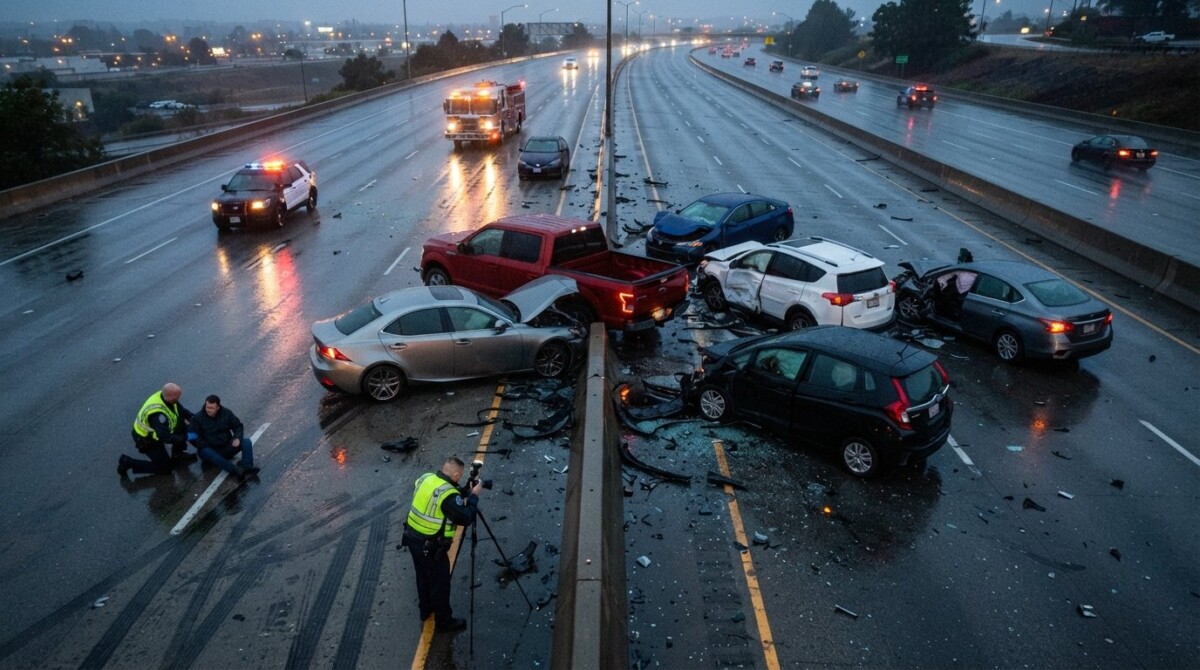
When multiple vehicles collide on a busy highway, the scene is often chaotic, and the legal aftermath can be even more tangled. You may wonder what happens if accident involves multiple parties and vehicles, especially when fault is shared or unclear. Unlike a simple two-car fender bender, a multi-vehicle crash creates a web of insurance claims, liability questions, and potential lawsuits. Understanding the process is your first step toward protecting your rights and securing fair compensation.
This guide walks you through the claims process, liability rules, evidence collection, and the role of an attorney in these complex cases. It also explains how to avoid common mistakes that could reduce your settlement. By the end, you will have a clear roadmap for navigating a multi-vehicle accident, whether you are a driver, passenger, or the family of an injured victim.
How Liability Works in Multi-Vehicle Accidents
In a multi-vehicle accident, liability is rarely black and white. Insurance adjusters and courts look at each driver’s actions to determine fault. The key question is: who caused the collision, and to what degree? States use two main systems to assign fault: comparative negligence and contributory negligence. Under comparative negligence, which most states follow, each party can be assigned a percentage of fault. Your compensation is reduced by your own percentage of fault. For example, if you are found 20% at fault and your damages total $100,000, you would receive $80,000.
Contributory negligence, used in a few states like Alabama and Maryland, is harsher. If you are even 1% at fault, you may be barred from recovering any damages. This makes it critical to understand the rules in your state. In a multi-vehicle pileup, the actions of each driver are examined independently. For instance, if Driver A rear-ends Driver B, pushing B into Driver C, then A is likely the primary cause. But if Driver B was tailgating, B might share some fault. The insurance companies will investigate the sequence of events, review police reports, and interview witnesses to build a liability picture.
In many multi-vehicle accidents, a single negligent driver is not the only one at fault. Poor road conditions, vehicle defects, or even a third-party construction zone can contribute. Your attorney can help identify all potentially liable parties, which may include a government entity responsible for road maintenance or a manufacturer whose faulty brakes caused the crash. This is why it is essential to preserve evidence and consult a professional early.
The Claims Process: What to Expect
After a multi-vehicle accident, you will likely deal with multiple insurance companies. Each driver’s insurer will conduct its own investigation, and you may receive calls from adjusters within days. The process involves several steps, and each one requires careful attention.
- Report the accident: Always call the police and file an official report. This document is a cornerstone of your claim.
- Seek medical attention: Even if you feel fine, injuries like whiplash may not appear for hours. A medical record links your injuries to the accident.
- Notify your insurance company: Report the accident promptly, but stick to the facts. Do not speculate about fault.
- Document everything: Take photos of the scene, your vehicle, and your injuries. Collect contact info from witnesses.
- Consult an attorney: Especially in multi-vehicle cases, legal guidance can prevent costly missteps.
Once you file a claim, the insurance company will investigate. They may ask for a recorded statement, but you are not obligated to give one without legal advice. The adjuster will review the police report, damage estimates, and medical records to determine liability and damages. In a multi-vehicle case, the adjusters from different insurers may disagree on fault, leading to delays. Patience and documentation are your allies.
If the insurance company offers a settlement, do not accept it immediately. Initial offers are often lower than your claim’s value, especially when injuries are severe. An attorney can negotiate on your behalf and ensure you receive compensation for medical bills, lost wages, pain and suffering, and future care. In some cases, the claim proceeds to litigation, where a judge or jury decides liability and damages.
Evidence Collection: Building a Strong Case
Evidence is the lifeblood of any accident claim, but in a multi-vehicle accident, it becomes even more crucial. With multiple drivers and vehicles, the chain of events can be disputed. The more evidence you have, the stronger your position. Start by taking photos and videos of the scene from multiple angles. Capture skid marks, vehicle positions, traffic signals, and any visible injuries. If there are witnesses, ask for their contact information and a brief statement.
Your attorney can also obtain official evidence, such as the police report, traffic camera footage, and black box data from your vehicle. This data can reveal your speed, braking, and steering at the time of the crash. In a multi-vehicle pileup, this information is invaluable for reconstructing the sequence of events. An accident reconstruction expert may be brought in to analyze the physics of the collision, helping to establish fault.
Medical records and bills are equally important. They document the extent of your injuries and the cost of treatment. Keep a journal of your pain levels, missed workdays, and how the injuries affect your daily life. This personal testimony can support a claim for non-economic damages. In our guide on what happens if an accident claim involves multiple parties, we explain how evidence influences settlement negotiations.
Multiple Parties and Vehicles: Who Pays What?
In a multi-vehicle accident, the question of who pays can be complex. Each driver’s insurance policy may cover a portion of the damages, depending on fault. For example, if Driver A is 70% at fault and Driver B is 30%, then A’s insurer pays 70% of the total damages, and B’s insurer pays 30%. However, if one driver is uninsured or underinsured, you may need to tap into your own uninsured/underinsured motorist coverage.
If you are a passenger in one of the vehicles, you may have claims against both drivers. If you are a pedestrian or cyclist involved in a multi-vehicle accident, the rules are similar. In any case, you are entitled to seek compensation from all at-fault parties. This is where having an attorney is invaluable. They can coordinate between insurers and ensure that all liable parties are held accountable. For instance, if a commercial truck is involved, the trucking company may also be liable, adding another layer of complexity. Our article on what happens if an accident involves a bicycle offers insights into how non-driver victims are treated in claims.
In some multi-vehicle accidents, the at-fault driver’s insurance limits may be insufficient to cover all damages. This is particularly common in serious pileups with multiple injured victims. In such cases, you may need to pursue a lawsuit against the at-fault driver personally, or look to other coverage sources. An attorney can help you explore all avenues for compensation.
Common Mistakes to Avoid After a Multi-Vehicle Accident
Even well-intentioned actions can jeopardize your claim. Here are common pitfalls to steer clear of:
- Admitting fault: Even a simple “I’m sorry” can be interpreted as an admission. Stick to the facts when speaking to police and insurers.
- Delaying medical treatment: Waiting to see a doctor gives insurers reason to argue your injuries are not related to the accident.
- Posting on social media: Insurers may monitor your accounts. Photos of you at a party can undermine your injury claim.
- Signing a release too early: Once you sign, you cannot pursue additional compensation later.
These mistakes are common and often costly. By avoiding them, you preserve your ability to negotiate from a position of strength. An attorney can also advise you on how to handle communications with insurers, ensuring you do not inadvertently harm your case.
Why You Need an Attorney for Multi-Vehicle Accidents
Multi-vehicle accidents are among the most legally complex cases in personal injury law. With multiple insurance companies, conflicting stories, and the potential for significant damages, you need someone who understands the nuances. An attorney can conduct an independent investigation, hire experts, and build a compelling case on your behalf. They also handle the paperwork, deadlines, and negotiations, allowing you to focus on recovery.
Moreover, attorneys have experience dealing with insurance adjusters who may try to minimize your claim. They know the tactics used to undervalue injuries and can push back with evidence. In a multi-vehicle case, the stakes are high, and the outcome can affect your financial future. Investing in legal representation is often the best decision you can make.
Frequently Asked Questions
How long do I have to file a claim after a multi-vehicle accident?
The statute of limitations varies by state, typically ranging from one to six years. In most states, you have two to three years from the date of the accident to file a personal injury lawsuit. However, if the claim involves a government entity, the deadline may be shorter, often just six months. Consult an attorney promptly to ensure you do not miss the deadline.
What if I am partially at fault?
Under comparative negligence, you can still recover damages, but your award is reduced by your percentage of fault. For example, if you are 30% at fault and your damages are $50,000, you would receive $35,000. In contributory negligence states, you may be barred from recovery if you are even slightly at fault. An attorney can help argue that your fault was minimal or nonexistent.
Can I claim against multiple insurance policies?
Yes. You may file claims against the insurance policies of all at-fault drivers. If their limits are insufficient, you can use your own uninsured/underinsured motorist coverage. An attorney can help maximize your recovery by identifying all available policies.
What if the at-fault driver is uninsured?
Your own uninsured motorist coverage can step in to cover your damages. This coverage is optional in some states but mandatory in others. If you do not have it, you may need to sue the driver personally, which can be challenging if they have few assets. An attorney can explore all options.
How are settlement negotiations handled in multi-vehicle cases?
Negotiations can be complex because multiple insurers are involved. Your attorney will prepare a demand package that outlines your damages and liability arguments. They will then negotiate with each insurer to reach a fair settlement. If negotiations fail, the case may go to court.
Protecting Your Rights: Next Steps
If you have been in a multi-vehicle accident, the actions you take in the coming weeks can significantly impact your recovery. Document your injuries, keep all medical records, and follow your doctor’s orders. Do not discuss the accident with anyone other than your attorney and your insurance company. If you are contacted by another insurer, refer them to your lawyer.
Remember, the insurance companies are not on your side; they are looking to minimize their payouts. A skilled attorney levels the playing field. They can investigate the accident, calculate the full value of your damages, and fight for the compensation you deserve. Whether you are negotiating a settlement or preparing for trial, you do not have to go through this alone.
Take the time to research attorneys who specialize in multi-vehicle accidents. Many offer free consultations, so you can discuss your case without financial risk. Ask about their experience, success rates, and fee structure. A contingency fee arrangement, where the attorney only gets paid if you win, is common in personal injury cases.
For more detailed information, review our resources on accident claims involving multiple parties and accidents involving bicycles. These guides offer practical advice and legal insights to help you navigate the aftermath of a crash. Every case is unique, so always consult a qualified attorney for advice tailored to your situation.