What Happens If an Accident Claim Involves Multiple Parties
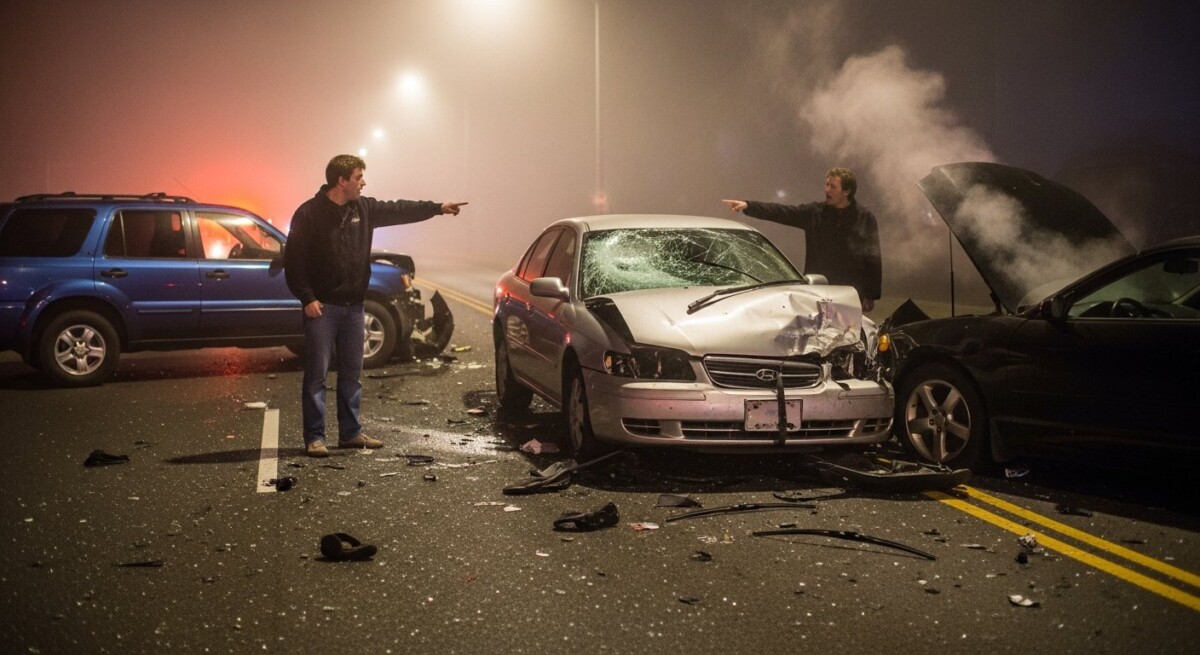
When a car crash involves more than two drivers or multiple vehicles, the legal and insurance process becomes far more complex. You might be wondering what happens if an accident claim involves multiple parties and how fault is divided among several drivers, pedestrians, or even government entities. The short answer is that liability gets split based on each party’s degree of fault, and the insurance companies and courts must sort out the percentages. Understanding this process early can help you avoid surprise bills and maximize your recovery. In our guide on how a car accident claim lawyer maximizes your settlement, we explain how an experienced attorney can navigate these tangled situations.
Understanding Multi-Party Accidents
A multi-party accident is any collision that involves more than two parties. This could be a chain-reaction pileup on the highway, a three-car intersection crash, or an incident where a pedestrian and a cyclist are also involved. The key challenge is that each party may have a different level of responsibility. For example, Driver A might be 60% at fault for running a red light, while Driver B is 40% at fault for speeding. The presence of additional parties means more insurance adjusters, more medical claims, and a higher risk of disputes over what actually happened.
When you are part of such an accident, your first step should always be to gather evidence: photos of the scene, witness statements, police reports, and dashcam footage. This evidence becomes critical when multiple drivers give conflicting accounts. The legal concept known as comparative negligence often applies in these cases. Under comparative negligence, your compensation is reduced by your own percentage of fault. If you are found 20% at fault and your damages total $100,000, you can only recover $80,000.
Determining Fault and Liability
One of the hardest parts of a multi-party accident claim is proving who did what. Insurance adjusters and attorneys will review the police report, skid marks, vehicle damage patterns, and witness testimony. Sometimes accident reconstruction experts are brought in to recreate the crash. The more parties involved, the more complex the reconstruction becomes. In our article on the best way to prove fault in accident claims, we detail the evidence that can tip the scales in your favor.
Liability can be shared in different ways depending on state law. Some states use pure comparative negligence, where you can recover damages even if you are 99% at fault (though the recovery is tiny). Others use modified comparative negligence, where you cannot recover if you are 50% or 51% or more at fault. A few states still use contributory negligence, which bars recovery if you are even 1% at fault. Knowing which rule applies in your state is essential when multiple parties are involved.
Joint and Several Liability
In some multi-party cases, the concept of joint and several liability may apply. This means that if multiple defendants are at fault, you can collect the full amount of your damages from any one of them, even if that party was only partially responsible. That party can then seek contribution from the others. This rule protects you if one defendant is uninsured or bankrupt, but it can also lead to complex litigation between the defendants. Not all states apply joint and several liability, and some limit it to certain types of damages.
The Role of Insurance Companies
Insurance companies are profit-driven, and in a multi-party claim they often try to shift blame to other drivers to reduce their own payout. You may receive calls from multiple adjusters asking for a recorded statement. Be very cautious: anything you say can be used to minimize your claim. It is often wise to decline giving a statement until you have legal representation. The adjusters will compare your story with others and look for inconsistencies.
If the accident involves several vehicles, each insurer will likely pay only its insured’s share of fault. For example, if three drivers are each 33% at fault, and you are one of them, your own insurance may cover your damages partly under your collision coverage, while the other drivers’ insurers pay their portions. If one driver is uninsured, your uninsured motorist coverage might step in, but only up to your policy limits. Working with an attorney can help you coordinate claims across multiple policies.
There are several key factors that affect how insurance companies handle multi-party claims:
- The degree of fault assigned to each party by the police or a court
- The policy limits of each driver’s liability insurance
- The availability of umbrella or excess coverage for high-value claims
- Whether any party is a government entity, which has special claim filing deadlines
- The existence of multiple insurance policies covering the same vehicle (e.g., personal and business)
After the adjusters review these factors, they will make settlement offers. However, initial offers are almost always low. You should not accept a quick settlement before you know the full extent of your injuries and the total fault picture. If you settle with one driver’s insurer, you might give up your right to pursue others. For example, if you sign a release with Driver A’s insurer, you may be prevented from seeking additional compensation from Driver B later.
Legal Options and Lawsuits
If insurance negotiations fail, you may need to file a lawsuit. In a multi-party accident, you can name all potentially liable parties as defendants. The lawsuit will proceed, and each defendant will have the opportunity to present evidence about their own level of fault. Discovery can be extensive, involving depositions, expert witnesses, and document requests. The court will eventually decide the percentage of fault for each party, or the parties may reach a settlement before trial.
Filing a lawsuit also opens the door to recovering non-economic damages like pain and suffering, which are often capped in some states. A lawsuit can also force an uncooperative insurer to take the claim seriously. However, litigation takes time and money. You need an attorney who understands the nuances of multi-party litigation. Our article on legal steps after a car accident claim provides a roadmap for navigating this process from start to finish.
Steps to Protect Your Claim
To maximize your recovery when multiple parties are involved, take these proactive steps. First, seek medical attention immediately even if you feel fine. Some injuries, like whiplash or concussions, may not appear for days. A prompt medical record connects your injuries to the accident. Second, do not discuss fault at the scene. Let the police document the facts. Third, notify your own insurance company as required by your policy, but stick to the basic facts: date, time, location, and parties involved. Avoid speculating about fault.
Fourth, preserve evidence. Save dashcam footage, take photos of the damage from multiple angles, and collect contact information from witnesses. Fifth, consider hiring an attorney who specializes in personal injury and has experience with multi-party claims. An attorney can handle communications with multiple insurance companies, calculate the full value of your claim including future medical costs and lost earning capacity, and negotiate a settlement that reflects the true fault percentages. If the accident claim is rejected by an insurer, your attorney will know the next steps to appeal or file suit.
Finally, keep a journal of your recovery. Document pain levels, limitations, medical appointments, and how the injuries affect your daily life. This journal can serve as powerful evidence of non-economic damages. When multiple parties are involved, a well-documented claim is harder for insurers to dispute.
Frequently Asked Questions
Can I file a claim if I am partially at fault?
Yes, in most states you can still recover damages as long as your fault does not exceed a certain threshold (usually 50% or 51%). Your compensation will be reduced by your percentage of fault.
How is fault split among three or more drivers?
Fault is determined by evidence such as police reports, witness statements, and accident reconstruction. The court or the insurers assign a percentage to each party. For example, Driver A 50%, Driver B 30%, Driver C 20%.
Will my insurance rates increase if I am not at fault?
In some states, insurers can raise rates even for not-at-fault accidents if you file a claim. Multi-party accidents can be flagged as high-risk. Check your policy and state regulations.
Do I need a lawyer for a multi-party accident?
It is highly recommended. Multiple insurance companies, complex liability, and potential lawsuits require professional advocacy. A lawyer can protect your rights and negotiate a better settlement.
What if one driver is uninsured?
Your own uninsured motorist coverage can pay for your damages if the uninsured driver was at fault. However, the at-fault percentages of other insured drivers may also apply.
Understanding what happens if an accident claim involves multiple parties can be overwhelming, but you do not have to face it alone. Whether you are dealing with two drivers or a five-car pileup, the key is to act quickly, preserve evidence, and seek experienced legal guidance. An attorney can help you navigate the fault determination process, deal with insurers, and pursue fair compensation. If you have been injured in a multi-party crash, contact a qualified legal professional to evaluate your case. Your financial and physical recovery depend on making the right moves from the start.