
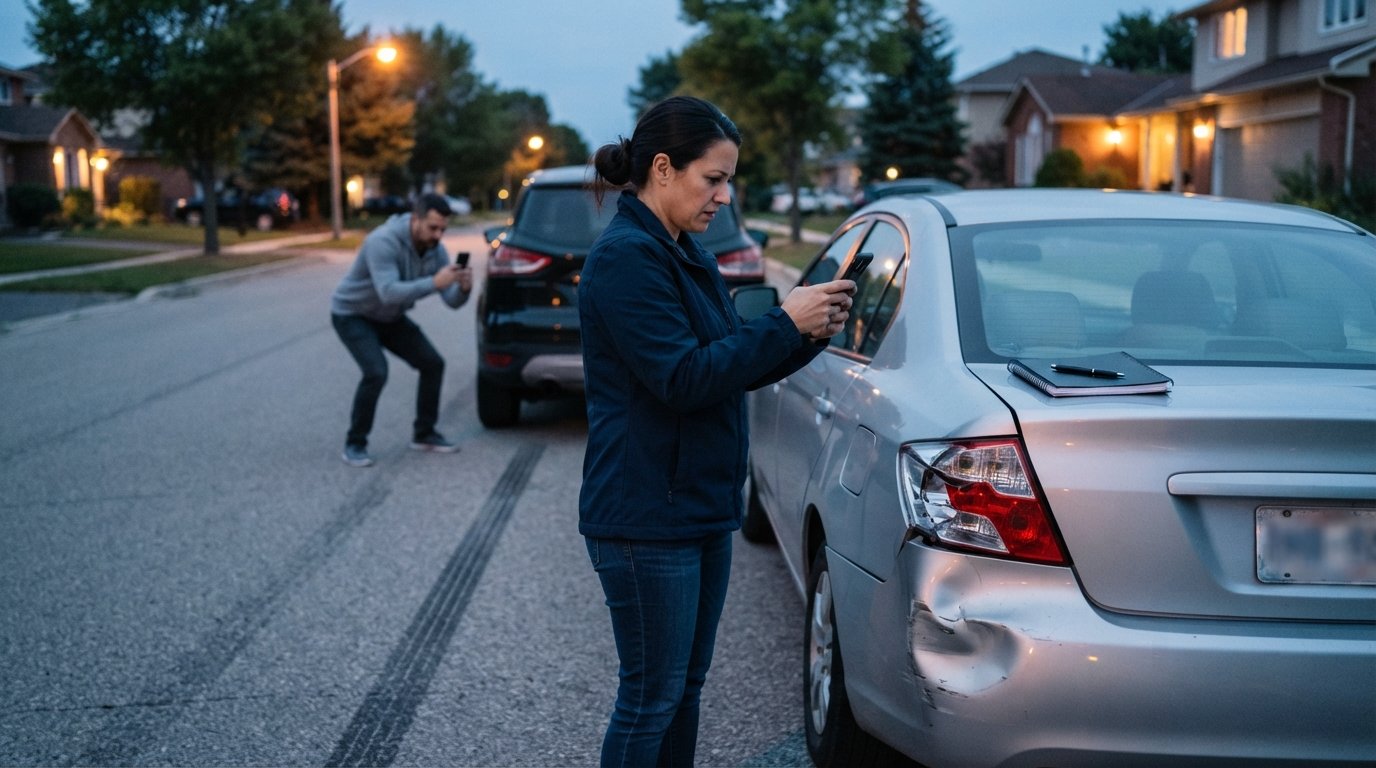
Collecting Evidence After an Accident When Police Did Not Respond
Collecting evidence after an accident when police did not respond is critical for your claim. For a free case review, call (833)-670-8160 today.

A car crash is disorienting even in the best of circumstances, but when no police officer arrives at the scene, the responsibility for preserving the facts falls squarely on you. Maybe it was a minor fender bender, or perhaps the responding agency was overwhelmed and told you to file a report later. Whatever the reason, the absence of an official police report does not mean your claim disappears. It means you must become the primary evidence collector at a moment when you are likely shaken and in pain. The steps you take in the first hours and days can determine whether an insurance company takes your claim seriously or disputes it outright. This guide walks you through exactly what to document, how to document it, and why each piece of evidence matters when you are collecting evidence after an accident when police did not respond.
Why Evidence Collection Falls to You When Police Do Not Respond
In a typical accident, the police report serves as a neutral, third-party account of what happened. It records the date, time, location, parties involved, witness statements, and the officer's observations about fault and damage. Insurance adjusters lean heavily on these reports because they are official and hard to dispute. When no report exists, that anchor is missing, and the insurer will look for any reason to question your version of events. That is why your own documentation becomes the backbone of your claim.
Many jurisdictions have self-reporting requirements for crashes that meet certain thresholds, such as property damage above a dollar amount or any injury. Failing to report can create problems later, so it is important to know your state's rules. Even in states where police are not required to respond to minor crashes, you may still be legally obligated to file a report with the DMV or another agency within a set number of days. This article focuses on the evidence you gather, but understanding the reporting rules for your state is a parallel task you should handle promptly, ideally the same day. If you are unsure where to start, a free case review with a participating attorney can clarify your obligations and protect your rights.
The core challenge is that evidence fades fast. Skid marks wash away in rain. Surveillance footage is overwritten after a few days or weeks. Witnesses forget details or move on. Your own injuries may not feel serious until the next morning, by which time you have lost the chance to photograph visible bruising or swelling. The window for collecting evidence after an accident when police did not respond is narrow, and it rewards speed and thoroughness.
Photographing the Scene: Your First and Most Important Task
If you are physically able and it is safe to do so, start taking photos before anything is moved. If you are injured, prioritize your safety and call for medical help first. But in situations where you can move around, your phone camera is your most powerful tool. Take more photos than you think you need. Digital storage is cheap, and you can always delete duplicates later. Aim for wide shots that show the overall scene, medium shots that capture the relationship between vehicles, and close-ups of damage, debris, and road conditions.
Here is a practical checklist for photographing the accident scene:
- Vehicle damage from multiple angles, including close-ups of dents, scratches, broken glass, and deployed airbags
- License plates of all vehicles involved, including your own
- Road conditions such as potholes, faded lane markings, missing signs, or debris that may have contributed to the crash
- Traffic signals and signs at or near the intersection, including their state at the time (a green light that later changes is worth documenting)
- Weather and lighting conditions, since glare, rain, or fog can affect fault and visibility
- Visible injuries on yourself and others, including redness, swelling, or cuts, even if they seem minor
- Skid marks, fluid leaks, and final resting positions of the vehicles before they are moved
After you leave the scene, continue documenting. Photograph your injuries every day or two as bruises develop and change color. This visual timeline is powerful evidence that your injuries are real and consistent with the crash. It also helps counter any claim that you were not hurt or that your injuries appeared later for unrelated reasons. Store these photos in multiple places, such as your phone, cloud storage, and a backup drive, so a lost or damaged phone does not erase your case.
In some crashes, injuries are not immediately obvious. Soft tissue damage, concussions, and internal injuries can take hours or days to manifest. If you notice symptoms that were not present at the scene, document them and seek medical attention. You can read more about this phenomenon in our guide on hidden trauma after accidents, which explains why a lack of visible injury does not mean a lack of harm.
Identifying and Contacting Witnesses Before Memories Fade
Independent witnesses are gold in any accident claim, and they become even more valuable when no police report exists. A neutral third party who saw the crash can corroborate your account, especially if the other driver tells a different story. The challenge is that witnesses rarely stick around once the immediate chaos subsides, and their memories degrade quickly. If you can, collect contact information at the scene. Ask bystanders, other drivers who stopped, and pedestrians if they saw what happened. Get their names, phone numbers, and email addresses. If they are willing, ask them to write a brief description of what they saw on the spot, or record a short video statement on your phone with their permission.
If you could not gather witness information at the scene, you may still be able to find them. Post a notice in local community groups or social media asking anyone who witnessed the crash to come forward. Check whether nearby businesses had employees or customers outside at the time. Time is critical here, because people move, change phone numbers, and forget details. Reach out within a day or two if possible. When you contact a witness later, be polite and brief. Explain that you were in an accident, that no police report was filed, and that their recollection could help you protect your claim. Ask if they would be willing to provide a written statement or speak with your insurer or attorney. Keep a record of every attempt to contact them, including dates and outcomes, because this log demonstrates diligence if your claim is later challenged.
Securing Surveillance and Doorbell Footage Quickly
Video evidence can be decisive, but it is also the most perishable form of evidence. Many businesses overwrite their security footage on a rolling basis, often within seven to thirty days. Home doorbell cameras may store clips for even less time unless the owner has a subscription plan. If your accident happened near businesses, intersections, or residential streets, there is a reasonable chance someone captured it on camera. The key is to ask fast and ask specifically.
Start by identifying the closest businesses to the crash site. Gas stations, convenience stores, banks, and restaurants are common locations for exterior cameras. Visit in person if you can, and ask to speak with the manager. Explain what happened, provide the date and approximate time, and ask whether their cameras might have captured the incident. Be prepared to provide your contact information and a written request. Some businesses will share footage voluntarily, while others may require a subpoena or a request from law enforcement or an attorney. Even if they will not hand over the video, ask them to preserve it. A written preservation request can create a legal obligation to retain the footage and prevent it from being erased.
Residential doorbell cameras are another valuable source. Walk the nearby streets and look for visible cameras. Knock on doors, explain the situation, and ask if the homeowner would be willing to check their footage for the relevant time window. Some people will share it directly, while others may prefer to provide it to your attorney or insurer. If you are working with an attorney, they can send formal preservation letters to businesses and homeowners, which carries more weight than a casual request. The sooner these requests go out, the lower the risk that crucial footage disappears.
Reporting the Crash to Insurers and State Authorities
Even when police do not respond, you generally still need to report the crash to your own insurance company. Most policies require prompt notice of any accident, and failing to do so can give the insurer grounds to deny coverage. Call your insurer as soon as practical, provide the facts you have gathered, and ask what documentation they need. Be honest and consistent, but stick to what you know. Avoid speculating about fault or minimizing your injuries. If the other driver's insurer contacts you, you are not obligated to give a recorded statement immediately. You can ask for time to consult an attorney, and you should be cautious about providing details that could be used against you later.
State reporting requirements vary widely. Some states require a report to the DMV within a few days for crashes involving injury, death, or property damage above a certain threshold. Others require police notification only for specific circumstances. If you are unsure about your state's rules, check the DMV website or consult a local attorney. Failing to file a required report can result in fines or license suspension, and it can complicate your insurance claim. Keep copies of any reports you file, along with confirmation numbers or receipts. These documents help establish that you took the incident seriously and followed the law.
If you are dealing with an insurer that seems to be delaying or disputing your claim, it helps to understand your rights. You can learn more about legal options for insurance disputes and how an attorney can pressure an insurer to act fairly. For many accident victims, a free consultation is the fastest way to understand whether they have a claim worth pursuing and what evidence still needs to be gathered.
Documenting Symptoms and Treatment to Establish the Injury Timeline
Insurance adjusters are trained to look for gaps in medical treatment. If you were hurt in the accident but waited two weeks to see a doctor, they will argue that your injuries were minor or unrelated. The best way to counter this is to create a clear, consistent record of your symptoms and treatment from the very beginning. If you have not seen a doctor yet, do so as soon as possible, even if you think your injuries are minor. A medical professional can document findings that you cannot see or describe accurately, such as whiplash, concussion, or soft tissue damage.
Keep a daily symptom journal that records your pain levels, limitations, and any new symptoms. Note the date and time of each entry. Include details like difficulty sleeping, headaches, stiffness, numbness, or emotional distress. This journal serves two purposes: it helps your doctor provide better care, and it creates a contemporaneous record that supports your claim. If your symptoms worsen over time, the journal shows a consistent progression rather than an unexplained gap. Save all medical bills, receipts, and explanation of benefits statements. Request copies of your medical records and imaging results, and keep them organized in a folder or digital file.
It is also wise to document how the injuries affect your daily life. If you missed work, keep a record of lost wages and any communication with your employer. If you cannot perform household tasks or hobbies, note that as well. These details may seem minor, but they help build a comprehensive picture of your damages. When you are collecting evidence after an accident when police did not respond, your medical records and symptom journal are often the most persuasive evidence of the harm you suffered.
Organizing Your Evidence and Knowing When to Seek Legal Help
As you gather photos, witness statements, video footage, medical records, and insurance correspondence, you need a system to keep everything organized. Create a dedicated folder on your computer or cloud storage and use clear file names. Keep a master timeline that lists each event in chronological order, from the moment of the crash through each doctor visit, insurance call, and evidence request. This timeline becomes invaluable if you need to explain your case to an attorney, an adjuster, or a judge. It also helps you spot gaps in your evidence before the other side does.
There is a point in many accident claims where self-help is no longer enough. If the other driver disputes fault, if the insurer denies your claim or offers a low settlement, or if your injuries are serious and ongoing, a consultation with an attorney is worth the time. An attorney can send preservation letters, request surveillance footage formally, interview witnesses, and negotiate with insurers on your behalf. Many personal injury attorneys offer free, no-obligation case reviews, so you can learn about your options without financial risk. Remember that AttorneyLawsuit.com is not a law firm and does not provide legal advice; it connects you with participating attorneys who can evaluate your situation. A free case review can help you understand what evidence you still need and how to move forward.
Finally, do not let the absence of a police report discourage you. The evidence you gather can be just as compelling as an official report, and in some cases more so, because it captures details that an officer might have missed. Act quickly, be thorough, and keep everything organized. If you do those three things, you give yourself the best possible chance of a fair outcome.