Best Evidence for an Injury Lawsuit: What Wins Cases
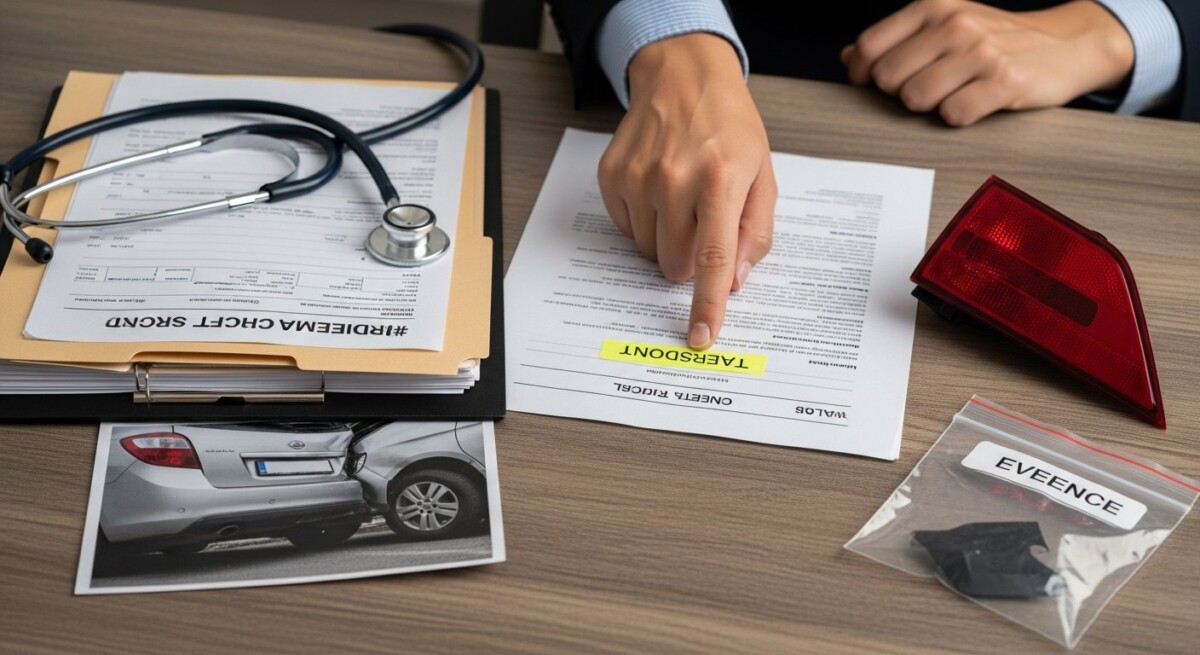
When you file a personal injury claim, the strength of your evidence often determines whether you receive fair compensation or walk away with nothing. Insurance adjusters, defense attorneys, and juries do not take your word alone. They demand proof. The question of what is the best evidence for injury lawsuit comes down to one principle: reliable, verifiable documentation that directly connects the defendant’s actions to your injuries and losses. Without this evidence, even a severe injury may result in a denied claim or a lowball settlement offer.
Imagine a rear-end collision where the other driver admits fault at the scene. Weeks later, that driver denies responsibility, and the insurance company sides with their policyholder because you have no photos, no witness statements, and no police report. This scenario plays out daily. The best evidence eliminates ambiguity and forces the opposing side to acknowledge liability and damages. In this article, we break down the types of evidence that consistently persuade insurers and juries, explain how to gather each type, and show you how to build a case that maximizes your recovery.
Why Medical Records Are the Gold Standard
Medical records form the backbone of any personal injury case. They provide an objective, contemporaneous account of your injuries, treatment, and prognosis. When a doctor documents your complaints, performs diagnostic tests, and prescribes a treatment plan, that record becomes powerful proof that your injuries are real and caused by the accident. Insurance companies trust medical records far more than your verbal descriptions or even your testimony.
The most persuasive medical evidence includes emergency room records, radiology reports (X-rays, MRIs, CT scans), operative reports from surgeries, and ongoing treatment notes from your primary care physician or specialists. These records establish a timeline linking the accident to your injuries. For example, if you visit an emergency room the same day as a car crash and complain of neck pain, the record creates a direct causal link. Delays in seeking treatment weaken this link and give insurers ammunition to argue your injuries were pre-existing or unrelated.
Do not overlook prescription records, physical therapy notes, and mental health counseling records if you suffer from emotional distress or post-traumatic stress disorder. These documents demonstrate the full scope of your damages. As we explain in our guide on what evidence is required for a personal injury lawsuit, medical records also support claims for future medical expenses when your doctor provides a prognosis and life care plan.
Photographic and Video Evidence: A Picture Speaks Volumes
Visual evidence often carries more weight than any other type of proof. A photograph of a damaged vehicle, a hazardous condition on a property, or visible injuries like bruises, lacerations, or swelling tells a story that words cannot. Video footage from dashcams, security cameras, smartphones, or traffic cameras can capture the accident itself, showing exactly how it happened and who was at fault.
To maximize the value of photographic evidence, follow these guidelines:
- Take photos from multiple angles and distances, including wide shots showing the overall scene and close-ups of specific damage or injuries.
- Capture time-stamped images immediately after the incident, before anything is moved or cleaned up.
- Photograph injuries daily for several weeks to document the healing process or worsening condition.
- If possible, obtain surveillance footage from nearby businesses, traffic cameras, or home security systems before the footage is overwritten or deleted.
Video evidence is especially compelling because it captures movement, speed, and context. A dashcam video of a rear-end collision leaves no room for the other driver to claim you stopped suddenly. Security footage of a slip and fall in a grocery store shows whether the floor was wet, whether warning signs were present, and how long the hazard existed. In our article on how to prepare for an injury lawsuit key steps, we emphasize the importance of preserving this evidence before it disappears.
Witness Statements and Expert Testimony
Independent witnesses who saw the accident occur can provide unbiased accounts that corroborate your version of events. Eyewitness testimony is particularly valuable when liability is disputed. A witness who saw a driver run a red light or a store employee ignore a spill can tip the scales in your favor. Collect names, phone numbers, and email addresses from witnesses at the scene. Ask them to provide a written or recorded statement while the details are fresh.
Expert testimony takes witness evidence to another level. Medical experts, accident reconstruction specialists, vocational experts, and economists can offer professional opinions that quantify your damages and explain complex issues to a jury. A medical expert can testify that your herniated disc was caused by the collision, not by age-related degeneration. An accident reconstruction expert can use physics and engineering principles to demonstrate that the defendant was speeding or failed to brake. A vocational expert can calculate your lost earning capacity if your injuries prevent you from returning to your previous occupation.
These experts charge fees for their time, but their testimony often makes the difference between a modest settlement and a substantial award. Insurance companies know that experts are expensive to hire and may offer a fairer settlement to avoid going to trial against a well-prepared expert.
Police Reports and Official Documentation
Police reports carry significant weight because they are created by a neutral third party with no stake in the outcome. Officers who respond to accidents document their observations, including skid marks, vehicle positions, weather conditions, and statements from drivers and witnesses. They may also issue citations or note violations of traffic laws, which can establish negligence per se in some jurisdictions.
Request a copy of the police report as soon as it becomes available, usually within a few days to a week. Review it carefully for accuracy. If the report contains errors, such as the wrong date, incorrect description of damage, or a mistaken statement attributed to you, contact the issuing agency to request a correction. An inaccurate report can harm your case if it contradicts your evidence.
Other official documents that support your claim include incident reports from businesses where a slip and fall occurred, property damage estimates from repair shops, and towing or storage receipts. These documents create a paper trail that reinforces the timeline and severity of the incident.
Financial Documentation of Damages
Compensation in a personal injury case covers economic and non-economic damages. Economic damages are easier to prove because they involve concrete financial losses. Gather every document that shows money you lost or spent because of the injury. This includes medical bills, pharmacy receipts, mileage logs for trips to medical appointments, and pay stubs showing missed work.
Keep a detailed journal of all out-of-pocket expenses, including co-pays, prescription costs, medical devices (crutches, braces, bandages), and any home modifications needed due to your injury. If you hire someone to perform household tasks you can no longer do, such as lawn care or cleaning, save those receipts as well. These expenses add up and can be included in your claim.
Lost wages require documentation from your employer, including a letter verifying your hourly rate, the dates you missed work, and any overtime or bonuses you lost. If your injuries result in long-term or permanent disability, a vocational expert can project your future lost income. The personal injury lawsuit proof checklist 7 key steps includes specific instructions for organizing these financial documents.
Preserving Evidence After an Accident
Evidence can disappear quickly if you do not act promptly. Physical evidence like damaged clothing, a defective product, or a broken piece of equipment should be stored in a safe place. Do not repair or discard the item until your attorney tells you it is safe to do so. Digital evidence, such as text messages, social media posts, and emails, can be deleted by the other party or lost if you change devices.
Create backups of all digital evidence immediately. Take screenshots of relevant text conversations, save emails to a folder, and download any video footage to a cloud storage service or external hard drive. Social media posts from the defendant that show them engaging in risky behavior or admitting fault can be powerful evidence, but only if you capture them before they are removed.
If you are unsure how to preserve certain types of evidence, consult an attorney. Many law firms offer free initial consultations and can advise you on what to keep and how to store it. The cost of losing critical evidence far outweighs the effort required to preserve it.
Common Mistakes That Weaken Your Evidence
Even strong evidence can be undermined by mistakes made during the claims process. One common error is failing to seek medical treatment immediately after the accident. Gaps in treatment or delays in seeing a doctor suggest that your injuries were not serious or were caused by something else. Another mistake is giving a recorded statement to the insurance company without legal representation. Insurance adjusters are trained to ask questions that elicit responses minimizing your claim.
Posting about the accident on social media is another dangerous pitfall. Defense attorneys frequently monitor plaintiffs’ social media accounts for photos, comments, or check-ins that contradict their injury claims. A photo of you at a party or exercising can be used to argue that your injuries are exaggerated. Set your accounts to private and avoid posting anything related to the accident or your physical condition until your case is resolved.
Finally, do not discard or lose any evidence, no matter how insignificant it seems. A receipt for a neck brace or a screenshot of a weather report showing rain on the day of a slip and fall may seem trivial, but it can become a crucial piece of your case later.
Frequently Asked Questions
What is the single most important type of evidence in a personal injury case?
Medical records are generally considered the most important evidence because they provide objective documentation of your injuries, treatment, and prognosis. Without medical records, it is difficult to prove that you were injured or that your injuries are linked to the accident.
How long after an accident can I still gather evidence?
You should gather evidence as soon as possible, ideally immediately after the accident or within the first few days. Physical evidence can be lost or destroyed, witnesses may forget details or move away, and surveillance footage is often overwritten within days or weeks. Waiting too long can permanently damage your case.
Can I use my own smartphone photos as evidence?
Yes, smartphone photos are admissible as evidence as long as they are authentic and not altered. Time stamps and location metadata can help verify when and where the photos were taken. Take photos immediately after the accident and avoid using filters or editing software.
Do I need an attorney to help me gather evidence?
While you can gather basic evidence on your own, an attorney can help you obtain more complex evidence such as expert testimony, surveillance footage, and official records. Attorneys also know how to preserve evidence in a way that meets legal standards. For more information, see our guide on filing an injury lawsuit without a lawyer key steps.
What happens if the other party destroys evidence?
If the other party intentionally destroys evidence, the court may impose sanctions, such as instructing the jury to assume the evidence was unfavorable to them. This is called spoliation of evidence. An attorney can file a motion to address this issue and protect your rights.
The best evidence for an injury lawsuit is not a single document or photo. It is a comprehensive collection of medical records, visual documentation, witness accounts, official reports, and financial records that together tell a clear, convincing story of liability and damages. By understanding what is the best evidence for injury lawsuit and taking action to gather and preserve it, you position yourself for the strongest possible outcome. Whether you negotiate a settlement or present your case at trial, the evidence you compile will be the foundation of your recovery. If you have questions about your specific situation, call us at (833) 227-7919 to discuss your case with a qualified professional.