Wyoming Car Accident Fault and Liability Insurance Rules
Fault disputes can shrink your Wyoming car crash recovery. Call (833)-670-8160 for a free case review with a licensed attorney.

By Elowyn Parker
When a car crash happens in Wyoming, the question of who pays often comes down to one word: fault. Wyoming follows a traditional fault-based liability system, meaning the person who caused the accident is financially responsible for the injuries and damage it produces. That sounds straightforward until adjusters start disputing who did what, when, and why. Understanding how Wyoming car accident fault and liability insurance rules actually work can mean the difference between a fair settlement and a stack of unpaid bills.
This guide explains the state's minimum insurance requirements, how comparative fault reduces recovery, what evidence proves fault, and how to handle an adjuster who insists the crash was your fault. It is educational information, not legal advice. If you are unsure where you stand, a free case review with a licensed Wyoming attorney can clarify your options before you sign anything.
Wyoming's Fault-Based System and Minimum Insurance Requirements
Wyoming is not a no-fault state. After a crash, the injured party generally pursues a claim against the at-fault driver's liability insurance, either through a settlement or a lawsuit. Wyoming law requires drivers to carry liability coverage at these minimum limits:
- $25,000 per person for bodily injury
- $50,000 per accident for total bodily injury
- $20,000 per accident for property damage
These are minimums, not recommendations. A serious crash can easily exceed $25,000 in medical bills alone, which is why many drivers buy higher limits or add uninsured and underinsured motorist coverage. Wyoming also requires proof of financial responsibility, and drivers must carry proof of insurance in the vehicle.
Because the system is fault-based, the insurance company for the at-fault driver is only obligated to pay up to its policy limits. If damages exceed those limits, the injured person may need to look to their own underinsured motorist coverage or pursue the at-fault driver personally. This is one reason fault disputes matter so much: the label determines which policy responds and how much money is actually available.
How Comparative Fault Reduces What You Can Recover
Wyoming uses a modified comparative fault rule. Under Wyoming Statutes section 1-1-109, a claimant's recovery is reduced in proportion to their own share of fault. If you are 20 percent at fault for a crash and your damages total $100,000, your recoverable amount drops to $80,000.
The rule has a hard cutoff. If your fault is 51 percent or more, you recover nothing. That makes the percentage fight the central battleground in many Wyoming car accident claims. Adjusters know this, and they sometimes assign inflated fault percentages to push claimants above the 50 percent line and eliminate the claim entirely.
Comparative fault applies to every category of damages: medical expenses, lost wages, property damage, and pain and suffering. Even a modest fault assignment can meaningfully shrink a settlement, so it pays to challenge unfair allocations with evidence rather than accepting the first number an insurer offers.
What Evidence Supports a Fault Determination
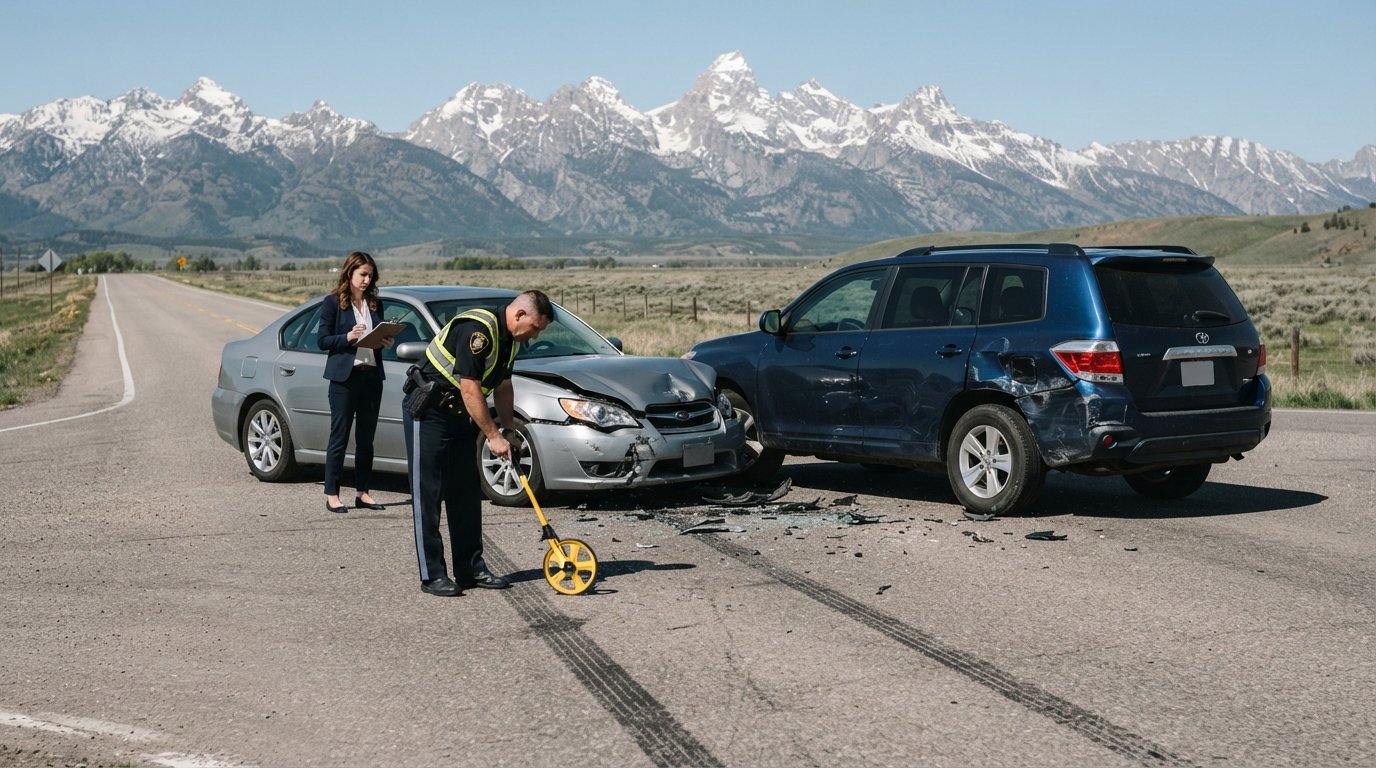
Fault is decided on evidence, not on who argues loudest. The strongest claims are built from documentation collected as close to the crash as possible. Useful evidence includes:
- Police crash reports, which often include officer observations and citations
- Witness statements with names and contact information
- Photos of vehicle damage, skid marks, road conditions, and traffic signals
- Medical records linking injuries to the collision
- Vehicle data or surveillance footage when available
Wyoming's wide-open roads and winter weather create common fault scenarios: rear-end collisions, failure to yield, unsafe lane changes, and speed too fast for conditions. Each scenario has its own evidence pattern. A rear-end crash, for example, usually supports a presumption that the following driver was at fault, while an intersection crash often turns on signal timing and witness accounts.
Wyoming is also a comparative fault state for uninsured motorist claims, so the same evidence can affect coverage under your own policy. Preserving it early, before vehicles are repaired and memories fade, is essential. For a broader look at handling insurers during this stage, see our guidance on the best ways to deal with insurance companies after an accident.
Dealing With Adjusters When Liability Is Disputed
When an adjuster disputes liability, the conversation usually follows a predictable script: the insurer questions your speed, your signaling, or your attention, and then offers a reduced amount or denies the claim. You are not required to give a recorded statement, and doing so early, without preparation, often hurts your position.
A better approach is to document everything in writing, provide only the information needed to evaluate the claim, and correct factual errors promptly. If the adjuster assigns you partial fault, ask for the specific evidence supporting that percentage. Insurers must act in good faith, and Wyoming law recognizes claims for bad faith handling, though these are complex and fact-specific.
If negotiations stall, a licensed Wyoming attorney can send a demand letter, obtain the full police file, and retain accident reconstruction experts when needed. Many attorneys offer free initial consultations, and some work on contingency, meaning you pay nothing upfront. If you are exploring whether a claim is worth pursuing, a confidential case review through AutoInjuryAccident.com can connect you with participating attorneys who handle car crash claims nationwide, including Wyoming. Note that fault rules, insurance requirements, and deadlines vary by state, so confirm the details with a licensed local attorney.
When to Request a Free Case Review
Not every fender-bender needs a lawyer. But certain situations justify a free case review with a licensed Wyoming attorney:
- Injuries are serious, ongoing, or require surgery
- The insurer has denied the claim or assigned you significant fault
- Policy limits appear too low to cover your damages
- There is a dispute about who caused the crash
- You are unsure whether a settlement offer is fair
Wyoming's statute of limitations for personal injury claims is generally four years from the date of injury, but shorter deadlines can apply to government vehicles and other special defendants. Waiting too long can erase an otherwise valid claim. A free review costs nothing and gives you a clear picture of your rights under Wyoming car accident fault and liability insurance rules before you commit to anything.
The key takeaway is that fault is not fixed at the scene. It is built from evidence, argued through insurance channels, and sometimes decided in court. Knowing the rules puts you in a stronger position to protect your recovery.