
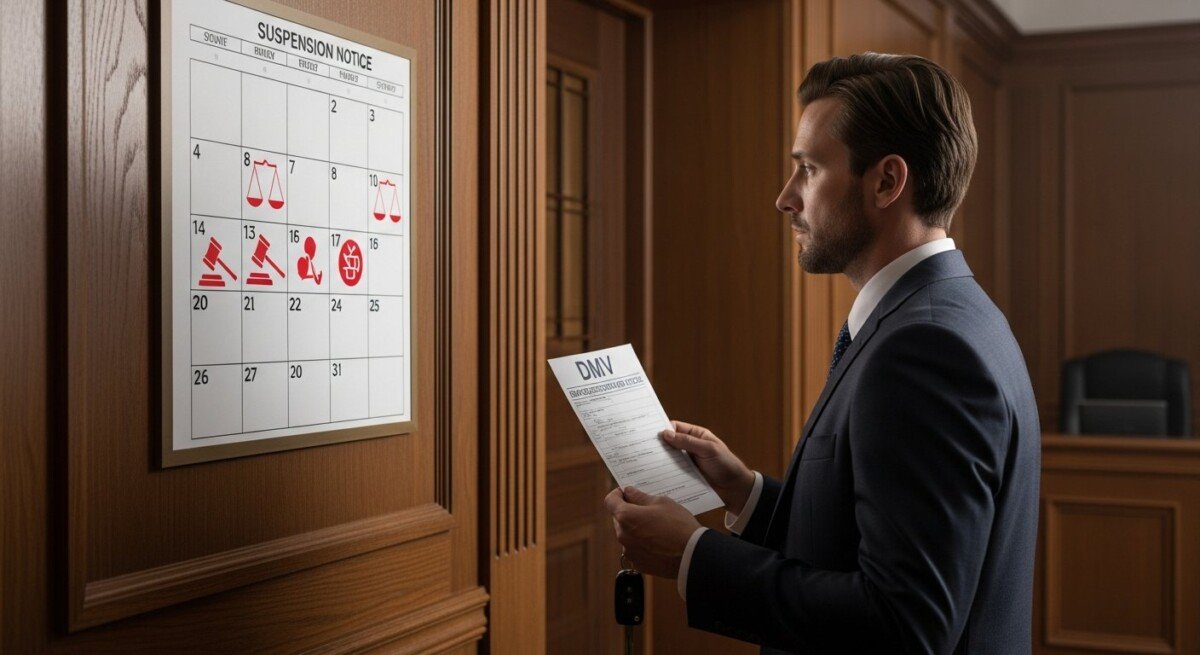
Understanding the DUI Court Timeline From Arrest to Resolution
Navigate the complex DUI court timeline with clarity. For a confidential case review, call our legal team at (833) 227-7919.

By Brian Thompson
Facing a DUI charge is a stressful experience, and a significant part of that stress comes from the unknown. The legal process can seem like a labyrinth with no clear end in sight. Understanding the typical DUI court timeline is crucial for managing expectations, preparing an effective defense, and navigating the complex interplay of criminal and administrative procedures. While every case is unique, the journey from arrest to final resolution generally follows a predictable sequence of hearings and deadlines. This article provides a comprehensive overview of that process, offering clarity on what to expect at each stage.
The Initial Stages: Arrest and Administrative Actions
Your DUI court timeline begins the moment you are pulled over and an officer suspects impairment. The arrest itself sets two parallel processes in motion: the criminal case in court and an administrative action against your driving privileges through the Department of Motor Vehicles (DMV). It is critical to understand that these are separate tracks. The criminal case determines guilt and potential penalties like fines and jail, while the DMV action determines if you can keep your driver’s license. Immediately after the arrest, you will be given a temporary license and a notice of suspension. You have a very short window, often only 10 days, to request a DMV administrative hearing to challenge the license suspension. Missing this deadline results in an automatic suspension.
Concurrently, the criminal case is initiated with your first court appearance, known as the arraignment. This hearing is usually scheduled within a few weeks of the arrest. At the arraignment, you are formally advised of the charges against you, and you will enter a plea of guilty, not guilty, or no contest. For a DUI, pleading not guilty is almost always the first step to allow your attorney to review the evidence and build a defense. The judge may also address bail conditions and any release requirements at this time.
Key Hearings and the Pre-Trial Phase
After the arraignment, the case enters the pre-trial phase, which constitutes the bulk of the DUI court timeline. This period is dedicated to discovery, negotiation, and motion practice. Your defense attorney will obtain all the evidence from the prosecution, including police reports, breathalyzer calibration records, dashcam footage, and witness statements. Analyzing this evidence is fundamental to identifying weaknesses in the prosecution’s case.
Several key hearings typically occur during this phase. A pre-trial conference is a meeting between the defense and prosecution, often in front of a judge, to discuss the status of the case and explore the possibility of a plea bargain. In many jurisdictions, a motions hearing is held where your attorney can file legal challenges to suppress evidence. Common motions in a DUI case challenge the legality of the traffic stop, the procedures used during field sobriety tests, or the accuracy and administration of chemical tests. A successful motion can severely weaken the prosecution’s case or even lead to dismissal.
The following list outlines the common pre-trial hearings that shape the dui court timeline:
- Arraignment: Formal reading of charges and plea entry.
- Pre-Trial Conference(s): Status updates and plea negotiations.
- Motions Hearing: Legal arguments to exclude evidence.
- Readiness / Settlement Conference: Final discussions before trial.
Throughout this phase, your attorney will be negotiating with the prosecutor. A plea bargain may involve reducing the DUI charge to a lesser offense like reckless driving, or agreeing to specific sentencing terms in exchange for a guilty plea. The duration of the pre-trial phase varies widely, from a few months to over a year, depending on the court’s caseload, the complexity of the case, and the strategies employed.
Resolution: Trial, Plea, and Sentencing
If a plea agreement cannot be reached, the case proceeds to trial. A DUI trial can be before a judge alone (bench trial) or before a jury. The trial process involves jury selection, opening statements, witness testimony and cross-examination, presentation of evidence, closing arguments, and deliberation. A trial is the longest and most uncertain part of the dui court timeline, but it is your constitutional right to have the prosecution prove its case beyond a reasonable doubt.
The vast majority of DUI cases are resolved before trial through a plea agreement. Once a resolution is reached, either by plea or trial verdict, the final stage is sentencing. Sentencing may occur immediately after a guilty plea or verdict, or it may be scheduled for a later date. For a DUI conviction, sentencing can include a combination of penalties. Judges often consider factors like your blood alcohol content (BAC) level, prior offenses, and whether the incident involved an accident or injury.
Typical DUI sentencing components include:
- Fines and court costs, which can total thousands of dollars.
- Completion of a DUI education or substance abuse program.
- A license suspension period, separate from any DMV action.
- Probation, often for three to five years.
- Possible jail time, which may be served alternatively through work release or house arrest.
- Installation of an Ignition Interlock Device (IID) on your vehicle.
- Community service hours.
It is important to note that “final resolution” may not be the absolute end. You may have the option to appeal a conviction, and you will certainly have to complete all sentencing requirements to successfully close the case and seek license reinstatement.
Factors That Influence the DUI Court Timeline
The length of your specific dui court timeline is not fixed. Several variables can cause it to shorten or extend significantly. A first-time DUI with no aggravating factors and a straightforward evidence review may be resolved in a few months. Conversely, a case involving an accident with injuries, a high BAC, a refusal to test, or a prior record will be more complex and take longer. The jurisdiction also matters immensely. Busy urban courts often have much longer delays than rural ones. Furthermore, strategic decisions by your attorney, such as filing detailed motions or requesting extended time for investigation, can deliberately extend the timeline to build a stronger defense.
Frequently Asked Questions
How long does a typical DUI case take from start to finish?
There is no single answer. A simple first-offense DUI might resolve in 3-6 months, while a contested case with a trial can easily take 12-18 months or more. The administrative DMV process runs on its own, often shorter, timeline.
Can I speed up the DUI court process?
While you cannot control the court’s docket, you can avoid delays by promptly hiring an attorney, attending all hearings, and providing your lawyer with necessary information quickly. However, rushing can harm your defense; thorough investigation takes time.
What happens if I miss a court date during the DUI timeline?
Missing a court date is extremely serious. The judge will likely issue a bench warrant for your arrest, which can lead to jail time, additional charges, and the forfeiture of any bail. It will also severely damage your standing with the court.
Does the DUI court timeline include the DMV hearing?
No, they are separate. The DMV hearing is an administrative procedure to save your driving privileges and usually occurs very early, often before the first criminal court date. The outcomes are independent, though evidence from one can affect the other.
How does a not guilty plea affect the timeline?
Pleading not guilty is standard and initiates the full pre-trial process, including discovery and negotiations. It is the necessary step to challenge the charges and will make the timeline longer than an immediate guilty plea, but it is essential for protecting your rights and seeking the best outcome.
Navigating the dui court timeline requires patience and skilled legal guidance. Each step presents critical decisions that can profoundly impact the final outcome of your case. By understanding this process, you can work effectively with your attorney to develop a strategy tailored to the specifics of your situation, ensuring your rights are protected from the initial arrest through to the final disposition.