
Understanding a Personal Injury Lawsuit in West Virginia
Learn how West Virginia’s modified comparative negligence law affects your recovery after an accident. This guide explains the key steps in a personal injury lawsuit West Virginia.

By Zachary Evans
When you are injured due to someone else’s negligence in West Virginia, the path to securing fair compensation often involves navigating the state’s unique legal landscape. A personal injury lawsuit in West Virginia is not just about filing paperwork, it is a strategic process governed by specific statutes and legal precedents. Understanding these rules, from the modified comparative fault system to the impact of contributory negligence on your case, is crucial for any injured party. This guide provides a comprehensive overview of what West Virginia residents need to know to protect their rights and pursue justice following an accident.
Key Elements of a West Virginia Personal Injury Claim
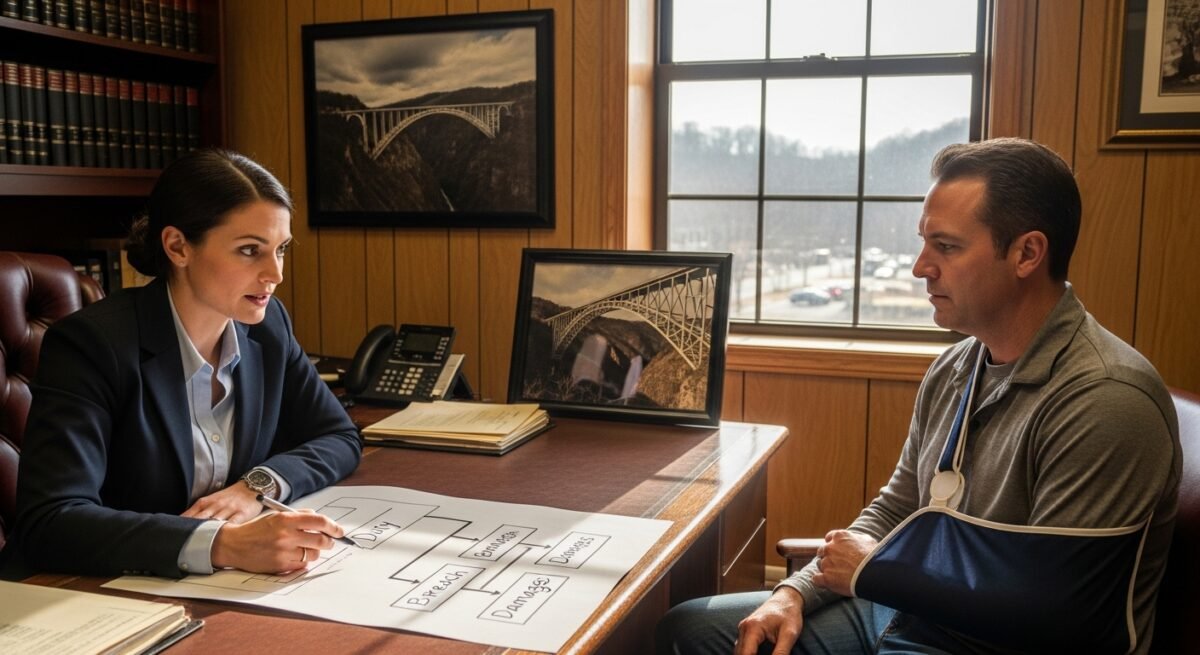
To succeed in a personal injury lawsuit in West Virginia, you must establish four fundamental legal elements. First, you must prove that the at-fault party owed you a duty of care. This duty varies by situation, for example, all drivers have a duty to operate their vehicles safely, while property owners have a duty to maintain safe premises. Second, you must demonstrate that this duty was breached through negligent or intentional actions. Third, you must establish a direct causal link between that breach and your injuries. Finally, you must provide evidence of the damages you suffered as a result. These damages are not limited to medical bills, they can include lost wages, pain and suffering, emotional distress, and loss of enjoyment of life. A strong claim meticulously documents each of these elements from the outset.
West Virginia’s Modified Comparative Negligence Rule
One of the most critical state-specific laws affecting your case is West Virginia’s modified comparative negligence rule, formally known as W. Va. Code 55-7-13c. This statute significantly impacts your ability to recover damages if you are found partially at fault for the accident. Under this rule, you can still recover compensation as long as your share of fault is 49% or less. However, your total award will be reduced by your percentage of fault. For instance, if a jury awards you $100,000 but finds you 20% responsible for the crash, your recovery will be reduced to $80,000. Crucially, if you are found to be 50% or more at fault, you are barred from recovering any compensation. This makes a thorough investigation and a compelling presentation of fault essential. For a detailed look at how another state handles fault, you can review the similar process in our guide on filing a personal injury lawsuit in Texas.
The Statute of Limitations in West Virginia
Time is of the essence in any legal action. In West Virginia, the statute of limitations for most personal injury lawsuits, including those arising from car accidents, slip and falls, and other negligence cases, is two years from the date of the injury. This deadline is strictly enforced by courts. If you fail to file your lawsuit within this two-year window, you will almost certainly lose your right to sue forever, regardless of the merits of your case. There are very few exceptions that might pause or extend this deadline, such as incidents involving minors or cases where an injury was not discovered immediately. Because gathering evidence and building a case takes time, it is imperative to consult with an attorney as soon as possible after an injury to ensure this critical deadline is not missed.
Types of Damages You Can Recover
Successful personal injury lawsuits aim to make the injured party whole, at least as much as money can. In West Virginia, recoverable damages are typically divided into two main categories: economic and non-economic. Economic damages are those with a clear monetary value. These include past and future medical expenses, rehabilitation costs, lost income, loss of future earning capacity, and property damage. Non-economic damages are more subjective and compensate for intangible losses. They include compensation for physical pain, mental anguish, emotional distress, loss of consortium (companionship), and a diminished quality of life. In cases involving egregious misconduct, punitive damages may also be awarded to punish the defendant and deter similar behavior, though these are less common and subject to specific legal standards.
The Personal Injury Lawsuit Process: Step by Step
While every case is unique, most personal injury lawsuits in West Virginia follow a similar general trajectory. Understanding this process can help manage expectations and prepare for what lies ahead.
Initial Consultation and Investigation: It begins with consulting an attorney who will evaluate your case. If they take your case, they will conduct a thorough investigation: collecting police reports, medical records, witness statements, and expert analyses.
Demand and Negotiation: Before filing suit, your attorney will typically send a demand package to the at-fault party’s insurance company, outlining your damages and demanding a settlement. The majority of cases are resolved during this negotiation phase.
Filing the Lawsuit (Complaint): If a fair settlement cannot be reached, your attorney will file a formal complaint in the appropriate West Virginia circuit court, initiating the litigation. The defendant is then served and must file an answer.
Discovery: This is the longest phase, where both sides exchange information through written questions (interrogatories), requests for documents, and depositions (sworn out-of-court testimony).
Mediation and Settlement Conferences: Courts often require parties to attempt mediation with a neutral third party before trial. Many cases settle at this stage.
Trial: If settlement fails, the case proceeds to a jury or bench trial, where both sides present evidence, and a verdict is reached.
Appeal: Either party may appeal the verdict, though this extends the process significantly.
Navigating this process requires legal expertise, especially during discovery and trial. For a comparison to another state’s procedural steps, consider the framework outlined in our article on how to file a personal injury lawsuit in Utah.
Why Legal Representation is Crucial
Attempting to handle a personal injury lawsuit in West Virginia without an attorney is extremely risky. Insurance companies have legal teams whose goal is to minimize payouts. An experienced West Virginia personal injury lawyer levels the playing field. They understand how to value your claim accurately, accounting for all future medical needs and intangible losses. They know how to preserve crucial evidence, hire the right expert witnesses, and navigate complex court procedures. Perhaps most importantly, they are skilled negotiators who can advocate for maximum compensation while you focus on recovery. Many attorneys in this field work on a contingency fee basis, meaning they only get paid if you win, which aligns their interests with yours and removes the barrier of upfront legal costs. For additional perspectives on building a strong legal strategy, you may find it helpful to Read full article on related legal case strategies.
Frequently Asked Questions
How long does a typical West Virginia personal injury case take? There is no standard timeline. A straightforward case with clear liability may settle in a few months. Complex cases that go through full discovery and trial can take two to three years or longer.
What if I was partly at fault for my accident? As discussed, West Virginia’s modified comparative negligence law allows recovery if you are less than 50% at fault. Your compensation will be reduced by your percentage of fault.
What is the average settlement value? It is misleading to discuss “average” settlements, as each case is valued on its specific facts: the severity of injury, clarity of fault, impact on your life, and available insurance limits.
Will my case go to trial? Most personal injury cases settle before reaching a trial verdict. However, having an attorney prepared to go to trial is often what forces the insurance company to offer a fair settlement.
What should I do immediately after an accident? Seek medical attention first. Then, if possible, document the scene (photos, witness contacts), report the incident to the proper authority (police, property manager), and avoid giving detailed statements to insurance adjusters before consulting an attorney.
Pursuing a personal injury lawsuit in West Virginia is a significant undertaking, but it is the primary legal mechanism for holding negligent parties accountable and securing the resources needed for recovery and stability. By understanding the state’s laws, the importance of evidence, and the value of skilled legal counsel, you can make informed decisions to protect your future after a serious injury.