
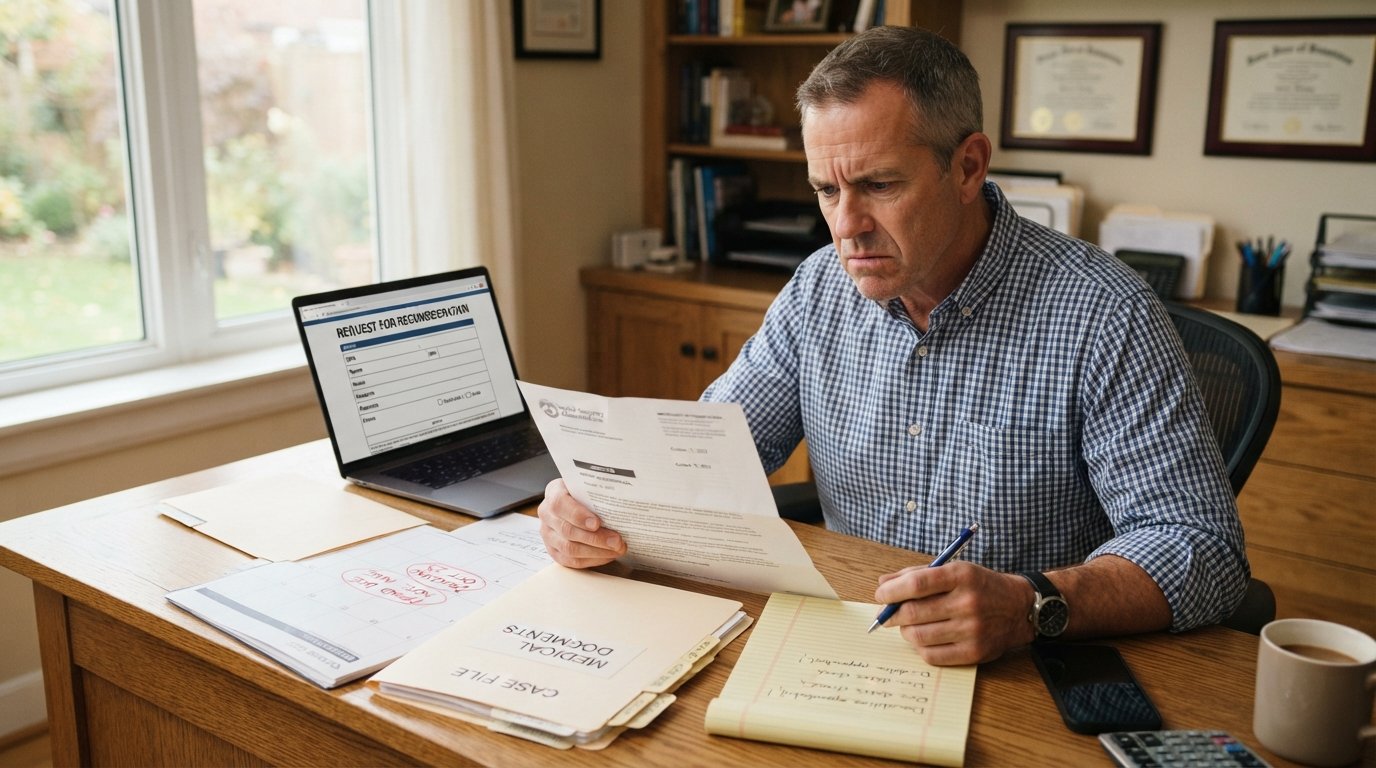
Responding to SSDI Denial: Appeal Process Steps
Facing an SSDI denial? Learn the appeal process steps, deadlines, and evidence tips that can turn a denial into an approval.

By Miles Thornbury
Receiving a denial letter from the Social Security Administration (SSA) is a frustrating turning point, but it is not the end of the road. In fact, a significant percentage of initial applications are denied, and many claimants eventually win benefits after moving through the appeal stages. The key is knowing exactly what to do, how long you have to act, and which deadlines can make or break your case. This guide walks you through the essential steps for responding to an SSDI denial appeal process, from the first reconsideration request to a hearing before an administrative law judge. Along the way, you will learn how to strengthen your medical evidence, avoid common procedural traps, and decide when to bring in professional help. If you are also curious about what happens on the other side of a legal dispute, our overview of what happens when a defendant files an appeal explains how appeals work in civil litigation, which can help you understand the broader legal landscape.
Why SSDI Claims Get Denied And What It Means For Your Appeal
The SSA denies most initial disability applications for a handful of recurring reasons. Some denials are technical: your earnings record shows you are not insured for SSDI, or your application was incomplete. Others are medical: the agency concluded that your impairment does not meet or equal a listed impairment and that you can still perform some type of work. Still others are procedural: you missed a deadline, failed to attend a consultative exam, or did not respond to a request for records.
Understanding the reason for your denial is the first step in building a successful appeal. The denial letter itself usually includes a short explanation and a notice of your appeal rights. If the denial is based on insufficient medical evidence, your appeal strategy should focus on supplying the missing records and a strong residual functional capacity (RFC) assessment. If the denial is based on a technical issue, you may need to correct your earnings record or prove that you meet the insured status requirement. In either case, the appeal process gives you a chance to present a more complete picture.
It is important to remember that an appeal is not a new application. You are asking a higher level of the SSA to review the same claim, but with the opportunity to submit additional evidence and argument. That distinction matters because the deadlines are strict and the standards of review differ at each level. Treat every appeal stage as a fresh chance to tell your story more convincingly.
The Four Levels Of SSDI Appeals And What Happens At Each
The Social Security disability appeal system has four main levels. Most claimants move through them in order, although a small number of cases can be escalated in limited circumstances. Knowing what to expect at each level helps you prepare the right materials and set realistic timelines.
- Reconsideration: A new claims examiner who was not involved in the initial decision reviews your file. You can submit new evidence, and in some cases a disability hearing officer may conduct an informal interview.
- Administrative Law Judge (ALJ) Hearing: If reconsideration is denied, you can request a hearing before an ALJ. This is the most important stage for most claimants because it is the first opportunity to appear in person (or by video) and present testimony.
- Appeals Council: After an ALJ decision, either you or the SSA can ask the Appeals Council to review the case. The Council can deny review, remand the case for a new hearing, or issue its own decision.
- Federal Court: If the Appeals Council denies review, you can file a civil action in federal district court. This is a longer and more expensive process, and it is usually reserved for cases with clear legal errors.
Each level has its own deadline and its own form. Missing a deadline can result in the loss of your appeal rights, so it is critical to calendar every date as soon as you receive a notice. The reconsideration stage is often the fastest, but it also has the lowest success rate. The ALJ hearing stage has the highest approval rate, which is why many claimants and representatives focus their energy there.
Step By Step: Responding To An SSDI Denial Appeal Process
When you receive a denial letter, the clock starts ticking. The SSA generally gives you 60 days from the date you receive the notice to file an appeal, plus a few extra days for mailing. The exact deadline is stated in your letter, and you should assume it is firm unless you have a very good reason for missing it. Here are the core steps for responding to an SSDI denial appeal process.
- Read the denial letter carefully. Identify the type of denial, the appeal level you are eligible for, and the exact deadline. Note whether the denial is medical or technical, because that shapes your evidence strategy.
- File the correct appeal form on time. For reconsideration, use Form SSA-561. For an ALJ hearing, use Form HA-501. You can file online, by mail, or in person at a local SSA office. Keep proof of filing.
- Gather and submit supporting evidence. This includes medical records, treatment notes, imaging, test results, and statements from doctors, family, and former employers. The stronger and more current your evidence, the better your chances.
- Prepare for the hearing if your case reaches an ALJ. Review your file, practice answering questions about your daily limitations, and make sure your representative (if you have one) has all the records well before the hearing date.
- Follow up and track your case. The SSA is slow, and files get lost. Check the status of your appeal periodically and respond promptly to any requests for information.
One of the most common mistakes is filing a bare-bones appeal that simply says "I disagree." That is rarely enough. Your appeal should include a clear statement of why the denial was wrong and what evidence supports your position. If you have new medical records, submit them with the appeal or as soon as possible afterward. The SSA will consider evidence submitted before the hearing, but the earlier you provide it, the more time the reviewer has to evaluate it.
Building A Strong Medical Record For Your Appeal
Medical evidence is the heart of any SSDI appeal. The SSA wants to see objective findings, consistent treatment, and a clear link between your impairments and your inability to work. A diagnosis alone is not enough; you must show how your condition limits your ability to sit, stand, walk, lift, concentrate, or interact with others on a sustained basis.
Start by requesting your complete medical records from every provider you have seen, including specialists, therapists, and emergency rooms. If your doctors have not provided a residual functional capacity (RFC) assessment, ask them to complete one. An RFC form describes your specific physical and mental limitations and is often the single most persuasive piece of evidence in a disability case. Statements from friends, family members, and former coworkers can also help by describing how your condition affects your daily life.
If you are also dealing with a legal dispute involving a lawyer, such as a fee disagreement or a malpractice concern, you may need a different kind of legal resource. Platforms like LawyerCaseReview connect individuals with attorneys who handle personal injury, mass tort, and other civil claims, which can be useful if your disability situation overlaps with another legal matter. However, for SSDI appeals, the focus remains on medical proof and procedural compliance.
Deadlines, Forms, And Common Procedural Mistakes
Deadlines are the silent killer of disability appeals. The SSA does not always send reminders, and a missed deadline can mean starting over with a new application, losing back pay, or losing your appeal rights entirely. The standard deadline is 60 days from the date you receive the denial notice, plus five days for mailing if the notice was sent by mail. If you file late, you must show good cause, such as a serious illness, a death in the family, or a lack of notice.
Common procedural mistakes include filing the wrong form, sending the appeal to the wrong office, failing to sign the form, and not including your Social Security number on every document. Another frequent error is failing to update your address with the SSA, which can cause you to miss hearing notices. Keep copies of everything you send, and use certified mail or the SSA's online portal so you have a record of the filing date.
If you move or change phone numbers during the appeal, notify the SSA immediately. If you are represented by an attorney or advocate, make sure they also have your current contact information. The SSA may schedule a consultative examination or send additional forms, and missing those requests can derail your case. When in doubt, call the SSA's toll-free number or visit your local office to confirm the status of your appeal.
When To Get Professional Help With Your SSDI Appeal
You are not required to have a lawyer or representative to appeal an SSDI denial, but having one can significantly improve your chances, especially at the ALJ hearing level. Disability attorneys and advocates know the SSA's rules, the medical listings, and the vocational factors that influence decisions. They can help you gather evidence, prepare your testimony, cross-examine vocational experts, and file timely appeals.
Most disability attorneys work on a contingency basis, which means they are paid only if you win. The fee is typically capped by federal law and must be approved by the SSA. If your case is denied at the initial level and you are not comfortable navigating the appeal process alone, it is worth consulting a qualified disability attorney. The earlier you get help, the more time they have to build a strong record.
At the same time, be cautious of non-attorney advocates who charge upfront fees or promise guaranteed results. Legitimate representatives will explain the process clearly, provide a written fee agreement, and never guarantee an outcome. If you are unsure whether a representative is right for you, you can request a free case evaluation from a reputable legal information site and compare your options before committing.
What Happens After You Win Or Lose Your Appeal
If you win at the reconsideration or ALJ level, the SSA will calculate your back pay and begin monthly benefits. Back pay can be substantial, especially if your case took years to resolve. You should receive a notice explaining the amount and the payment schedule. If you lose, you still have the right to appeal to the Appeals Council and, in some cases, to federal court. The Appeals Council can deny review, which usually ends the administrative process, or it can remand your case for a new hearing.
Even if you lose at the Appeals Council, a federal court appeal may be possible if there was a legal error or a lack of substantial evidence. These appeals are complex and usually require an attorney. If you are considering federal court, act quickly because there are strict time limits. In the meantime, you may be able to file a new application if your condition has worsened or if you have new evidence, but be aware that a new application can affect your back pay date.
Responding to an SSDI denial appeal process is rarely easy, but it is manageable with careful planning. Read every notice, meet every deadline, submit strong medical evidence, and do not be afraid to ask for help. Whether you are at the reconsideration stage or preparing for an ALJ hearing, the steps you take now can make the difference between a denial and a favorable decision. If your case involves other legal issues, such as a dispute with a former attorney, a separate legal resource like AttorneyLawsuit.com can help you understand your rights and connect with a qualified lawyer for a free case review.