How to Collect Evidence for Your Injury Lawsuit
The success of your personal injury claim hinges on the strength of your evidence. From the moment an accident occurs, the clock starts ticking on gathering and preserving the proof that will connect your injuries to the negligence of another party. A robust collection of evidence is what transforms a mere allegation into a compelling, winnable case. This process, often overwhelming for someone recovering from trauma, requires a systematic and immediate approach. This guide provides a comprehensive framework for collecting evidence for your injury lawsuit, ensuring you build the most persuasive claim possible to secure fair compensation.
The Foundation: Understanding What Constitutes Evidence
Evidence in a personal injury case is any material, document, testimony, or object that helps establish the facts. Its purpose is to prove four critical legal elements: that the defendant owed you a duty of care, that they breached that duty through negligence or intentional action, that this breach directly caused your injuries, and that you suffered measurable damages as a result. Evidence falls into several broad categories, each playing a unique role. Tangible evidence includes physical objects and documentation, while testimonial evidence encompasses statements from witnesses, parties, and experts. Digital evidence has become increasingly paramount, covering everything from social media posts to data from electronic devices. A successful strategy involves collecting from all these categories to create an undeniable narrative.
Immediate Actions at the Accident Scene
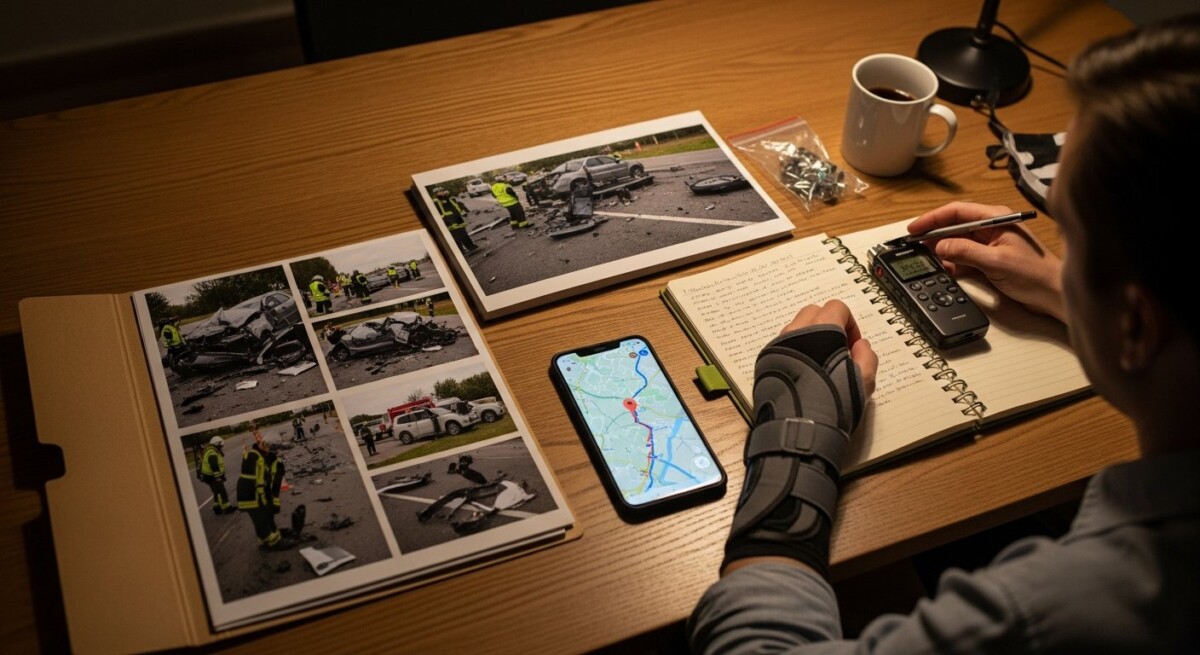
If you are physically able, the actions you take in the immediate aftermath of an incident are the most crucial for evidence collection. Your priority is always safety and medical care, but if you can, start documenting. Use your smartphone’s camera and video function extensively. Take wide-angle shots of the overall scene to establish context, and close-up photos of specific hazards, vehicle damage, skid marks, defective products, or slippery surfaces. Photograph your visible injuries from multiple angles. Do not rely on memory, write down the names and contact information of every witness. Their independent accounts can be invaluable later. If possible, make a brief voice memo detailing exactly what happened while your memory is fresh. This immediate documentation captures conditions before they change, which is vital for accident reconstruction. For a deeper look at the initial legal steps you should take, our essential personal injury lawsuit tips provide further guidance on protecting your rights from day one.
Systematically Gathering and Organizing Documentation
Once you have left the scene, the evidence collection process shifts to gathering and organizing all related documents. This creates a paper trail that substantiates every aspect of your claim. You should request official reports, such as police or incident reports from the responding agency. For medical evidence, obtain complete records from every provider, including ambulance reports, emergency room notes, doctor’s diagnoses, surgical reports, physical therapy notes, and all imaging results (X-rays, MRIs, CT scans). Meticulously track all expenses with bills, receipts, and invoices. Furthermore, document your non-economic damages by keeping a daily journal detailing your pain levels, emotional state, and how the injury limits your daily activities and enjoyment of life. Organize all this material chronologically in both physical and digital folders.
Leveraging Digital and Expert Evidence
Modern cases often turn on digital evidence. This includes surveillance footage from nearby homes or businesses, traffic camera data, and photos or videos posted to social media by witnesses or even the opposing party. Be extremely cautious with your own social media, as insurance adjusters will scrutinize it for anything to contradict your injury claims. In complex cases, expert evidence becomes necessary. Experts can examine the evidence and provide authoritative opinions. For instance, an accident reconstruction expert can analyze vehicle damage and scene data to determine speeds and points of impact. A medical expert can testify about the long-term prognosis of your injuries. An economist can calculate future lost earnings. Your attorney will identify when and what type of expert is needed to strengthen your case. Understanding how to integrate this evidence is a key part of the broader strategy, as outlined in our resource on essential steps to win an injury lawsuit.
What Not to Do: Common Evidence Mistakes
Knowing what to avoid is as important as knowing what to do. One of the most damaging mistakes is posting about your accident, injuries, or recovery on social media. Even a seemingly innocent photo of you at a family gathering can be misconstrued as evidence you are not seriously injured. Never give a recorded statement to the opposing insurance company without consulting your lawyer, as they will use it to find inconsistencies. Do not discard any physical evidence, such as a damaged piece of equipment or torn clothing. Do not delay medical treatment, as gaps in care can be used to argue your injuries are not severe or were caused by something else. Finally, do not try to handle complex evidence collection alone, especially when dealing with corporations or government entities who have vast resources.
The Role of Your Attorney in Evidence Collection
An experienced personal injury attorney is not just a litigator, they are an expert evidence manager. They bring legal tools and knowledge that are unavailable to individuals. Upon taking your case, they will immediately issue preservation letters to potential defendants and third parties, legally obligating them to not destroy relevant evidence. They can use the discovery process to formally request documents, depose witnesses under oath, and submit interrogatories (written questions) to the other side. They know how to authenticate evidence so it is admissible in court and will work with a network of investigators and experts to analyze and present the evidence most effectively. Their strategic approach to building your evidence file is designed to maximize leverage for settlement or prevail at trial. The specifics of building your case can vary by jurisdiction, and you can learn about the process in a specific state by reviewing the essential guide to filing a personal injury lawsuit in Alaska as an example of state-level procedures.
Frequently Asked Questions
How long do I have to collect evidence after an accident?
You should begin immediately. Evidence degrades, memories fade, and surveillance footage is often recorded over. The legal deadline to file a lawsuit, known as the statute of limitations, also imposes a final cutoff, which varies by state and claim type.
Can I collect evidence if I am already represented by a lawyer?
Yes, you should continue to keep your journal and provide any new documents or information to your attorney promptly. However, you should direct all formal evidence requests and communications with other parties through your lawyer.
What if the other party or their insurance company asks for my evidence?
Politely decline and refer them to your attorney. Do not voluntarily hand over originals of anything, especially your journal or social media passwords.
Is a photo from my phone admissible in court?
Generally, yes, if it can be properly authenticated (you can testify you took it, and it accurately depicts the scene). Your attorney will handle the technical legal requirements for admission.
What is the single most important piece of evidence?
There is no single piece. The case is built on the totality of evidence. However, thorough medical records that clearly link your treatment to the accident are fundamentally critical to proving damages. For a comprehensive view of the entire legal journey, including evidence collection, the essential guide to personal injury lawsuits in North Carolina offers a detailed state-specific perspective.
Collecting evidence for an injury lawsuit is a deliberate and continuous process that forms the backbone of your claim. By taking immediate, thorough, and organized action, and by partnering with a skilled personal injury attorney, you empower yourself to present the strongest possible case. This systematic approach not only preserves the truth of what happened but also dramatically increases your ability to achieve a full and fair recovery for the harms you have suffered.