
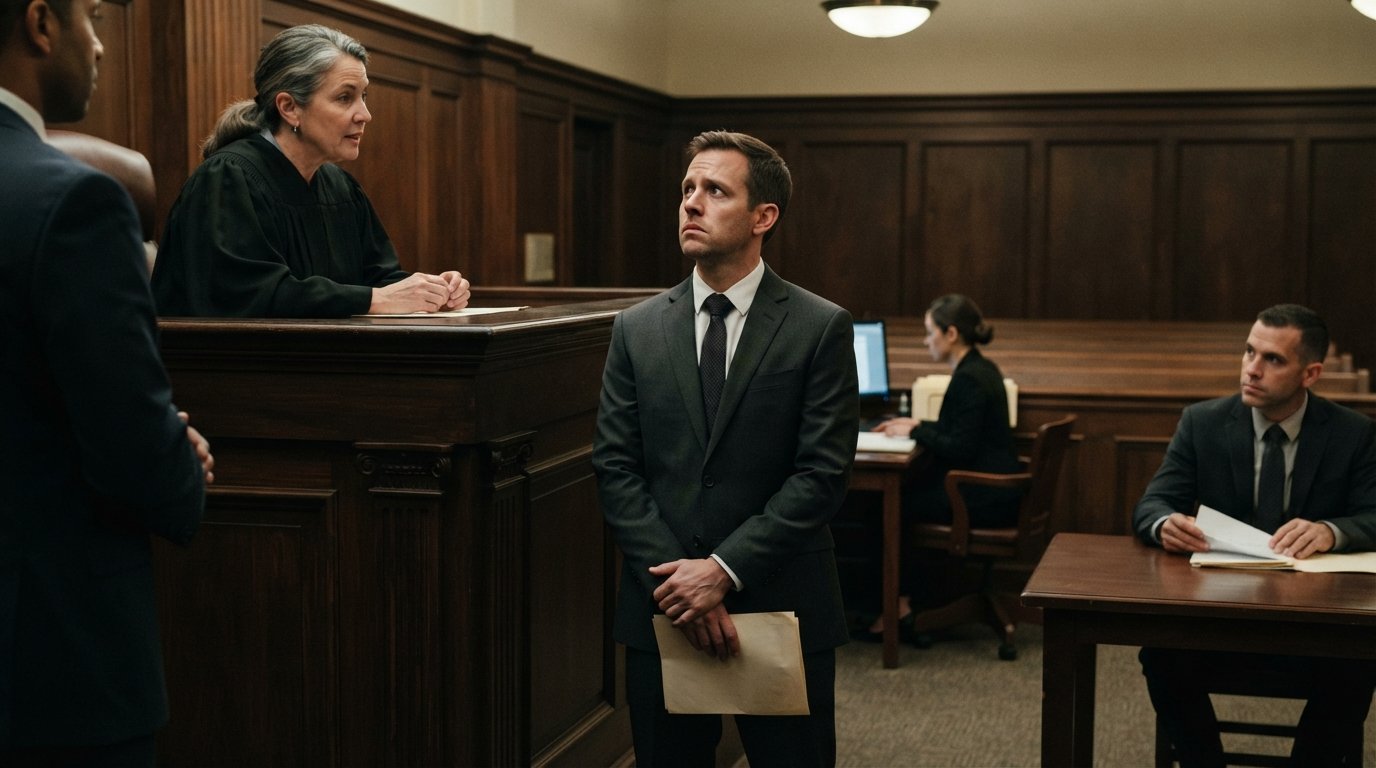
Facing a First DUI Charge: What Happens at Arraignment
Facing a first DUI charge? Here is what happens at arraignment and how to prepare. For a confidential case review, call (833)-670-8160.

By Stellan Moore
Your heart pounds as the police officer hands you a citation with a court date printed in bold. You have never been through this before, and the uncertainty feels overwhelming. You may be wondering what exactly will happen when you walk into that courtroom for the first time, who will speak to you, what you must say, and what the judge can impose before you have even had a chance to tell your side of the story. Understanding the arraignment process for a first DUI charge is the first step toward regaining a sense of control. This guide walks you through each stage of that initial court appearance, from the moment your name is called to the conditions you may leave with, so you can prepare effectively and make informed decisions about your defense.
What Is an Arraignment and Why Does It Matter for a First DUI?
An arraignment is a formal court proceeding where a judge informs you of the charges against you and asks for your plea. For a first DUI, this hearing is typically your first face-to-face encounter with the judge and the prosecutor. It is not a trial, and no evidence is presented. Instead, the arraignment serves three primary purposes: to ensure you understand the charges, to protect your constitutional rights by formally reading them, and to set the terms of your release or bail while the case moves forward. Many first-time defendants assume the arraignment is a mere formality, but the decisions made here, especially regarding bail conditions and license status, can shape the entire trajectory of your case.
In most jurisdictions, the arraignment happens within a few days to a few weeks after your arrest. If you were arrested and booked into jail, you may have already seen a judge for a bail hearing, sometimes called a first appearance. That hearing is separate from the formal arraignment, though the two are sometimes combined for defendants who are released on their own recognizance. The arraignment itself is usually brief, often lasting only a few minutes, but the consequences of what happens in those minutes are far-reaching. You will be asked to enter a plea, and the judge will decide whether you can remain free without supervision or must comply with specific conditions.
Because a DUI charge involves both criminal penalties and administrative license actions, the arraignment is also a critical checkpoint for your driving privileges. The judge may not directly address your license at the arraignment, but the court will be aware of the administrative suspension triggered by your arrest. Understanding the interplay between the criminal case and the separate administrative process is essential to protecting your ability to drive.
Step-by-Step: What to Expect in the Arraignment Courtroom
Walking into a courtroom for the first time can be intimidating, especially when you are facing a DUI charge. Knowing the typical sequence of events will help you feel more prepared. While procedures vary by state and county, most arraignments follow a similar pattern.
First, you will go through security and find the courtroom assigned to your case. You should arrive early, dress respectfully, and bring any documents the court has requested. When your case is called, you will approach the podium or stand before the judge. The judge will confirm your identity and then read the charges against you, including the specific statute you are alleged to have violated and the potential penalties. You will be asked if you understand the charges. If you do not, you have the right to ask for clarification.
Next, the judge will inform you of your rights: the right to remain silent, the right to an attorney, and the right to a trial. If you cannot afford an attorney, the judge will ask whether you want to apply for a public defender. This is a crucial moment. You must decide whether to proceed with court-appointed counsel or hire a private DUI attorney. If you are unsure, you can request a continuance to have time to hire a lawyer, though the judge may require you to enter a plea at this hearing regardless.
After the rights advisement, the judge will ask for your plea. You can plead guilty, not guilty, or no contest (nolo contendere). In most cases, pleading not guilty at the arraignment is the standard approach, as it preserves your options and allows your attorney to negotiate with the prosecutor. Pleading guilty at this early stage is rarely advisable without first consulting a lawyer. If you plead not guilty, the judge will set a date for a pretrial conference or a motions hearing.
Finally, the judge will address bail and release conditions. If you were not already released, the judge will set bail or release you on your own recognizance. Even if you are released, the judge may impose conditions such as not driving, not consuming alcohol, or wearing an ignition interlock device. These conditions are enforceable immediately, and violating them can lead to additional charges or revocation of bail. The entire arraignment may take less than ten minutes, but it sets the stage for everything that follows.
Entering a Plea: Guilty, Not Guilty, or No Contest
Your plea at the arraignment is one of the most consequential decisions you will make in your DUI case. A guilty plea is an admission of guilt and typically results in immediate sentencing or a sentencing date. It may seem tempting to plead guilty to get the process over with, but doing so without a thorough understanding of the consequences, including license suspension, fines, mandatory education programs, and potential jail time, can be a serious mistake. A no contest plea has similar consequences to a guilty plea in a criminal case, though it may have different implications in a subsequent civil lawsuit. For a first DUI, the long-term impact on your insurance rates and driving record can be substantial.
Pleading not guilty does not mean you are claiming innocence in a defiant way. It simply means you are requiring the prosecution to prove its case beyond a reasonable doubt. This plea preserves your right to challenge the evidence, such as the legality of the traffic stop, the accuracy of the breathalyzer or blood test, and the conduct of the arresting officer. Even if you believe you were intoxicated, there may be legal defenses or procedural errors that could reduce the charges or get them dismissed. An experienced DUI attorney can evaluate your case and advise you on the best plea to enter.
If you are unsure what to do, you can ask the judge for a short continuance to consult with an attorney. Many judges will allow this, especially for first-time offenders. However, some judges require a plea at the arraignment and will enter a not guilty plea on your behalf if you are unable to decide. In either case, you should never plead guilty without first speaking to a lawyer who understands DUI law in your state.
Bail, Release Conditions, and Immediate Restrictions
At the arraignment, the judge will decide whether you can be released from custody and under what conditions. For a first DUI charge, you are often eligible for release on your own recognizance or with a low bail amount, especially if there were no aggravating factors such as an accident, injury, or extremely high blood alcohol content. However, the judge has discretion to impose conditions designed to protect public safety and ensure your appearance at future court dates.
Common release conditions for a first DUI include:
- Posting bail or a promise to appear
- Surrendering your driver's license or agreeing not to drive
- Installing an ignition interlock device on any vehicle you operate
- Abstaining from alcohol and submitting to random testing
- Attending DUI education or treatment programs
These conditions can be imposed even before you are convicted. If you violate them, the judge can revoke your release and send you to jail. For example, if you are ordered not to drive and are caught driving, you could face additional charges for driving on a suspended license. If you are required to use an ignition interlock device and you attempt to start your car after drinking, the device will lock you out and may report the violation to the court. It is essential to take these conditions seriously from day one.
In some jurisdictions, the judge may also order SCRAM (Secure Continuous Remote Alcohol Monitoring) bracelet if there is evidence of alcohol dependency or if the circumstances of your arrest suggest a high risk. This device monitors your sweat for alcohol consumption around the clock. While such monitoring is more common in repeat offenses or cases involving high BAC, it can be imposed for a first offense if the judge believes it is necessary. Knowing what to expect can help you prepare mentally and financially for these potential requirements.
The Separate Track: Administrative License Suspension Timelines
One of the most confusing aspects of a DUI charge is that it involves two separate legal tracks: the criminal case and the administrative license suspension. The arraignment you attend in criminal court does not automatically resolve the status of your driver's license. In most states, when you are arrested for DUI, the officer will confiscate your license and issue a temporary permit. You then have a limited window, often 7 to 30 days, to request an administrative hearing to challenge the suspension. If you miss that deadline, your license will be suspended automatically, regardless of the outcome of your criminal case.
The administrative suspension is handled by the state's motor vehicle department or a similar agency, not the criminal court. The arraignment judge may not mention this deadline, and the prosecutor has no authority to extend it. This is why it is critical to act quickly after your arrest. If you hire a DUI attorney, they can often handle the administrative hearing request on your behalf. If you are representing yourself, you must file the request yourself and pay any required fees. The hearing is separate from your criminal proceedings, and the rules of evidence are less formal, but the stakes are high: a suspended license can affect your job, your family, and your daily life.
For a first DUI, many states offer a restricted license after a period of suspension, allowing you to drive to work, school, or treatment programs. However, you must apply for this privilege and comply with any requirements, such as installing an ignition interlock device. The timeline for reinstatement varies, but the key takeaway is that the administrative process runs on its own clock. Do not wait for your arraignment to address your license; check your state's deadlines immediately after your arrest.
Public Defender Eligibility and When to Hire Private Counsel
At the arraignment, the judge will ask if you have an attorney. If you do not, and you cannot afford one, you may be eligible for a public defender. Eligibility is typically based on your income, assets, and the size of your household. You will be asked to complete a financial affidavit under oath. The judge or a court clerk will review it and decide whether you qualify. If you do, a public defender will be appointed to represent you. Public defenders are experienced attorneys, but they often carry heavy caseloads and may have limited time to devote to your case. For a first DUI, a public defender can be a valuable resource, but you should be aware of the constraints.
If you do not qualify for a public defender or if you prefer to have more personalized representation, you may hire a private DUI attorney. Private counsel can investigate your case more thoroughly, negotiate with the prosecutor, and provide more frequent communication. The cost of a private attorney varies widely, but many offer payment plans. When deciding, consider the potential consequences of a DUI conviction, including fines, insurance increases, and license suspension. An attorney who specializes in DUI defense may be able to identify weaknesses in the prosecution's case that a general practitioner might miss.
If you are unsure whether to hire a private lawyer, you can request a continuance at the arraignment to have time to interview attorneys. Many DUI lawyers offer free consultations, so you can discuss your case and get a sense of their approach before committing. You can also use resources like GoFreeLegal to connect with attorneys who handle DUI cases in your area. GoFreeLegal is a free legal help and attorney-matching service that can help you find a lawyer without upfront cost. However, remember that you are ultimately responsible for choosing the attorney who is right for you.
For more strategic advice on fighting criminal charges in court, including how to prepare for hearings and work with your attorney, you may find our guide on fighting criminal charges in court helpful. It covers broader defense strategies that apply to DUI cases as well.
Documents and Records to Gather Before Your First Court Date
Preparation is key to a successful arraignment. Before you go to court, gather all relevant documents and records related to your arrest. This will help you and your attorney understand the case and identify potential defenses. The following items are particularly important:
- Your citation or arrest report, which contains the charges, date, time, and location
- Any paperwork from the jail or booking, including bail information
- The notice of administrative license suspension and any temporary driving permit
- Any medical records if you were injured or required a blood draw
- Witness names and contact information, including passengers or bystanders
In addition to these documents, write down your own recollection of the events leading up to your arrest. Include details such as what you ate, how much you drank, whether you were taking any medications, and any statements you made to the police. This timeline can be invaluable when your attorney cross-examines the arresting officer or challenges the breath test results. If you have a dashcam or body camera footage from the police, your attorney can request it through discovery, but you should note any details you remember about the stop.
You should also bring proof of income and expenses if you plan to apply for a public defender. The court will require financial information to determine eligibility. If you are considering a private attorney, bring any quotes or fee agreements you have received. Finally, bring a notebook and pen to write down important dates, such as your next court appearance and any deadlines for the administrative hearing. The arraignment can be fast-paced, and you may not remember everything the judge says. Having a written record will help you stay organized.
Common Mistakes First-Time DUI Defendants Make at Arraignment
First-time DUI defendants often make mistakes at the arraignment that can harm their case. One of the most common is pleading guilty without fully understanding the consequences. As mentioned earlier, a guilty plea can result in immediate penalties and may limit your ability to negotiate later. Another mistake is failing to request an administrative hearing within the deadline. Many people assume the criminal case will resolve the license issue, but the two are separate. If you do not request the hearing, your license will be suspended automatically, and you may not be able to get it back for months or longer.
Another common error is missing the arraignment entirely. If you fail to appear, the judge can issue a bench warrant for your arrest. This can lead to additional charges and make it much harder to resolve your case. If you have a legitimate reason for missing court, such as a medical emergency, contact the court as soon as possible to reschedule. Ignoring the problem will only make it worse. Finally, some defendants try to explain their side of the story at the arraignment, hoping to convince the judge of their innocence. The arraignment is not the time for that. The judge is not there to decide guilt or innocence; that comes later. Instead, you should focus on understanding the charges and protecting your rights.
It is also a mistake to assume that because this is your first offense, the case will be dismissed or reduced automatically. While first-time offenders may be eligible for diversion programs or reduced charges, these outcomes are not guaranteed. The prosecutor has discretion, and the judge may have specific policies. Having an attorney who knows the local court practices can make a significant difference in the outcome.
How an Attorney Can Help Before and After the Arraignment
An attorney can help you at every stage of a DUI case, starting well before the arraignment. If you hire a lawyer immediately after your arrest, they can request the administrative hearing, investigate the evidence, and advise you on how to plead. At the arraignment, your attorney can speak on your behalf, negotiate with the prosecutor, and argue for favorable release conditions. For example, if the prosecutor seeks a high bail or harsh conditions, your attorney can present evidence of your ties to the community, employment, and lack of criminal history to argue for leniency.
After the arraignment, your attorney will continue to build your defense. This may involve filing motions to suppress evidence, challenging the validity of the traffic stop, or questioning the accuracy of the breath test device. In some cases, your attorney may negotiate a plea bargain that reduces the charges or minimizes penalties. Having a knowledgeable attorney can also help you navigate the administrative process and apply for a restricted license if eligible. Even if you ultimately decide to plead guilty, an attorney can ensure that your rights are protected and that you understand the full scope of the consequences.
If you are considering hiring an attorney but are concerned about cost, remember that many DUI lawyers offer payment plans and free consultations. You can also explore legal aid resources or public defender options. The important thing is to make an informed decision rather than going through the process alone. The arraignment is just the beginning, and having a strong advocate by your side can make a significant difference in the outcome of your case.
Facing a first DUI charge is stressful, but understanding the arraignment process can help you navigate the court system with confidence. From entering a plea to addressing bail conditions and license suspension, each step requires careful attention. By preparing the right documents, knowing your rights, and considering professional legal guidance, you can protect your interests and make informed choices that benefit your future.