
Essential Criminal Case Evidence Tips for a Strong Defense
Protect your rights with essential criminal case evidence tips. For immediate legal guidance, call (833) 227-7919.

By Cassia Redmont
In the high-stakes arena of a criminal trial, evidence is the battlefield. The prosecution’s entire case rests on its ability to present compelling, admissible evidence to prove guilt beyond a reasonable doubt. For the defense, the strategic handling of evidence, from the moment of arrest through the final verdict, is not just a legal tactic, it is the cornerstone of protecting a defendant’s rights and freedom. Understanding how evidence works, how to challenge it, and how to build a counter-narrative can mean the difference between conviction and acquittal. This guide provides critical criminal case evidence tips, offering a roadmap for defendants and their legal teams to navigate the complex evidentiary rules that govern our justice system.
The Foundation: Understanding Types of Evidence
Before developing a strategy, one must understand the categories of evidence that may be presented. Evidence is broadly classified as either direct or circumstantial. Direct evidence directly proves a fact without the need for inference, such as an eyewitness testimony stating they saw the defendant commit the act. Circumstantial evidence, often misunderstood as weaker, requires an inference to connect it to a conclusion of fact. For example, finding the defendant’s fingerprints at a crime scene is circumstantial evidence they were there, but does not directly prove they committed the crime. Both types can be powerful, and a strong defense must be prepared to address each.
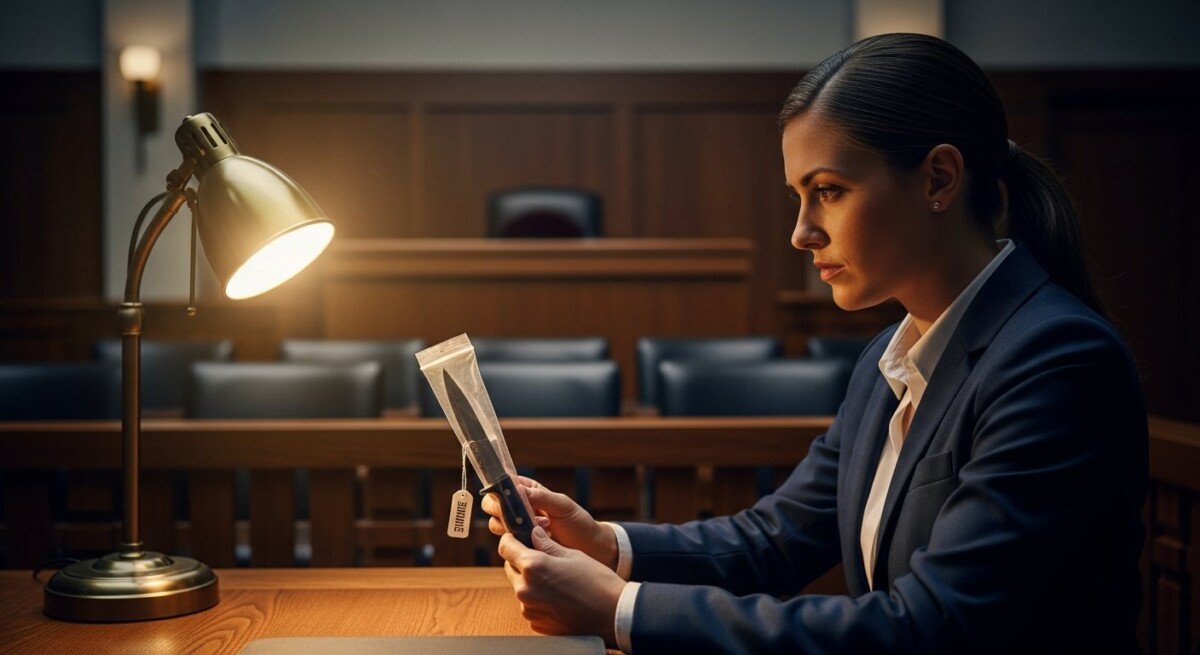
Further breakdowns include physical evidence (the murder weapon, DNA samples, documents), digital evidence (text messages, social media posts, location data), and testimonial evidence (statements from witnesses, experts, and the defendant). Each type has specific rules for collection, preservation, and admission. A failure in the chain of custody for physical evidence or improper authentication of digital records can render critical proof inadmissible. Understanding these nuances is the first of our essential criminal case evidence tips, as it allows the defense to identify the precise points of vulnerability in the prosecution’s case from the outset.
Critical Pre-Trial Evidence Strategies
The work of challenging evidence begins long before a trial date is set. The pre-trial phase is where the foundation for success is laid, primarily through the process of discovery and pre-trial motions.
Mastering Discovery and Investigation
Discovery is the legal process where both sides exchange information and evidence. The defense has a constitutional right to review all evidence the prosecution intends to use, as well as any exculpatory evidence (evidence favorable to the defendant). An effective defense team conducts its own parallel investigation. This involves interviewing witnesses the prosecution may not have contacted, hiring independent experts to review forensic reports, and examining the scene. For a deeper look at this initial phase, our resource on the criminal case timeline from arrest to verdict outlines when key discovery milestones typically occur.
Filing Motions to Suppress Evidence
One of the most powerful tools in a defense attorney’s arsenal is the motion to suppress. This is a formal request asking the judge to exclude certain evidence from the trial because it was obtained illegally or in violation of the defendant’s constitutional rights. Common grounds for suppression include evidence gathered from an unlawful search or seizure, statements taken without a proper Miranda warning, or identifications from improperly conducted lineups. Successfully suppressing a key piece of evidence can severely weaken, or even dismantle, the prosecution’s case.
The process for filing and arguing these motions is intricate. It requires a detailed understanding of Fourth Amendment search and seizure law, Fifth Amendment rights against self-incrimination, and Sixth Amendment right to counsel. A well-argued motion not only removes tainted evidence but can also alter the prosecution’s entire strategy, potentially leading to favorable plea negotiations. This strategic filing is a cornerstone among criminal case evidence tips for leveling the playing field before a jury is even selected.
Trial Tactics: Presenting and Challenging Evidence
At trial, the battle over evidence becomes a live performance. The rules of evidence strictly govern what a jury hears and sees. Effective tactics here involve both a meticulous challenge to the prosecution’s case and a thoughtful presentation of the defense’s own narrative.
During the prosecution’s case-in-chief, the defense must actively object to improper evidence. Objections can be based on relevance, hearsay (an out-of-court statement offered for its truth), speculation, or lack of proper foundation. Even if an objection is overruled, it preserves the issue for a potential appeal. Cross-examination of prosecution witnesses is another critical moment. The goal is not always to prove the witness is lying, but to highlight inconsistencies, expose biases, or limit the damage of their testimony. For instance, challenging the reliability of an eyewitness’s memory or the procedures used by a forensic analyst can create reasonable doubt.
When presenting the defense case, evidence must be introduced methodically. This often involves:
- Laying a Foundation: Before an item can be admitted, a witness must authenticate it, explaining what it is and how it is relevant.
- Using Demonstrative Evidence: Charts, diagrams, or animations can help the jury understand complex timelines or forensic concepts.
- Presenting Expert Testimony: Qualified experts can explain technical evidence (like DNA analysis) or offer opinions that support the defense theory.
- Introducing Exculpatory Evidence: Any physical or testimonial evidence that directly contradicts the prosecution’s claim or supports an alibi must be presented clearly and convincingly.
Understanding the sequence and strategy of a trial is vital. Our article detailing the criminal case court process step by step breaks down these stages in greater detail.
Leveraging Digital and Forensic Evidence
In the modern era, digital and forensic evidence often forms the core of a prosecution’s case. Smartphones, computers, social media, and surveillance footage create a detailed digital footprint. Forensic science, from fingerprint analysis to ballistics, carries an aura of infallibility with juries. However, these evidence types are not impervious to challenge.
Digital evidence requires strict authentication. The defense must question how the data was extracted, whether the chain of custody was maintained, and if the original data was altered. Metadata (data about the data, like timestamps) can be crucial. A text message may be authentic, but its send time could be wrong due to a phone error, potentially breaking an alibi. Similarly, digital location data from cell towers or GPS is often presented as precise, but it actually shows a general area, not an exact pinpoint.
Forensic evidence, while scientific, is often based on interpretation. The defense should always consider hiring an independent expert to review the prosecution’s forensic reports. Fields like bite mark analysis, hair microscopy, and even some aspects of fingerprint comparison have faced scrutiny regarding their subjective nature and error rates. Challenging the methodology, the analyst’s qualifications, or the statistical meaning of a “match” can be highly effective. For example, stating “DNA was found” is different from explaining the probability of that DNA belonging to someone other than the defendant. This nuanced approach to scientific evidence is a non-negotiable tip for a robust defense.
Frequently Asked Questions
What is the most common mistake defendants make regarding evidence?
The most common and damaging mistake is speaking to law enforcement without an attorney present. Anything said can be used as evidence, and statements are often misinterpreted or taken out of context. Invoking the right to remain silent and the right to an attorney is the single best step to protect oneself.
Can evidence be used if it was found illegally?
Generally, no. The “exclusionary rule” typically prevents evidence obtained through violations of a defendant’s constitutional rights (like an unlawful search) from being admitted at trial. This is why filing a motion to suppress is so critical, as explored in our guide to the step-by-step court process.
What is “exculpatory evidence” and who must disclose it?
Exculpatory evidence is any information that is favorable to the defendant and material to guilt or punishment. The prosecution has a legal and ethical duty (under the Brady rule) to disclose this evidence to the defense. Failure to do so can result in a mistrial or overturned conviction.
How important is the chain of custody for evidence?
It is paramount. The chain of custody documents everyone who handled a piece of evidence, when, and why. A broken chain can lead to “tampering” or “contamination” arguments, which can convince a judge or jury that the evidence is unreliable and should be disregarded.
What should I do if I discover new evidence after a conviction?
Newly discovered evidence can be grounds for an appeal or a motion for a new trial. This is a highly complex area of law requiring immediate action by a skilled post-conviction attorney. Time limits are strict, so consulting counsel promptly is essential. The post-conviction landscape is another critical phase outlined in the criminal case timeline from arrest to verdict.
Navigating a criminal case is a daunting journey where evidence serves as both the prosecution’s weapon and the defense’s shield. By understanding the rules, aggressively challenging improper evidence through pre-trial motions, and strategically presenting a counter-narrative at trial, a defendant can assert their rights and fight for a just outcome. These criminal case evidence tips underscore that a proactive, knowledgeable defense is not merely a legal strategy, but a fundamental component of justice itself.