
Effective DUI Defense Strategies to Challenge Your Charges
Explore key DUI defense strategies that can challenge the evidence against you. For a confidential case evaluation, call (833) 227-7919.

By Brian Thompson
Facing a DUI charge can feel overwhelming, but it is not an automatic conviction. The prosecution must prove their case beyond a reasonable doubt, and a skilled defense attorney can identify and exploit weaknesses in the state’s evidence. From the initial traffic stop to the chemical test results, numerous opportunities exist to challenge the allegations. Understanding the most effective DUI defense strategies is the first step toward protecting your rights, your license, and your future.
Foundations of a DUI Defense: The Traffic Stop and Arrest
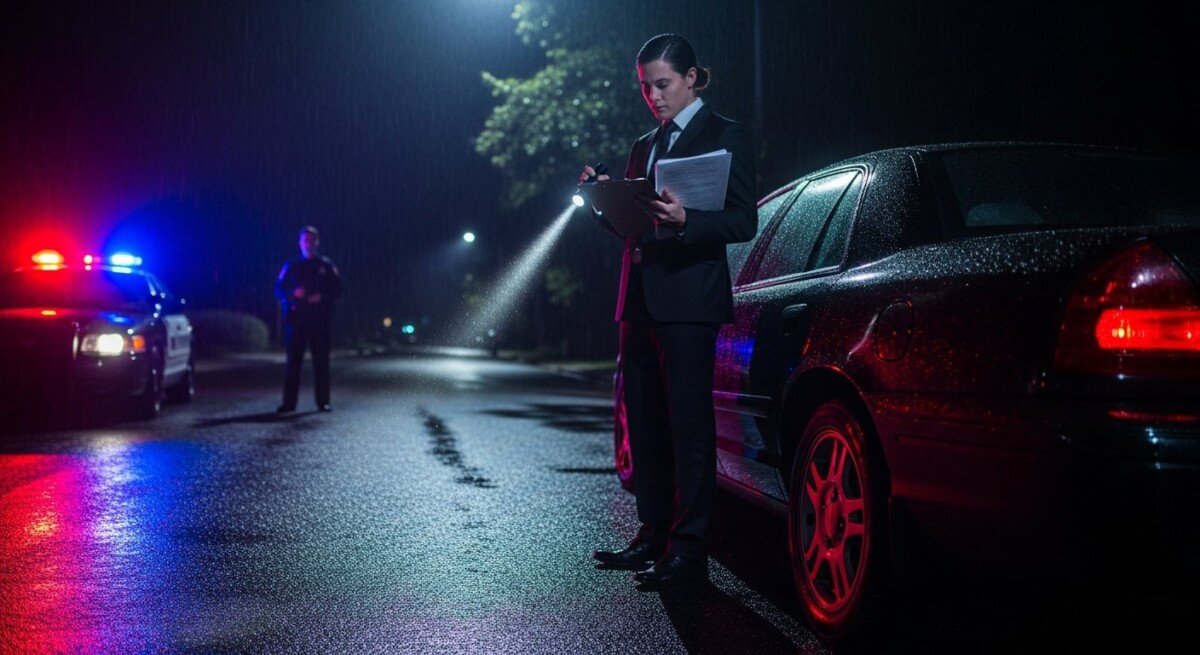
Every DUI case begins with the initial police encounter. The law requires that an officer have a valid legal basis, known as reasonable suspicion, to pull you over. This could be a traffic violation like speeding or a broken taillight, or an observed driving pattern indicative of impairment. If the officer lacked this legal justification, any evidence gathered afterward may be suppressed, potentially leading to the dismissal of charges. This is a powerful preliminary defense strategy that scrutinizes the very foundation of the case.
Following the stop, the officer will look for signs of impairment to establish probable cause for an arrest. This includes observations of your behavior, speech, and performance on field sobriety tests (FSTs). Challenging the administration and interpretation of these tests is a core component of DUI defense. Officers must follow strict standardized procedures. Deviations from these protocols, environmental factors like poor lighting or uneven pavement, or medical conditions affecting balance can all be used to question the reliability of the FST results. A strong defense will meticulously review the arrest report and any available dashcam or bodycam footage to identify these flaws.
Challenging Chemical Test Evidence
Chemical tests of blood, breath, or urine often form the cornerstone of the prosecution’s case. However, these tests are not infallible. A successful defense strategy requires a deep understanding of the science and procedures behind them to challenge their accuracy and validity.
Breath Test Defenses
Breathalyzer machines are complex instruments that require proper calibration, maintenance, and operator training. Defense strategies often focus on the machine’s margin of error, the presence of interfering substances, or the failure to observe the defendant for the required period before the test. Residual mouth alcohol from recent drinking, burping, or even certain medical conditions like GERD can produce falsely high readings. Furthermore, the specific model of the device and its known error rates can be a significant point of contention in court.
Blood Test Defenses
Blood tests are considered more accurate, but the chain of custody and analysis process introduces multiple points of potential failure. The defense can investigate whether the blood draw was performed by an authorized professional, if the antiseptic used contained alcohol, and if the blood vials were properly stored and preserved. Breakdowns in the chain of custody, where the handling of the blood sample is not meticulously documented, can cast doubt on whether the tested sample was truly yours or was contaminated. Independent testing of a preserved sample can sometimes yield different results, creating reasonable doubt.
Key Legal and Procedural Defense Strategies
Beyond the scientific evidence, procedural and legal defenses can be equally decisive. These strategies focus on the actions of law enforcement and the legal process itself.
The Miranda warning, which informs you of your right to remain silent and to an attorney, is only required during custodial interrogation. However, statements made before an arrest can still be damaging. A defense attorney will examine whether any incriminating statements were coerced or made without a proper understanding of your rights. Furthermore, the prosecution has a duty to provide all evidence, including exculpatory evidence that could help the defense. Failure to do so, known as a Brady violation, is a serious matter that can lead to sanctions or dismissal.
Another critical area involves the administrative license suspension that often accompanies a DUI arrest. You have a limited window, typically 10 to 30 days depending on the state, to request an administrative hearing to challenge the suspension. This hearing is separate from the criminal case and focuses on specific issues, such as whether the officer had probable cause for the arrest and whether you were properly informed of the consequences of refusing a test. Winning this hearing can allow you to keep driving while your criminal case is pending. The following are common grounds for challenging a license suspension at an administrative hearing:
- The officer did not have reasonable suspicion for the initial traffic stop.
- The arrest was made without probable cause to believe you were driving under the influence.
- You were not properly advised of your state’s implied consent laws and the penalties for test refusal.
- The breath test machine was not calibrated or maintained according to regulations.
- The blood draw was performed unlawfully or by an unauthorized person.
Success at this stage not only preserves your driving privileges but can also provide valuable discovery and weaken the prosecution’s position in the criminal trial.
Building a Defense Based on Rising Blood Alcohol Concentration
The “rising blood alcohol” defense is a sophisticated strategy based on the physiology of alcohol absorption. It argues that your blood alcohol concentration (BAC) was below the legal limit of 0.08% while you were actually driving, but rose to an illegal level by the time the chemical test was administered later at the station. Alcohol takes time to absorb fully into the bloodstream, meaning BAC can increase for an hour or more after the last drink. This defense relies on retrograde extrapolation, a calculation to estimate BAC at the time of driving. It requires expert testimony and is most effective when there is a significant delay between the driving and the test, and when the timing of your last drinks can be reliably established.
Negotiation and Trial Defense Considerations
The vast majority of criminal cases, including DUIs, are resolved through plea negotiations. A seasoned defense attorney uses the weaknesses identified in the state’s case as leverage to negotiate a favorable reduction. This could mean reducing the charge to a lesser offense like reckless driving (often called a “wet reckless”), which typically carries fewer penalties, no mandatory license suspension, and may avoid a mandatory ignition interlock device requirement. The value of a skilled negotiator cannot be overstated, as prosecutors are often more willing to deal when faced with a lawyer prepared to take a strong case to trial.
If a satisfactory plea cannot be reached, proceeding to trial is the next step. A trial defense synthesizes all the previously discussed strategies into a coherent narrative for the judge or jury. The defense does not need to prove innocence, only that the prosecution has failed to meet its burden of proof beyond a reasonable doubt. Effective cross-examination of the arresting officer and state experts, presentation of defense witnesses, and a compelling closing argument that highlights inconsistencies and scientific doubts are the hallmarks of a robust trial defense. The decision to go to trial is significant and should be made with the full understanding of potential risks and benefits, guided by your attorney’s experienced counsel.
Frequently Asked Question Section
What is the most common successful DUI defense? There is no single “most common” defense, as success depends on the unique facts of each case. However, challenging the legality of the traffic stop and the administration of field sobriety tests are very frequent and effective starting points. If the initial contact was invalid, the entire case may collapse.
Can I defend myself against a DUI without a lawyer? While it is legally possible, it is highly inadvisable. DUI law is complex, involving intricate rules of evidence, scientific principles, and procedural deadlines. An experienced DUI defense attorney understands these nuances, knows how to challenge the prosecution’s evidence, and can often achieve a far better outcome than an individual navigating the system alone.
How much does a DUI defense attorney cost? Costs vary widely based on the case’s complexity, the attorney’s experience, and geographic location. Fees may be flat-rate for straightforward cases or hourly for those requiring expert witnesses and trial preparation. Many attorneys offer payment plans. It is crucial to view this as an investment in your future, as a conviction carries long-term financial, professional, and personal costs that far exceed legal fees.
What happens if I refused a breath test? Refusal typically triggers an automatic administrative license suspension, often longer than if you had failed a test. In some states, refusal can also be used as evidence of guilt in court. However, refusal may also deprive the prosecution of its most powerful piece of evidence (your BAC number), making their case harder to prove. The advisability of refusal is a complex, state-specific decision.
Are there defenses for a DUI involving drugs (DUID)? Yes, though they can be more complex. Defenses may challenge the drug recognition expert (DRE) evaluation protocol, question the subjective nature of officer observations, or dispute the results of blood or urine tests, which may only show the presence of a drug metabolite, not actual impairment at the time of driving.
Navigating a DUI charge requires a proactive and strategic approach. The consequences extend beyond fines and a temporary license suspension, potentially impacting employment, insurance rates, and personal reputation. By thoroughly examining every stage of the state’s case, from the moment the police lights appear, a robust defense can be constructed. Consulting with a qualified attorney who specializes in DUI defense strategies is the most critical step you can take to assess your options and fight for the best possible resolution.