Can You Still Win a Case Without Witnesses
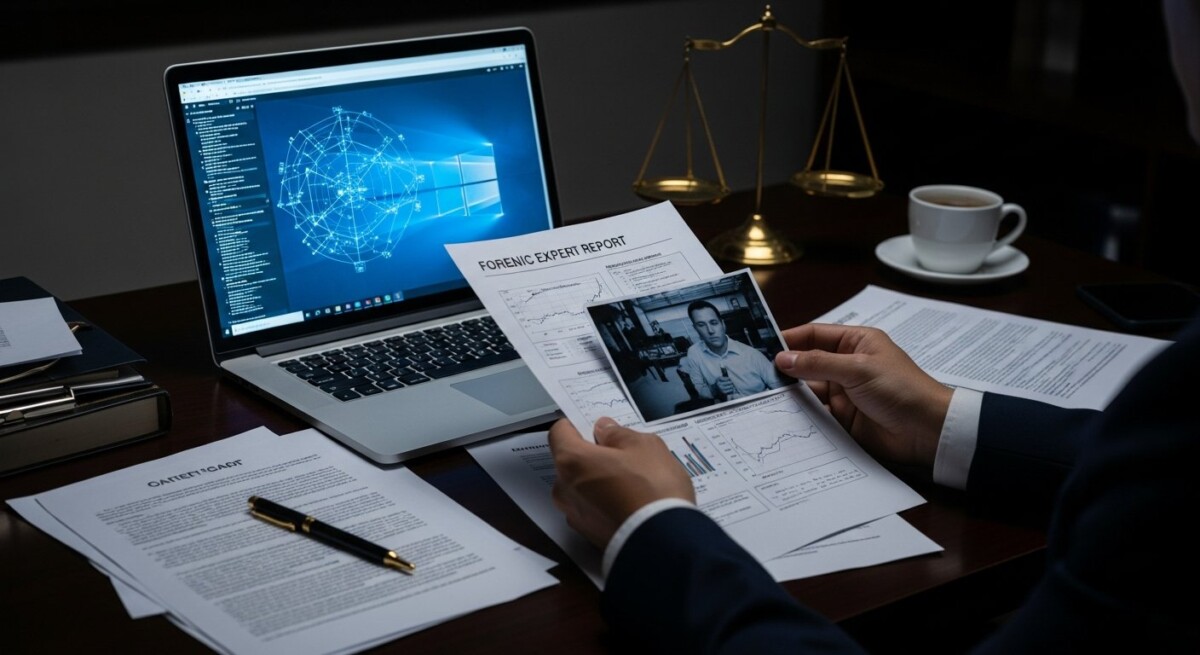
Imagine you are in a legal dispute where the facts are on your side, but no one saw what happened. You might wonder if your case can survive without a single witness. The short answer is yes. Many cases are won on evidence alone, and witnesses are not always required. However, understanding how to build a strong case without live testimony is critical. This article explains the strategies, types of evidence, and legal principles that can help you prevail even when witness lists are empty.
Why Witnesses Are Not Always Necessary
Witnesses serve one primary purpose: to provide testimony about facts in dispute. But testimony is just one form of evidence. Courts also rely on documents, physical objects, expert reports, photographs, video footage, and electronic records. In fact, many successful verdicts are based entirely on circumstantial evidence or documentary proof. The legal standard is not how many people testify, but whether the evidence as a whole establishes your claim by a preponderance of the evidence (in civil cases) or beyond a reasonable doubt (in criminal cases).
For example, a breach of contract case often hinges on the written agreement itself, emails, and payment records. If those documents clearly show the other party failed to perform, you may not need a single witness. Similarly, a slip-and-fall case might rely on surveillance footage and maintenance logs rather than eyewitness accounts. As long as the evidence tells a coherent story, the absence of live witnesses does not automatically doom your case.
Types of Evidence That Substitute for Witnesses
When you lack witnesses, you must lean heavily on other forms of evidence. Courts accept a wide range of proof, and assembling the right mix can compensate for missing testimony. Below are key categories to consider.
Documentary Evidence
Contracts, invoices, letters, emails, text messages, and medical records are powerful substitutes. They provide a contemporaneous record of events, often more reliable than human memory. For instance, a series of emails showing a defendant admitted fault can be just as persuasive as a witness saying the same thing in court. Ensure your documents are authenticated through proper procedures, such as business records affidavits or testimony from a custodian of records.
Physical and Demonstrative Evidence
Physical objects like a defective product, a damaged vehicle, or a torn carpet can speak for themselves. Photographs and diagrams also help illustrate your version of events. In a car accident case, photos of the scene, vehicle damage, and skid marks can recreate the crash without a witness. Demonstrative evidence such as 3D animations or timelines can make complex facts understandable to a judge or jury.
Expert Testimony
Experts are not ordinary fact witnesses. They provide opinions based on specialized knowledge. If you cannot find an eyewitness, hire an expert to analyze the evidence and explain what it means. For example, an accident reconstructionist can use physics and vehicle damage to determine how an accident occurred. A medical expert can link your injuries to the incident using records and diagnostic imaging. Expert testimony often carries significant weight because it is grounded in science and methodology.
Circumstantial Evidence
Circumstantial evidence is proof of facts from which the jury can infer other facts. Many people mistakenly think it is weaker than direct evidence, but courts treat it equally. For instance, if you prove that the defendant was the only person with access to a room where a theft occurred, and the stolen item was found in their car, that circumstantial chain can support a verdict without any witness seeing the theft. The key is to connect the dots logically and thoroughly.
Strategic Steps to Strengthen a Witness-Free Case
Winning without witnesses requires careful planning and attention to detail. Start by identifying every piece of evidence you have and organizing it into a clear narrative. Then, follow these steps to maximize your chances.
- Preserve all evidence immediately. Spoliation (destruction of evidence) can lead to sanctions or a presumption that the evidence would have hurt you. Save documents, photos, videos, and physical items as soon as possible.
- Create a timeline. Map out every event from start to finish, noting what each piece of evidence proves at each stage. This helps you see gaps and identify what additional proof you need.
- Use admissions against interest. If the other party made statements (in emails, social media posts, or depositions) that contradict their current position, those statements are powerful evidence. They can function like a witness confessing.
- Depose the opposing party. In civil cases, you can take depositions of the defendant or their employees. Their sworn testimony becomes evidence you can use at trial, even if they later change their story.
- Request judicial notice. For certain well-known facts (e.g., the date of a holiday, scientific principles), you can ask the judge to take judicial notice, eliminating the need for a witness.
Each of these steps builds a foundation that compensates for absent witnesses. For example, in our guide on filing a lawsuit after a settlement offer, we explain how preserved documents can overcome a rejected offer. The same principle applies here: thorough documentation often substitutes for live testimony.
When Witnesses Are Essential
There are situations where witnesses are nearly indispensable. If the case turns entirely on credibility, such as a he-said-she-said dispute over a verbal agreement, a witness can tip the scales. Similarly, in criminal cases where the defendant claims alibi, an eyewitness placing them elsewhere may be crucial. Family law custody battles often rely on witness observations of parenting behavior. In these scenarios, you should aggressively search for witnesses, even if it means hiring a private investigator or issuing subpoenas for reluctant observers.
But even in these tough situations, you can supplement with other evidence. For instance, phone records can corroborate an alibi, and text messages can show a pattern of behavior. Never assume a case is lost just because you lack a witness. Always explore alternative evidence first. As discussed in our article on claiming compensation after a minor accident, even small incidents can be proven with photos and repair estimates.
Common Myths About Witnesses
Many litigants overestimate the power of witnesses. One myth is that a single credible witness guarantees victory. In reality, juries weigh all evidence, and a witness can be impeached through prior inconsistent statements, bias, or poor memory. Another myth is that you cannot win without an eyewitness. This is false; courts routinely decide cases based on circumstantial evidence alone. A third myth is that expert witnesses are too expensive. While they can be costly, some cases are worth the investment, and you may find experts who work on a flat fee or contingency.
Understanding these myths helps you avoid wasting time searching for witnesses when other evidence suffices. Focus your resources on what will most effectively prove your case, not on what seems traditional.
How Judges and Juries View Witness-Less Cases
Judges and juries are trained to evaluate evidence impartially. They do not automatically discount a case because no one took the stand. Instead, they look at the totality of the evidence and ask whether it meets the burden of proof. In bench trials (without a jury), judges are especially comfortable relying on documents and expert reports. In jury trials, attorneys must present the evidence in an engaging way, using charts, summaries, and clear explanations so the jury can follow the logic.
One effective technique is to treat the documents themselves as witnesses. For example, you can say, “This email speaks for itself. It shows the defendant agreed to pay $5,000 on June 1.” By personifying the evidence, you make it memorable. Additionally, jury instructions often state that circumstantial evidence is entitled to the same weight as direct evidence, so you can remind the jury of that fact.
If you are concerned about how a judge might rule, consider reviewing similar cases that succeeded without witnesses to see the patterns. Many published opinions involve verdicts based solely on documentary evidence.
Frequently Asked Questions
Can you still win a case without witnesses if the other side has witnesses?
Yes. Your evidence can outweigh their witnesses if it is more credible or complete. For instance, a clear contract document can defeat a witness who claims a different verbal agreement. The key is to impeach their witnesses or show that their testimony conflicts with undisputed facts.
What if I cannot afford an expert witness?
You may still win by relying on other evidence. Many cases are decided on documents and photographs alone. If expert testimony is essential, look for pro bono experts, use government reports, or ask the court to appoint an expert at public expense in certain cases.
How do I authenticate documents without a witness?
You can use a self-authentication method under rules of evidence. For example, business records can be authenticated by a certification from the custodian. Public records often come with a seal. Email printouts can be authenticated by testimony from the recipient about their regular practice. Consult your attorney for specific procedures.
Does the lack of witnesses affect settlement value?
It can, but not always. If the evidence is strong, the opposing party may still offer a fair settlement to avoid trial. However, if the case is weak on evidence, the settlement offer may be low. Your attorney can use the available proof to negotiate effectively.
Can I testify on my own behalf as a witness?
Yes. You are a competent witness in your own case. Your testimony can fill gaps, but it is generally viewed as self-serving. Combine it with corroborating documents or physical evidence for maximum impact.
For more detailed guidance on building a case with limited witnesses, read our resource on compensation claims which covers evidence strategies for smaller incidents.
Winning a case without witnesses is not only possible, it is common. The legal system values all forms of proof, and a well-prepared case built on documents, physical evidence, and expert analysis can be just as compelling as one with multiple eyewitnesses. Focus on what you have, organize it logically, and present it clearly. If you are unsure where to start, consult an attorney who can evaluate your evidence and advise on the best path forward. The outcome depends on the strength of your proof, not the number of people you put on the stand.