Best Way to Collect Accident Evidence After a Crash
Seconds after a collision, your mind races with shock, adrenaline, and worry. In that chaotic moment, the last thing you think about is preserving proof. Yet the difference between a fair settlement and a frustrating denial often comes down to what you do in those first few minutes. Collecting accident evidence correctly can make or break your ability to prove fault, document injuries, and recover full compensation. Understanding what is the best way to collect accident evidence gives you a powerful advantage before you even speak with an insurance adjuster or file a claim.
This guide walks through a practical, step-by-step process for gathering the right evidence at the scene, after you leave, and throughout your recovery. Whether you are dealing with a minor fender bender or a serious crash, these strategies help protect your legal rights and strengthen your case. For deeper context on how evidence connects to legal fault, see our guide on the best way to prove negligence in an injury case.
Why Evidence Collection Matters More Than You Think
Insurance companies are not in the business of paying out maximum settlements. Their adjusters are trained to minimize payouts, and they do this by finding gaps, inconsistencies, or missing proof in your claim. If you cannot show clear evidence of what happened, who caused it, and how you were harmed, the insurer has an easy path to deny or undervalue your claim.
Evidence serves three critical purposes. First, it establishes liability by showing exactly how the accident occurred. Second, it documents the full extent of your injuries and property damage. Third, it creates a timeline that supports your version of events against conflicting accounts. Without solid evidence, you are left arguing your word against the other driver’s word. With proper evidence, you present an undeniable factual record.
Many people assume that police reports alone are sufficient. While police reports carry weight, they are not always complete or accurate. Officers may miss key details, make errors, or arrive after evidence has been moved. That is why your own collection efforts are essential. By taking control of evidence gathering, you ensure nothing is left to chance.
What to Do Immediately at the Scene
The moments right after an accident are the most critical for evidence collection. Once cars are moved, skid marks fade, witnesses leave, and injuries begin to swell. Acting quickly preserves details that vanish within minutes.
1. Prioritize Safety and Legal Obligations
Before you start snapping photos, check yourself and your passengers for injuries. If anyone is hurt, call 911 immediately. Move to a safe location away from traffic if you can do so without further risk. In most states, you are legally required to stop and exchange information with the other driver. Failing to do so can result in hit-and-run charges, which complicate your case severely.
2. Call Law Enforcement
Even for minor accidents, calling the police creates an official record. A responding officer will file a report that includes the date, time, location, and a preliminary assessment of fault. This report becomes a foundational piece of evidence. If the officer determines the other driver violated a traffic law, that finding carries significant weight with insurance companies and in court.
When the officer arrives, provide a clear, factual account of what happened. Stick to what you observed. Do not speculate about fault or admit fault in any way. Statements like “I didn’t see him” or “I’m sorry, I was distracted” can be used against you later. Simply describe the events as they unfolded.
3. Document the Scene with Photos and Video
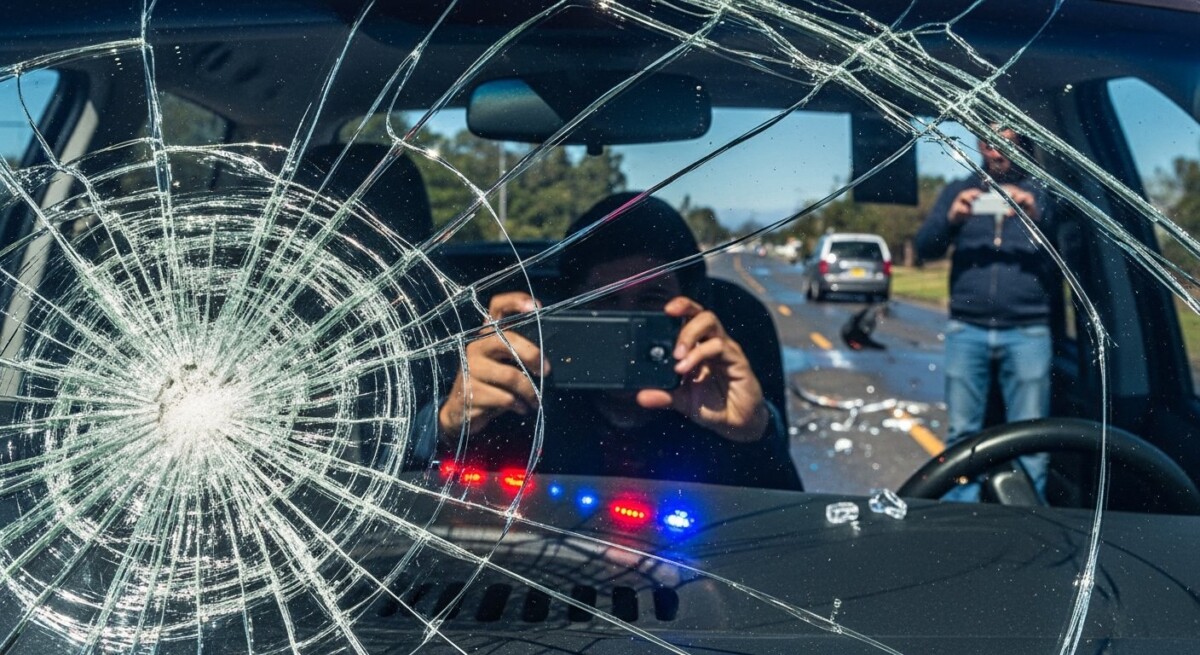
Your smartphone is your most powerful evidence collection tool. Use it to capture the scene from multiple angles before anything is moved. Here is a checklist of what to photograph:
- Wide shots showing the overall positioning of all vehicles involved
- Close-ups of damage to each vehicle from multiple angles
- Skid marks, debris, broken glass, and fluid leaks on the road
- Traffic signs, signals, and road markings near the accident site
- Weather conditions, lighting, and road surface quality
- Your injuries, including bruises, cuts, or swelling (take these photos at the scene and again later as injuries develop)
Video can capture the scene dynamically. Walk slowly around the vehicles while recording, narrating what you see. Video also helps document witness statements and the behavior of other drivers after the crash. Be careful not to record anyone without their consent if you are in a two-party consent state. When in doubt, ask permission before recording others.
After you have gathered scene evidence, you may find it useful to review how that evidence translates into a legal claim. Our article on what evidence is required for a personal injury lawsuit explains the specific documents and proof you will need.
Gathering Witness Information
Witnesses can provide an independent, unbiased account of the accident. Their testimony often carries more weight than either driver’s version because they have no stake in the outcome. Do not assume that witnesses will stick around or that the police will collect their information. You should do this yourself.
Approach witnesses calmly and ask if they saw what happened. If they agree to help, collect their full name, phone number, and email address. Also ask if they would be willing to provide a written or recorded statement. If they are uncomfortable with recording, simply take notes on what they say as soon as possible. Write down their exact words, not your interpretation.
In some cases, witnesses may leave before you have a chance to talk to them. Look for nearby businesses, homes, or dashcams that might have captured the accident. Leave a note with your contact information asking them to reach out if they have footage or saw anything. Security cameras on buildings, traffic cameras, and even doorbell cameras can provide crucial evidence.
Preserving Medical Evidence
One of the most common mistakes accident victims make is delaying medical treatment. Even if you feel fine immediately after the crash, some injuries take hours or days to manifest. Adrenaline masks pain, and conditions like whiplash, concussions, and soft tissue damage may not show symptoms until later.
Seek medical attention as soon as possible, even if you believe your injuries are minor. A doctor’s examination creates a medical record that links your injuries directly to the accident. This documentation is vital for proving causation. Without it, the insurance company can argue that your injuries preexisted the crash or were caused by something else.
Follow all treatment recommendations from your healthcare provider. Attend follow-up appointments, complete physical therapy, and take prescribed medications. Skipping appointments or stopping treatment early can be used as evidence that your injuries were not as serious as you claim. Keep a journal documenting your pain levels, limitations, and emotional struggles. This personal record adds a human element to the clinical data in your medical files.
For a deeper understanding of how to document non-economic harm, read our guide on the best ways to prove pain and suffering in court.
Collecting Documentary Evidence After the Scene
Evidence collection does not end when you leave the accident scene. In the days and weeks that follow, you should gather documents that support your claim. These records create a comprehensive picture of your losses.
Start by obtaining a copy of the police report. Most departments allow you to request a copy online or in person within a few days of the accident. Review the report carefully for errors. If the officer misstated facts, left out details, or incorrectly assigned fault, you can file a correction or supplement with your own evidence.
Next, collect all financial records related to the accident. This includes:
- Repair estimates and receipts for vehicle damage
- Receipts for rental cars, towing, and storage fees
- Medical bills, pharmacy receipts, and insurance explanation of benefits
- Pay stubs or employer statements showing lost wages
- Receipts for any out-of-pocket expenses related to your recovery
Organize these documents in a folder, both physical and digital. Create a timeline of events from the moment of the accident through your current recovery. Include doctor visits, missed work days, and any changes in your ability to perform daily activities. This timeline helps demonstrate the ongoing impact of the accident on your life.
Digital Evidence and Technology Tools
Modern technology offers powerful tools for evidence collection that previous generations did not have. Dashcams are one of the most effective. A forward-facing camera records the road ahead and can capture the exact moment of impact, the actions of both drivers, and the immediate aftermath. Many dashcams also record audio, which can capture conversations at the scene.
If you do not have a dashcam, ask the other driver or nearby witnesses if they have one. Some commercial vehicles, ride-sharing drivers, and delivery trucks have dashcams that may have captured the accident. Requesting this footage promptly is important because many systems overwrite old recordings after a set period.
Smartphone apps can also help. Several apps are designed specifically for accident documentation. They guide you through the process of taking photos, recording witness statements, and creating a digital report. Some even generate a PDF that you can share with your insurance company or attorney. Using an app ensures you do not forget any critical steps.
Social media can be a double-edged sword. While you might be tempted to post about the accident, doing so can harm your case. Insurance adjusters routinely monitor social media for posts that contradict injury claims. Avoid posting anything about the accident, your injuries, or your activities until your case is resolved. Even a photo of you smiling with friends can be used to argue that you are not truly suffering.
Working with an Attorney to Maximize Evidence
While you can collect a great deal of evidence on your own, an experienced attorney brings expertise that significantly strengthens your case. Attorneys know what evidence is most persuasive to insurance companies and juries. They also have resources to obtain evidence that may be difficult for you to access on your own, such as surveillance footage from businesses, cell phone records, or expert witness testimony.
An attorney will review your evidence for gaps and advise you on what additional proof you need. They can also handle communication with insurance companies, preventing you from making statements that could undermine your claim. If your case goes to court, your attorney will present the evidence in the most compelling way possible.
When selecting an attorney, look for someone with experience in personal injury and accident cases. Ask about their track record with cases similar to yours. Many attorneys offer free initial consultations, which gives you an opportunity to evaluate their approach and determine if they are a good fit. For more insight on how evidence affects your financial recovery, see our discussion on the best way to calculate settlement value for your claim.
Common Mistakes That Destroy Evidence
Knowing what to do is important, but knowing what to avoid is equally critical. Many accident victims unintentionally destroy or weaken their evidence through common mistakes. Avoid these pitfalls:
- Admitting fault at the scene, even casually or apologetically
- Failing to take photos before vehicles are moved
- Posting about the accident on social media
- Delaying medical treatment or failing to follow doctor’s orders
- Signing any documents from the insurance company without legal review
Each of these mistakes can be exploited by insurance adjusters to reduce or deny your claim. Being aware of them helps you protect the integrity of your evidence from the start.
Frequently Asked Questions
How soon after an accident should I collect evidence?
Start collecting evidence immediately at the scene. The first hour is the most critical. After that, continue gathering medical records, financial documents, and witness statements in the days following the crash. The sooner you act, the more reliable your evidence will be.
Do I need a lawyer to collect accident evidence?
No, you can collect basic evidence on your own, including photos, witness contact information, and medical records. However, an attorney can help you obtain more complex evidence, such as surveillance footage, expert analysis, and cell phone records. If your injuries are serious or liability is disputed, legal representation is strongly recommended.
What if the other driver refuses to exchange information?
If the other driver refuses to provide their information, do not confront them. Stay in your vehicle if it is safe and call the police. Officers can compel the exchange of information and document the refusal in their report. A refusal to cooperate can raise suspicion and may work in your favor later.
Can I use my phone’s photos as evidence in court?
Yes, smartphone photos are generally admissible in court as long as they accurately depict the scene. To strengthen their authenticity, take photos with timestamps enabled and avoid editing or altering the images. Preserve the original files with their metadata intact.
How long should I keep accident evidence?
Keep all evidence until your case is fully resolved, including any appeals. For most personal injury claims, the statute of limitations ranges from one to six years depending on your state. Even after settlement, retain copies of all documents for your personal records in case future issues arise.
Take Control of Your Recovery
Knowing what is the best way to collect accident evidence gives you a decisive advantage from the very first moment after a crash. By acting quickly, documenting thoroughly, and avoiding common mistakes, you build a case that demands fair treatment from insurance companies and protects your legal rights. Evidence is the foundation of your claim. The stronger that foundation, the better your chances of recovering the compensation you deserve. If you have been in an accident, take action now. Your future self will thank you.